
Skip to content

Dog-Friendly Beaches in Galicia

More and more people take their loyal companion on holiday rather than leaving the dog with a neighbour, family member or friend. Still, finding pet-friendly spots isn’t always easy. Demand has grown — there are more pet-friendly hotels, flats and campsites — but access for pets is still banned on most Galician beaches. Tough for tourists touring Galicia with dogs and for locals who want to enjoy sun and sand with their four-legged friends.

best beaches in Galicia

A few years ago, Galicia had no “pet-friendly” beaches. Now there are growing requests to expand the list, though authorised beaches in Galicia are still few — but the number has grown lately.

Which Galician beaches can we go to with dogs?

Here’s a list of dog-friendly beaches in Galicia, by province:

Dog beaches in A Coruña

By municipal bylaw, dogs are not allowed on Galician beaches between 1 June and 30 September; the rest of the year they may walk there. During summer, only two beaches accept dogs in A Coruña province.

In A Pobra do Caramiñal, dogs are tolerated in a small stretch of Playa del Arenal — also known as Playa de las Mariscadoras. The dog area is about 300 m; watch high tides as sand may be covered.

The Ares dog beach is a closer option to A Coruña — a delimited area within the large Ares beach, by the harbour. Council rules require dogs on leads.

dog beaches in Pontevedra

Dog beaches in Lugo

On the Lugo coast only one beach allows dogs in summer: Punta Corveira in Barreiros. The bylaw allowing access was passed only a couple of years ago.

Located between Longara and Pasadas, with large rocks but very fine sand. There’s also Areagrande in O Vicedo, where dogs are allowed in restricted hours from May to September — before 10:00 and after 21:00.

Dog beaches in Pontevedra

The province with the most dog-friendly beaches in Galicia — up to six.

In San Vicente do Mar: O Espiño and O Portiño beaches, in the south of the O Grove peninsula. Separated by rocks, near the Pedras Negras marina. Calm beaches, fine white sand, good views of the Ons Islands.

Since 2016: Cunchiña Beach in the O Morrazo peninsula. 110 m long, swimming only at one end.

In Vilagarcía de Arousa: O Castelete since 2016.

In Redondela: Cesantes and Chapela beaches. Cesantes (2016) has full services and Blue Flag often, plus it’s smoke-free. Chapela is a small cove with basic infrastructure.

In the council of Vigo: A Foz and A Calzoa, recently added in Navia-Coruxo parish. A Foz is 300+ m by the Lagares river. A Calzoa is 120 m, fine sand with some rocks.

which beach to go to in Galicia with your dog

Galicia has hidden coves where dog owners often go. Be careful — even unsupervised beaches can result in fines if the local bylaw bans access.

Some unofficial dog beaches: Portocelo, Aldán, Barra and Viñó or Barreiras (Pontevedra); Salinas and Petons (Arousa Island); Las Dunas, Carnota, Lago or Traba (A Coruña).

beaches to go to in Galicia

dog-friendly beaches in Galicia


Explore Galicia beyond the beach

Want to discover one of Galicia’s most spectacular coastlines without worrying about permits or tide times? Join our full-day trip to Lugo, Ribadeo and Cathedrals Beach from Santiago.

The Best Beach in Galicia for Surfing

Surfing in Galicia is a great option — for the waves first, then mild temperatures, and finally a calm, less crowded environment. Here are pointers for safe surfing, highlighting some of the contenders for the best beach in Galicia.

One great appeal of the Galician coast is that you can surf almost every day of the year — beaches face every wind direction. Very sheltered beaches (especially the Rías Baixas) and very open ones (closer to Portugal). An important note: the best waves are in winter and that’s also when crowds are smaller — key, since in summer you may have trouble for that reason.

We’ve considered the target audience — beaches for beginners alongside those that have hosted championships for years and are surf references.

The best beach in Galicia for surfing

Pantín

Pantín’s natural beach is the best beach in Galicia for surfing. Two advantages: perfectly oriented for strong Atlantic swells (you can surf almost year-round), and it has a competition tradition — the Pantín Classic has been held in early autumn for over 25 years on the Ferrolterra beaches. A European reference. The beach needs little sea to work, with waves up to 2 m. Tradition says if there are no waves in Pantín, there are no waves in all Galicia.

the best beach in Galicia for surfing

Sabón

Close to A Coruña, in Arteixo. Sabón needs some sea due to the outer harbour breakwater that blocks waves, but it’s been gathering sand in recent years, offering some of the best waves in the area. Great for beginners and pros. Parking by the beach, showers and on-beach surf schools.

Razo

For many experts, the best beach in Galicia for surfing. A vast wild stretch (5.5 km long) in Carballo, on the Costa da Morte. Several peaks along the beach. Quality waves suit any level — with a surf school for beginners and high-level options like the legendary “Cordobés” breaking right in front of the bar that bears its name. Surf at high or low tide; mid-tide rising is best.

You can see dolphins from the beach and sometimes surf with them. Best with southerly winds for offshore conditions. Showers, ample parking, surf camps, bars and pubs to enjoy Galician food while the sun sets on the Atlantic.

surfing beaches in Galicia

A Lanzada

In the heart of Rías Baixas, between O Grove and Sanxenxo. Singular beauty (white fine sand) and length (2,400 m long, 60 m wide), surrounded by white dunes and crystal-clear water, with a parallel wooden walkway. Long-rolling waves work with any tide, but low rising is best.

For experts, ideal for beginners — west-facing, so a small swell creates waves. Moderate north-easterly wind is perfect, southerly works up to half the beach, north-westerly handles cross at the airfield. Hosts many tournaments. Has multiple schools (Prado Surf, Mission, Tartaruga). Busy in summer but its length keeps it from feeling crowded. Blue Flag in summer, beach bars, lifeguards, showers, parking, hotels, country houses, restaurants and leisure all year.

beaches in Galicia to see

Without doubt, alongside the others mentioned, A Lanzada is one of Galicia’s best beaches for surfing and the most popular in the Pontevedra estuary.

Samil

Samil is in a setting of singular beauty with the Cíes Islands as a backdrop — one of the best Galician landscapes for sunsets. Not the best beach in Galicia but one of the most popular for surfing.

About 1,700 m long with public parking and great breaks especially at the start of the beach by the Lagares river mouth at the western end. Needs a strong swell and southerly winds. A favourite spot for local surfers when other beaches are tricky. Park right in front and easy access.

sunsets in Galicia surf beaches

La Toja Island

La Toja Island is undoubtedly one of the most recognised tourist spots in the Rías Baixas. If you’re organising a Galicia tour, a mandatory stop must be this small island in the Arousa estuary. Today we want to show you how to fully enjoy it.

What to see in La Toja

Seafront of O Grove and La Toja

O Grove has a seafront that continues onto La Toja Island. Magnificent views and a quiet area, just the right length to enjoy fully. On La Toja the promenade is just over 2 km, completely flat — great for bike rides.

what to do in La Toja

Shell necklaces (“As colareiras”)

Stop to enjoy the craft of our traditional colareiras. These artisans gather shells from beaches and weave them into necklaces, bracelets, earrings — very typical of a La Toja visit.

Thermal spa

Besides being an exceptional tourist area and a long tradition, La Toja is famous for its thermal waters. While in O Grove, spend a few hours immersed — you’ll come back with a smile and recharged.

what to see in La Toja

Forest park

Enjoy hiking through the woods or run away from asphalt. In the middle of the island lies a small forest, well prepared and cared for, ideal for a walk among the trees. At the centre of the park you can see donkeys, honouring the island’s legend, and take photos with them.

Other places to visit

The Chapel of San Caralampio and the Chapel of the Shells. Plus well-marked paths, rest points and small viewpoints with unbeatable views. Depending on the time you visit, you may meet hardly anyone along the route.

La Toja island

History of La Toja Island

La Toja, the treasure island. A worldwide reference for its spa, which modernised the concept of tourism in Pontevedra.

Originally called Louxo, the island had no trees and was uninhabited. In the early 19th century interest in its thermal waters began. The spa’s history dates to 1812 when a Frenchman who stayed after the War of Independence, with health issues, was sent to the island by a local healer to take the waters at Porca Morta. Seeing the Frenchman improve, Mosquera recommended the place to other patients arriving by boat.

Other versions: the donkey left there to die that revived; and another in which “tradition attributes to Arousa estuary fishermen the discovery — walking barefoot on certain parts of the island, they felt heat on their feet” — and so the thermal baths were found.

history of La Toja

Later, the owner — the Marquis of Riestra — considered turning the land into a thriving business. In 1841, botanist Antonio Casares had found magnesium, sodium, iron and calcium in the waters, at 30–60°C, said to be perfect for curing illness. A year later he got authorisation to build the spa, opened in 1899.

The Gran Hotel de La Toja opened 8 years later. Initially only accessible by boat or on foot. A bridge — at the time the longest in Europe — soon connected the island. The Galician Vázquez-Gulías won the design contest, drawing inspiration from European spas like Vichy and Marienbad.

After many difficulties, the Gran Hotel of La Toja Island remains Galicia’s only five-star spa. Beyond bathing in its waters and muds for physical and mental therapy, if time allows you can visit its boutiques or have a drink at the famous English Bar. You never know who you might meet.


Want to discover A Toxa and the Rías Baixas without driving?

Visit Cambados, O Grove, A Toxa and Combarro on a guided day trip from Santiago, including a winery visit and a boat trip along the estuary.

Hidden Waterfalls in Galicia to Discover

Galicia is known as “the land of 1000 rivers”. We get a lot of rain in winter and spring, so it’s hard to walk or drive anywhere in Galicia without crossing some rivers and small streams. Hidden in deep forests you can find magical places: waterfalls. Some are easy to find, even just by typing the name on Google Maps. Discover our favourite hidden waterfalls in Galicia where you can relax, breathe and bathe. Careful — the water can be very cold even in summer!

Hidden waterfalls in Galicia

Fervenza do Toxa (Silleda, Pontevedra)

One of the tallest in Galicia with 50 m of free fall. Surrounded by a spectacular natural setting, very popular on weekends. Bathe in the cold water at the foot of the waterfall, walk through an impressive forest full of botanical diversity or just sit and listen to the relaxing water. If lucky, you’ll see an otter swimming. Nearby, the restored Romanesque church of Carboeiro Monastery is worth a visit.

Refuxio de Verdes (Coristanco, A Coruña)

Not exactly a waterfall, or maybe a small one, but definitely worth visiting. Among cornfields, the Anllóns river creates islands and small waterfalls. Humans used the water’s force to build stone grain mills — now restored and used as a fishermen’s refuge. An incredible mix of stones, water, trees and wood where you can even barbecue. Reachable by car; avoid summer weekends as it can be packed.

Fervenza de Cadarnoxo (municipio de Boiro, provincia de A Coruña)

Fervenza do Pozo Negro (Brión, A Coruña)

A hidden waterfall close to Santiago de Compostela. In the forests of Brión, just 15 km from Santiago, a 20-minute walk takes you to this small, hidden, marvellous spot. Bathe or just relax. We’re again in the otter kingdom — patient, quiet observers may spot one. Not far from the Santiago-Fisterra pilgrim path.

Refuxio de Verdes

Fervenza de Ézaro (Dumbría, A Coruña)

One of Galicia’s largest waterfalls. The Xallas river ends in a small estuary. A wooden trail by a power plant takes you to this spectacular spot. Special illumination at night. You can also rent a kayak to see it from the water. Don’t miss it if visiting Cape Finisterre nearby. Then take the steep road to the mountain-top viewpoint — incredible views of mountains and the Atlantic.

Fervenza de Ézaro

Seimeira de Vilagocende (A Fonsagrada, Lugo)

“Seimeira” is a local name for “waterfall”. In the interior mountains of Galicia near Asturias. A 1 km trail leads to Galicia’s tallest waterfall — 53 m free fall. Surrounded by Atlantic forest, a must when visiting the mountains. Another trail leads to a viewpoint at the top.

Fervenza de Cadarnoxo (Boiro, A Coruña)

Hidden because it remains mostly unknown. Drive to within a few metres and take a narrow path. Be careful — rocks can be slippery. Bathe in a natural pool. In the Serra do Barbanza, with views of ocean and the Arousa estuary. A 2-hour archaeological tour reveals prehistoric funerary monuments and the “Arca do Barbanza” dolmen.

Hidden waterfalls in Galicia

Fervenza de San Xusto de Toxosoutos (Lousame, A Coruña)

Perfect for a relaxed bath in the natural pool at the foot of the waterfall. In a small forest by the remains of San Xusto de Toxosoutos Monastery. Continue to Noia, a charming old medieval town by the Muros-Noia estuary, with craft shops, tapas bars and restaurants.

Río Barosa Natural Space (Barro, Pontevedra)

Used in ancient times to mill grain. Up to 10 stone mills visible. Now a small natural park where you can drink, relax or bathe in the river. Popular and busy on summer weekends.

There are thousands of waterfalls in Galicia — just a small sample. All in natural areas, so be respectful of the environment and leave it as clean as you found it. Enjoy!

Hidden Treasures of the Galician Coast: Atlantis and Duios

The Galician coast is one of those magical places. The most famous hidden treasures of the Galician coast are Atlantis and Duio — sunken city legends everyone knows about.

Many legends surround these hidden treasures of the Galician coast — worth knowing and enjoying.

Hidden treasures of the Galician coast: Duios

Hidden treasures of the Galician coast: Duios

There’s a whole legend around Duios. Many residents say the city was flooded as a divine punishment in the 9th century. The wrath came because the inhabitants worshipped the sun and were indifferent to the apostle’s preaching.

Scientifically, it may have been a cataclysm where only the oxen were saved — remembered with two stones called Os Bois de Gures.

Archaeological remains of Dugium have been found here — a large city of Celtic Nerii. Saint William Christianised the place and built a place of prayer.

Hidden treasures of the Galician coast: Atlantis

Atlantis

Atlantis is one of the most famous city legends — described by Plato. Many say this advanced island civilisation was in Galicia.

It has become one of the hidden treasures of the Galician coast. Many tourists, adventurers and archaeologists run excursions looking for ruins. Although a legend, it features in history books. One spot considered is the Doñana marshes, with remains of an advanced civilisation.

Visible?

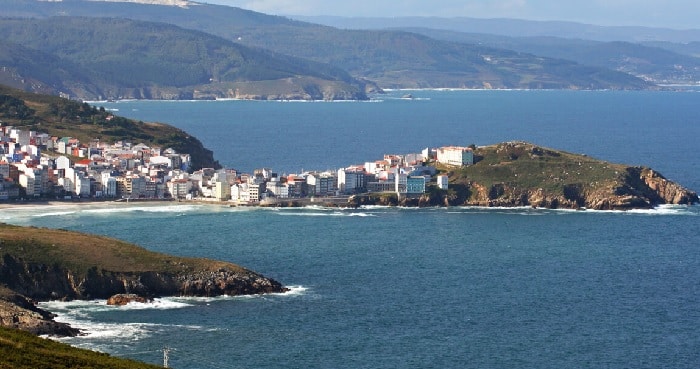
Veteran sailors from Malpica de Bergantiños say Atlantis is real and one of the hidden treasures of the Galician coast — sometimes visible, depending on the tide.

Hidden treasures of the Galician coast: Atlantis and Duios

In a Costa da Morte village near A Coruña, you can see stone heads rising above sea level, sometimes stone walls and even stairs — what some sailors describe as remains of a great village or civilisation submerged in the sea.

The Atlantis legend

Atlantis legend?

According to legend and Greek mythology, Atlantis was an advanced civilisation on an island of rich, wise and just people, ruled by Poseidon. Zeus punished its inhabitants for their greed — tsunamis and volcanic eruptions destroyed it in a single night.

Many say it sank under the Atlantic, but its location has never been confirmed. Said to be in different parts of the world; sometimes located on the Galician coast or even the Canary Islands.

Touring the North of Spain

If you’re thinking about touring the north of Spain, you’ll have a trip full of history, culture, beautiful landscapes and lots to learn. Helpful info to plan your itinerary:

Routes to tour the north of Spain

Touring the north is ideal in both winter and summer. Some routes:

Get to know the castles of Galicia

Galicia is one of the best activities in the north. Castles worth knowing:

  • San Antón Castle, on A Coruña’s seafront, with the Archaeology Museum — great for history fans.
  • Doiras Castle, in Cervantes municipality, with some of the most beautiful landscapes in Galicia.

You can also visit Santa Cruz, one of the oldest castles of Galicia — much history about war and strategic fortification.

Visit the San Juan Hermitage in the Basque Country

One of the most dazzling hermitages in the country, with two arches. You access via 241 historic stone steps with beautiful viewpoints.

Routes to tour the north of Spain

Take the kids to Cabárceno Nature Park

In Cantabria — a must when touring the north of Spain. Thousands of animal species in semi-freedom — you can interact and get close with the youngest. Near Santander, capital of Cantabria.

Contemplate the Picos de Europa

Ideal for trekking lovers. You can reach them via Cangas de Onís, south of the Sella river valley.

Following this route you reach the Hermida gorge — crystal-clear water and bird species near the lake or stone walls.

Get to know the castles of Galicia

Recommendations for touring the north of Spain

You can prepare with these recommendations:

Touring the North of Spain

  • Plan your itinerary in advance.
  • If you travel with young children, include fun activities for them.
  • Choose the right season and plan accordingly.
  • Budget what you’re willing to spend.
  • Always wear comfortable clothing suited to the temperature.
  • Anticipate lodging and food costs.

We recommend touring the north of Spain with a professional travel agency that can guide you throughout, organising your itinerary and making your trip more fun.

Best Routes Across Northern Spain

If you’ve decided to visit northern Spain, there are unforgettable routes worth knowing. Here are some of the best routes across northern Spain to discover on your trip.

Routes across northern Spain you can’t miss

The north of Spain features castles and dreamlike landscapes — ideal for holidays full of history. Some of the best routes to consider with a specialist agency:

Galicia

Galicia is a charm in itself. One of the best routes is to visit Galicia. You can see small villages like Ribadavia or head to the Ribeira Sacra.

One of the most interesting things in Galicia is to taste the wine. It has over 80 wineries that supply monastic pantries and delight every visitor.

Another visit on this route is the longest beach in Spain: Carnota. Surrounded by the Ézaro waterfall, from this beach you can head to A Coruña via the Costa da Morte for spectacular landscapes.

Best routes across northern Spain

The coast of Asturias

Another great route. From Galicia, you pass Taramundi to know local history, and see Pumares.

The Silence Beach is a must — dedicate at least a day. On the Asturian coast you can see Cudillero and Gijón.

In Gijón is San Lorenzo beach, where you can try Asturian cuisine. Don’t miss the Picos de Europa National Park — hiking and Enol and Ercina lakes.

The coast of Asturias

Cantabria

Cantabria must be on your plans. The gateway is Comillas — see Gaudí’s “Capricho”, an authentic piece of Catalan architecture.

Also Comillas beach and the neo-Gothic palace. You can head to Santillana del Mar or to Santander — the cultural capital of northern Spain, with the Prehistory and Archaeology Museum.

In Santander you’ll find urban graffiti by Okuda San Miguel in strategic spots.

Routes across northern Spain you can't miss

Basque Country

Visit the whole Basque Country: Bilbao, Vitoria and San Sebastián.

In Bilbao: Guggenheim Museum, old town streets and Arriaga theatre. Fans of Game of Thrones should visit San Juan de Gaztelugatxe.

In Vitoria: Cathedral of Santa María and Plaza de la Virgen Blanca. Don’t leave without trying good cider.

Finally, in San Sebastián head to Mount Urgull, ideal for nature lovers. Also visit the Constitution Square and the Church of Santa María del Coro.

5 Less-Known Routes in Galicia

Galicia is excellent for visiting and hiking. Here are some of the best less-known routes to visit on your next stay.

The best routes of Galicia

There are many routes — the best tour agencies will take you. Some of them are considered “less-known routes in Galicia” because they’re less travelled. Visiting them is more interesting because you’ll see hidden spaces few visit.

1. The “O camino dos faros” route

The O camino dos faros route

One of the best less-known hiking routes. Links Finisterre with Malpica along the sea, passing the lighthouses of the iconic Costa da Morte.

Medium difficulty — uneven terrain that gets harder. Recommended for fit walkers. Eight stages from Malpica through Niñóns, Ponteceso, Laxe, Arou, Camariñas, Muxía and Nemiña, ending in Finisterre.

2. The “O Rei do Cintolo” cave

In Mondoñedo, Lugo. A natural cavity of about 6.5 km. You’ll walk through galleries of natural and now historical heritage.

Considered a Palaeolithic site — Spain’s largest natural cave, also one of the deepest. To access it you need permission from the Mondoñedo Tourism Office, so a specialist agency is a good idea.

3. San Simón Island

best routes of Galicia

At the back of the Vigo estuary, reached by ferry. Between 20 and 24 July is the Sinsal Son Estrella Galicia Festival featuring local artists and international guests.

4. Senda dos Encomendeiros

In Pontedeume, A Coruña. Before the suspension bridges, the route starts. Ends at the Santa Cristina bridge, runs alongside the Eume river through the most important Atlantic forest in Europe — well preserved. Highlights include the Monastery of San Juan de Caaveiro.

5. Ascent to Pena Trevinca

One of the highest peaks in Europe. Recommended for experienced hikers — medium-high difficulty, with a high final stretch. Best to go with professionals.

5 less-known routes in Galicia

10 Routes to Discover the Most Unseen Galicia

If Galicia is famous for anything worldwide, it’s its historic and interesting routes. Today we’ll cover the best routes to discover the most unseen Galicia so you can plan an interesting, fun and original itinerary.

The best places to discover the most unseen Galicia

Galicia is a region of unforgettable natural spaces and routes. Choosing just one is hard, but here are 10 of the best — the best-preserved corners of all Galicia:

1. Ancares Mustallar – Piornedo

13.5 km to reach the Mustallar peak, one of the highest mountains in the Sierra de Ancares. Fun and informative, you’ll see the most picturesque area of the region.

Pallozas have cone-shaped roofs made of rye straw. They can be seen across the village of O Piornedo, the starting point.

2. Pedras Negras

One of the shortest trails to see the most unseen Galicia — about an hour, walking a wooden boardwalk to see some of the best landscapes and native bird species.

Pedras Negras

3. Sil Canyon – Santa Cristina Monastery

Unforgettable spaces in the Ribeira Sacra, passing the Balconies of Madrid and the Monastery of Santa Cristina de Ribas de Sil.

4. Mount Aloia

Natural Park since 1978, in Pontevedra. The first park in Galicia recognised internationally. Home to over 450 endemic species.

5. Devesa da Rogueira

In Lugo — the forest with the greatest botanical diversity in Galicia. The first geopark in northern Spain. Mediterranean forests up to 1,500 m altitude.

6. Praia de Teixidelo

Ends at the only black sand beach in the world whose origin is not volcanic. Only walk this in favourable weather — a medium-difficulty route with an unforgettable reward.

10 routes to discover the most unseen Galicia

7. Corga da Fecha

Passes places like Aquis Originis, a Roman mansion where travellers rested on the Vía Nova. Walks along the Roman Way that linked Braga with Astorga.

8. Camiño dos Faros

From Malpica to Finisterre, along the Coast of Death — a must-visit space.

best places to discover the most unseen Galicia

9. Mount Pindo Route

Known by tourists as the “Olympus of the Celts” — a magical place where the gods lived. The carved stones along the route were worked by ancient Celts.

10. Encomendeiros Route

Passes through Fragas do Eume, one of the best-preserved forests in Europe. A natural lung of great importance.

Five Experiences to Enjoy Autumn in Galicia

Enjoying autumn in Galicia is one of the must-do activities. It’s magical territory surrounded by stunning landscapes that let you discover its customs and best scenery.

The best experiences to enjoy autumn in Galicia

In autumn, Galicia takes on charm, with countless activities. Here are five highlights:

1. Visit the local museums

Museums are great if you love history, geography and art. In Galicia you’ll find the Museo de Pobo Galego in Santiago de Compostela. And the National Museum of Science and Technology in A Coruña.

2. Visit the Cathedral of Santiago de Compostela

In the heart of A Coruña sits the Cathedral, with the remains of Saint James. Thousands of tourists pilgrimage there every year. A surprising act of devotion.

How to enjoy autumn in Galicia?

3. Discover the gastronomic autumn

An essential activity is to taste its cuisine. In autumn, products of unmatched flavour appear — mushrooms, chestnuts, pumpkins.

To learn more, there are restaurants, markets and farms offering the best autumn produce.

4. Visit some beaches

Galicia stands out for its beautiful beaches, open to tourists all year. For a quieter plan, visit some Pontevedra beaches or do the coastal route.

best experiences to enjoy autumn in Galicia

In autumn the sun is warmer and you can enjoy a picnic with family alongside the waves.

5. Enjoy some festivities

Festivals are central to tourism during Galician autumn — like San Froilán of Lugo.

It’s best to hire a specialist tour agency to dip into the right festivities while you’re in the region.

How to enjoy autumn in Galicia?

In short, Galicia in autumn becomes an unforgettable destination. Hire a tour agency. Some tips:

  • Organise your itinerary in advance.
  • Disconnect from work activities.
  • If with young children, never lose sight of them and choose entertaining activities.
  • For trails, use comfortable clothes and sports shoes.
  • Don’t venture into difficult routes without experience.
  • Always carry water for physical demands.
  • If you travel during the bean, seafood or any food festival, visit the markets.

Five experiences to enjoy autumn in Galicia

Enjoying autumn in Galicia is an experience you should include in your future trips. You won’t regret visiting this charming land.