

Tips for Visiting Cape Vilán
Cape Vilán is one of A Coruña’s natural landmarks. It is a striking feature of the Costa da Morte and you cannot miss this beautiful spot, so we will share some tips to help you discover Cape Vilán.
Cape Vilán is one of A Coruña’s natural landmarks. It is a striking feature of the Costa da Morte and you cannot miss this beautiful spot, so we will share some tips to help you discover Cape Vilán.
O Grove is a town on the Iberian Peninsula, full of beautiful beaches to enjoy with the family. It boasts the best tourist spots from which to get to know the city and all of its advantages.
There are many places to eat in the Rías Baixas and, given the sheer number of restaurants, choosing is no easy task. That is why some research is needed to find the option that best suits your tastes and needs.
On the Galician coast, the large number of seafood restaurants where you can enjoy the finest dishes with shellfish and fish from the sea is one of the highlights.
Muros is a Spanish municipality in A Coruña. Known for its history and beautiful landscapes, it may not be among the most famous towns for tourists, but it holds magic and beauty that everyone should take the chance to discover one day. That is why in this article you will find the best places to see in Muros.
A Coruña is one of the most touristy regions in Spain. Thousands of tourists visit this coastal city in Galicia, so accommodation is one of the first things every traveller looks for before any trip. That is why we will give you a few tips on where to sleep in A Coruña.
This rocky peninsula draws every traveller in with its natural and architectural landmarks. It is also a central spot from which to reach other nearby towns where you can discover many more of the tourist places that Galicia has to offer.
The sea, the food, the culture and the history of these regions are the most sought-after attractions. The city has plenty of spaces to stay in so you can make the most of the best tourist spots. Where you sleep, however, will depend on the places you plan to visit.
This is now my fourth time in Galicia, and during all the time I have spent here I have visited many places and each time I feel closer to this region. In this post I have put together a piece on the places I think are worth seeing here. I invite you to come along on my journey through Galicia!
We start in the Rías Baixas; the jewel of this area is the Cíes Islands. According to The Guardian they have the best beach in the world. The British paper was not mistaken — Rodas Beach is gorgeous, with soft white sand and crystal-clear, turquoise-blue water. But the English press is not the only one to have been spellbound by the Cíes; the Romans were too, and they called them the “Islands of the Gods”. You can reach the islands by boat from Vigo or Sanxenxo.
In the Rías Baixas we can also visit many small seaside villages, such as O Grove, with the best seafood paella I have ever eaten, and a very long beach, A Lanzada, with large shells scattered through its sand.
In the south you can also visit cities like Pontevedra. “Pontevedra dá de beber a quen pasa” is a Galician saying that captures very well the essence of this city, which is hospitality. Pontevedra can be admired on foot; everything is fairly close together. You can visit the old quarter, the ruins of Santo Domingo, a few churches or the Museum of Pontevedra, with a gold collection of splendid jewellery more than 4,000 years old. They also say that, in Pontevedra, you never sleep.
We move on to Ourense, where the Romans arrived as early as the 1st century in search of gold in the River Miño. Today we have no gold, but we have hot waters. Some of the thermal baths are public; among the most famous are the Termas da Chavasqueira, where the water can reach 65 degrees. Ourense also has an interesting main square with several places to visit.
Near Ourense is the town of O Carballiño, known for its Octopus Festival. Curiously, several local businesspeople offered 30,000 euros five years ago to buy Paul the Octopus, the famous predictor of World Cup results. They wanted to turn him into the symbol of the octopus fair to promote it. In the end the octopus died and never made it from Germany to O Carballiño.
Another place where you can taste good octopus is Melide, a town we will pass through on the French Way.
Arzúa
The town of Arzúa is a compulsory stop for the many pilgrims who follow the Camino de Santiago, so despite its size it can boast a lively atmosphere at any time of the year. A stroll through town is a must to discover its squares, gardens and a little of the architecture of this very Galician — yet at the same time very international — village.
In Arzúa it can be a good idea to visit the Museo Vivente do Mel “O enredo do Abeleiro”, where the technique of making honey is explained, with a visit to the beehives included.
Portomouros reservoir
From here head east to take Calle Lugo / N-547 towards Calle Calvo Sotelo for 260 m, turn right onto Rúa Rego da Raña, and we are on our way to the Portomouros reservoir. You can also visit the town here, which has some very nice views; from there we set off for Melide along the CP-4603.
Melide
Historically, Melide was already very important, as it is the meeting point of the two most important Jacobean routes in the early years of the Middle Ages: the French Way and the Primitive Way.
It is well worth a good walk around the town to enjoy the pleasant atmosphere of its streets and to include some specific visits, such as the church of Santa María, the Museo Terra de Melide and the cruceiro of Melide, which Castelao considered the oldest in Galicia.
Also, if the hour is right, it is a good idea to enjoy a hearty serving of pulpo á feira, which is famously typical here, especially on festival days.
From Melide we can head towards Toques along the CP-4604, turning off to visit the pre-Romanesque church of Santa María da Capela. From Toques we backtrack a few kilometres to continue our route along the CP-8002 to Sobrado dos Monxes, the main town of the area and a heavily commercial and well-visited spot.
Sobrado dos Monxes
Sobrado dos Monxes owes its fame across the region to its great monastery, one of the largest and best-preserved in all of Galicia. A visit to the inside of the building is essential, as it allows you to learn about the way of life of the monks in the Middle Ages; the tour takes in not only the church, the cloisters or the sacristy, but also the great original kitchen from that period.
There are many places to eat in A Coruña — this is one of the perfect cities for a great weekend. It offers all kinds of options to enjoy while you get to know the city, from a lovely spot in the historic centre to an outstanding place by the beach.
Visiting A Coruña is enjoying the destination through its food and getting to know the best city in Galicia. You can savour exquisite tapas on an evening stroll, but you cannot miss out on the finest seafood that this city — with its important maritime port — has to offer.
This city gives you a whole range of culinary opportunities, which is why the sea produce on offer varies so much. You can also enjoy the delights of the meats, which are essential to the gastronomy of A Coruña.
Drinks are also an important point: there are typical local pours that anyone visiting A Coruña simply has to try.
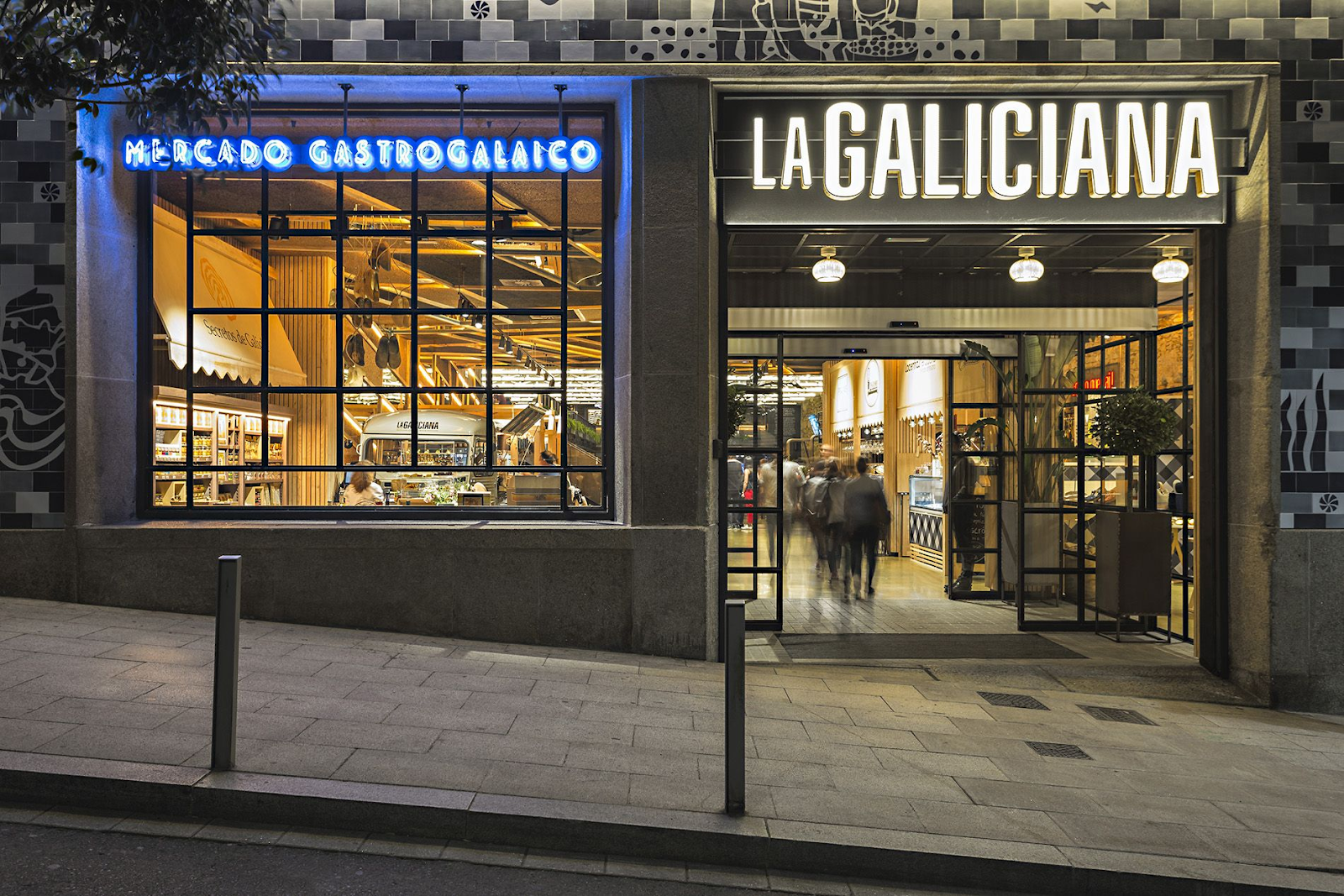
La Galiciana
Discover a one-of-a-kind food space: a market of more than 1,200 m² set in a restored industrial building over 60 years old. Enjoy two floors with 16 stalls that offer a wide range of culinary proposals for every taste.
Forget arguing about where to eat: this market is the perfect solution for groups with different preferences. From traditional Galician dishes to more innovative options, you will find the ideal pick for every palate here.
One tip: do not leave without trying their exquisite cheesecake, one of the market’s signature offerings that will leave an unforgettable taste in your mouth.
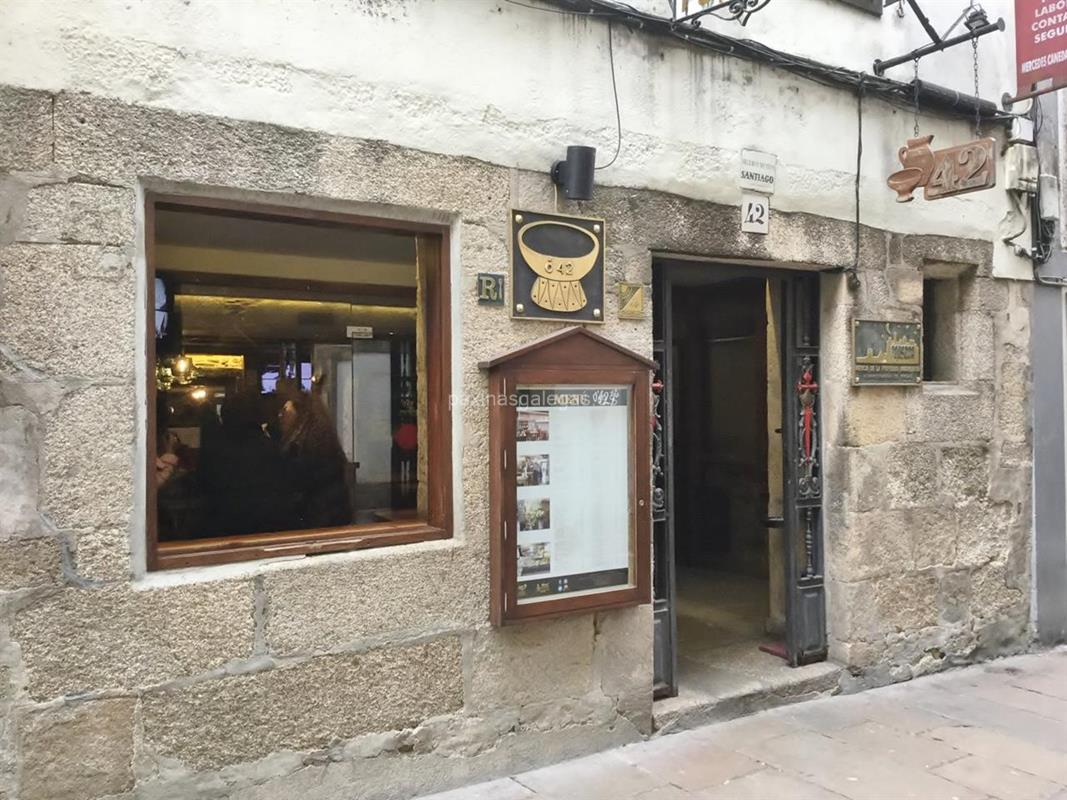
O 42
Love seafood? Mesón Restaurante O’42 is your spot in Santiago de Compostela. Enjoy fresh, top-quality produce with a range of options that will win you over.
Beyond seafood: let yourself be surprised by their exquisite octopus, considered one of the best in town. And if you are after traditional flavours, do not miss their cod, a house speciality you will love.
Options for everyone: choose between à la carte or the affordable daily set menu.
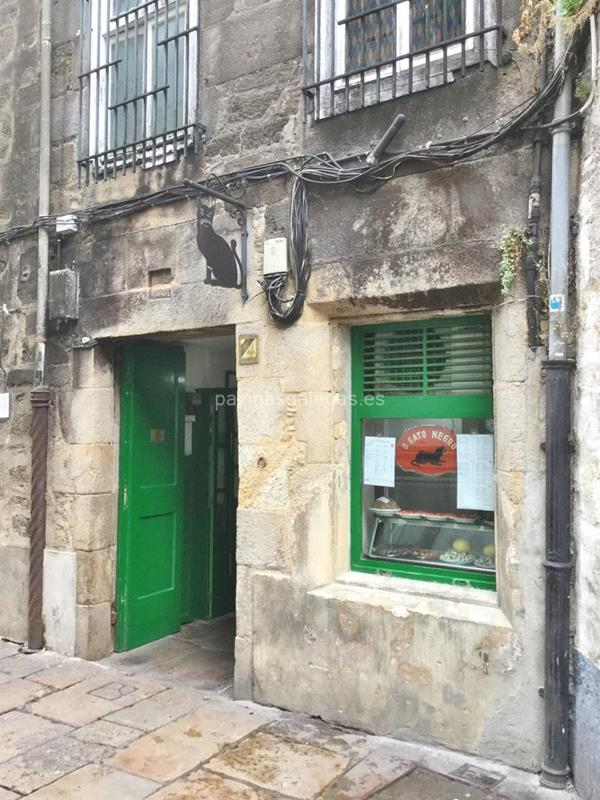
Taberna O Gato Negro
If you are looking for an authentic, well-priced experience, O Gato Negro is your spot for seafood in Santiago de Compostela. Located on one of the back streets behind the Cathedral, this traditional restaurant offers a family atmosphere and a wide variety of fresh shellfish.
Beyond seafood: do not miss their delicious sardines, a house speciality you will love. O Gato Negro is a charming corner that will win you over with its traditional flavour and excellent value for money.
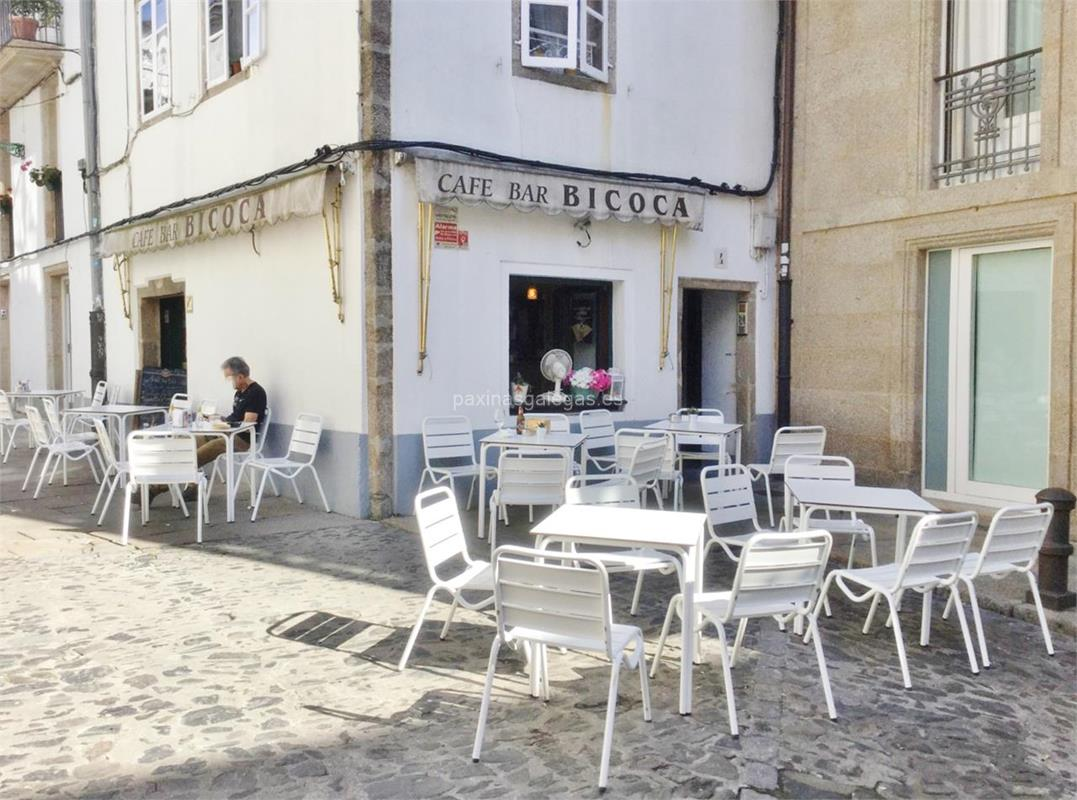
Bicoca
Looking for a full dining experience without breaking the bank? El Bicoca is your spot in Santiago de Compostela. This cosy restaurant offers a wide variety of dishes made with fresh, quality ingredients.
A charming setting: let yourself be wrapped in the warm atmosphere created by its rustic décor. El Bicoca is the perfect place to enjoy a lunch or dinner with family or friends.
Options for everyone: its varied menu has something for every taste, from traditional Galician dishes to more innovative options. And if you are after a more budget-friendly choice, do not miss their daily menu at an incredibly accessible price.
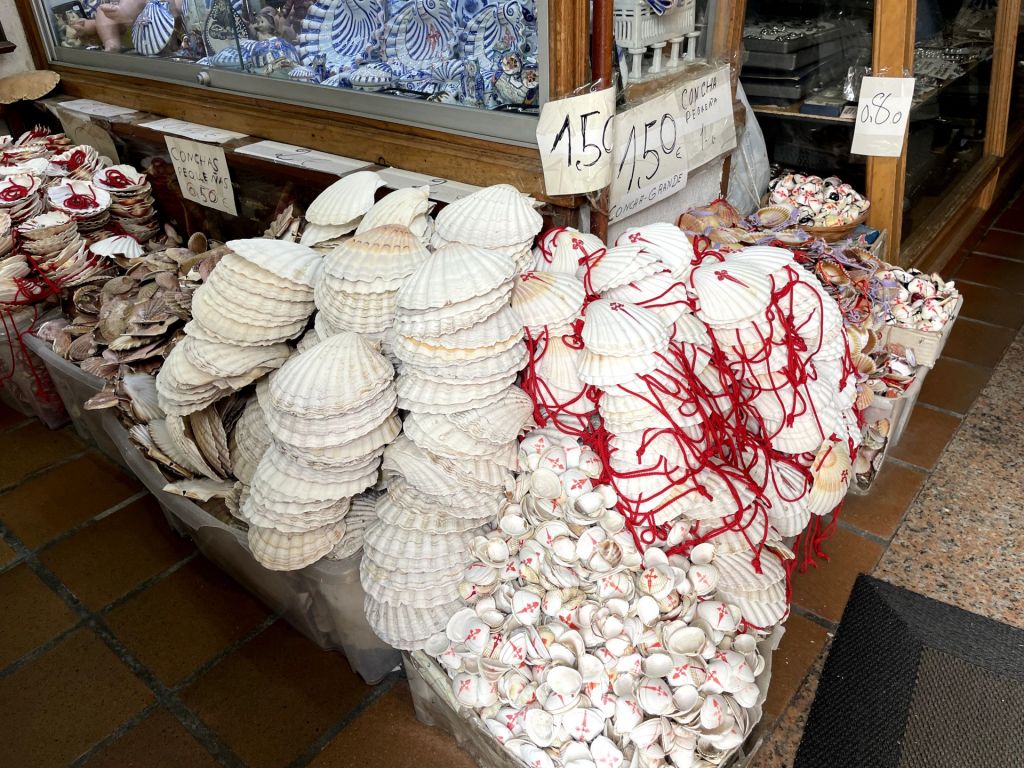
Pilgrim’s scallop shell
A living emblem: today, the scallop shell remains an inseparable icon of the Camino, adorning walking sticks, backpacks and even clothing. Many pilgrims choose to buy one along the way, carrying a symbol of their adventure and commitment.
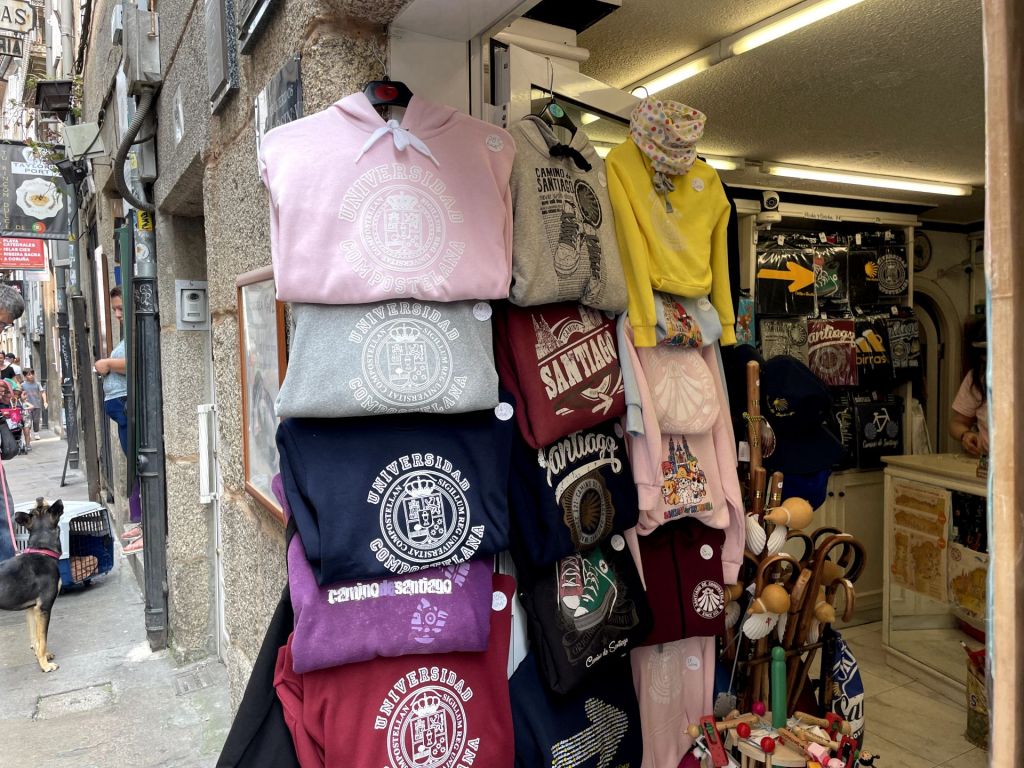
Camino de Santiago T-shirts
The scallop shell did not only serve as identification; it also represented St James’s protection, the pilgrim’s strength and endurance during the journey, and the faith that drove them to reach their destination.
The T-shirts are usually printed with Camino symbols, such as the yellow arrow, the scallop shell or the famous logo of the route. These elements are not merely decorative; they also evoke unforgettable emotions and memories of the journey.
T-shirts are, without a doubt, one of the most popular keepsakes of the Camino de Santiago. They become a tangible witness of the experience lived, a canvas where the essence of the Jacobean route is captured.
Patches are a popular way to personalise your backpack on the Camino de Santiago. Their designs, all linked to the route, let you express your love for the Camino and share your story.
Collect memories: many people buy a patch at each stage, building a mosaic of their journey. Others prefer to take one at the end as a reminder of the goal reached.
More than ornament: patches are a tangible witness to your adventure and a way of keeping the memory of the Camino alive.

Magnets
Magnets are a popular choice among travellers who want a small reminder of every place they visit. In the case of the Camino, they tend to depict the Cathedral of Santiago de Compostela and the famous image of the Apostle Saint James.
These magnets are a way of remembering the passage through Compostela and can be displayed easily on the fridge or other metal surfaces.
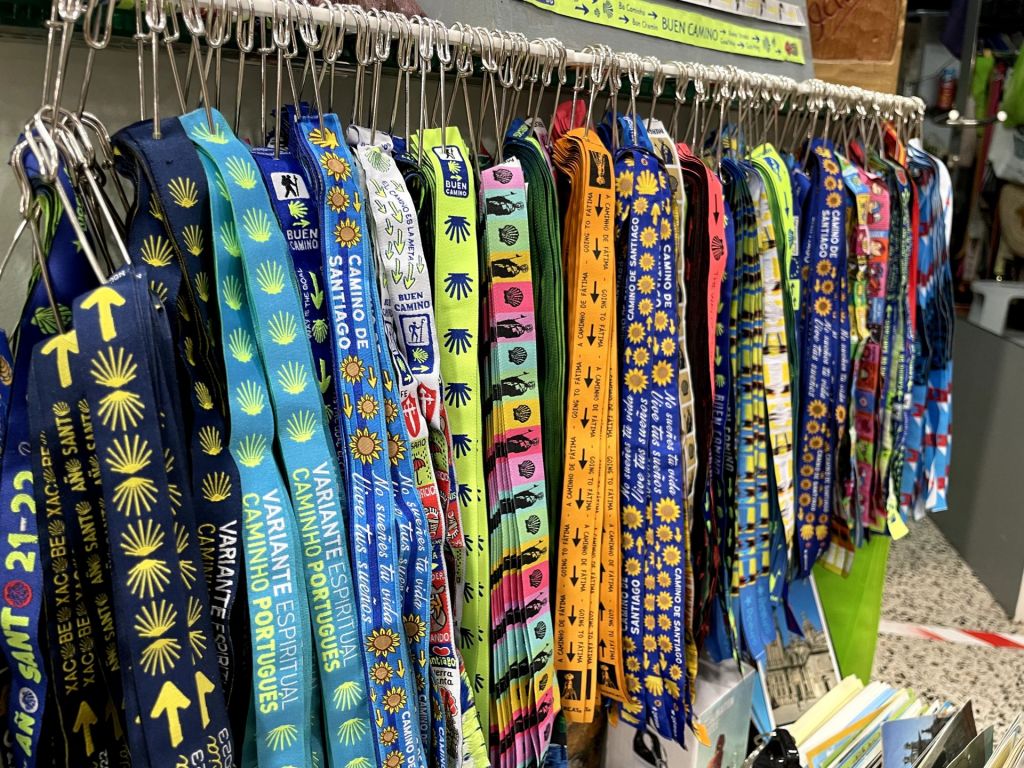
Fabric bracelets are accessories you can find all along the Camino, but most of all in Santiago, where they fill every shop. They tend to come in vibrant colours and to be decorated with the pilgrim’s scallop, the yellow arrow and uplifting messages of resilience.
They are a very common keepsake among younger travellers and among those who walk the route in a group, since the bracelet stands for the bond built along the Camino.
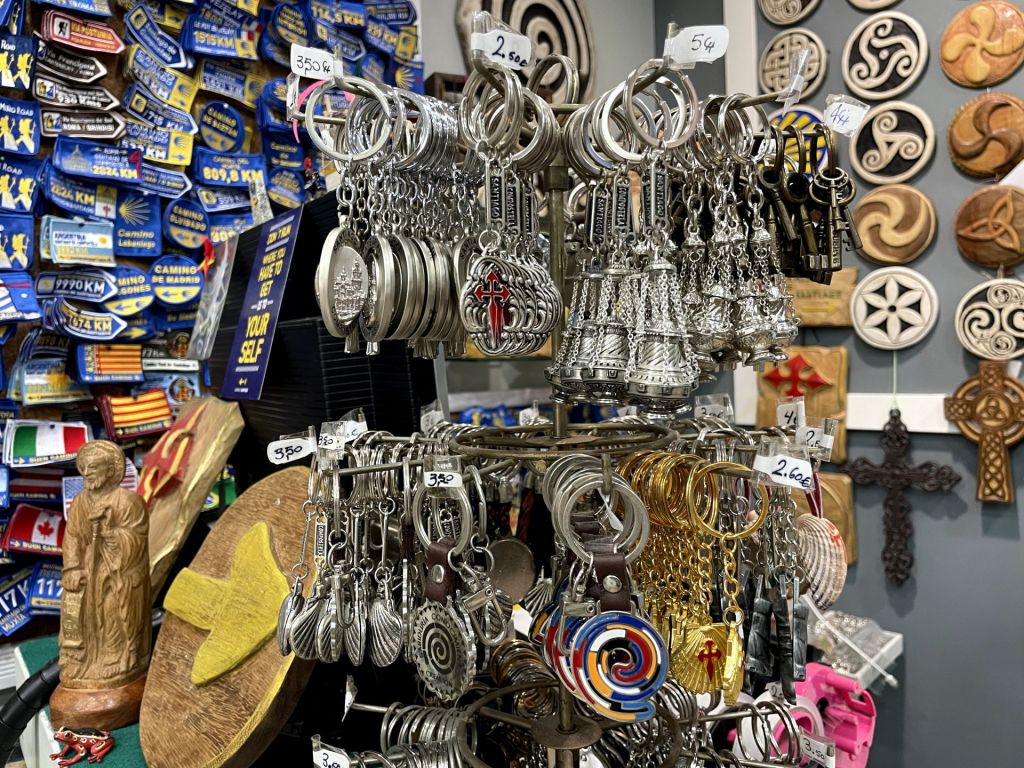
Keyrings can be found in nearly every tourist destination, and the Camino de Santiago is no exception. The Camino keyrings often feature iconic images such as the pilgrim’s scallop, the yellow arrow or the Cathedral of Santiago.
They are a practical and symbolic way to carry a piece of this experience with you and see it every day, whether on your keys or as an ornament on your backpack.
Really, they are meigas. We are told that they come from our Celtic past and were the wise women, the healers, those who held knowledge. We are also told that, over time, they were demonised. Today they are a symbol of good fortune.
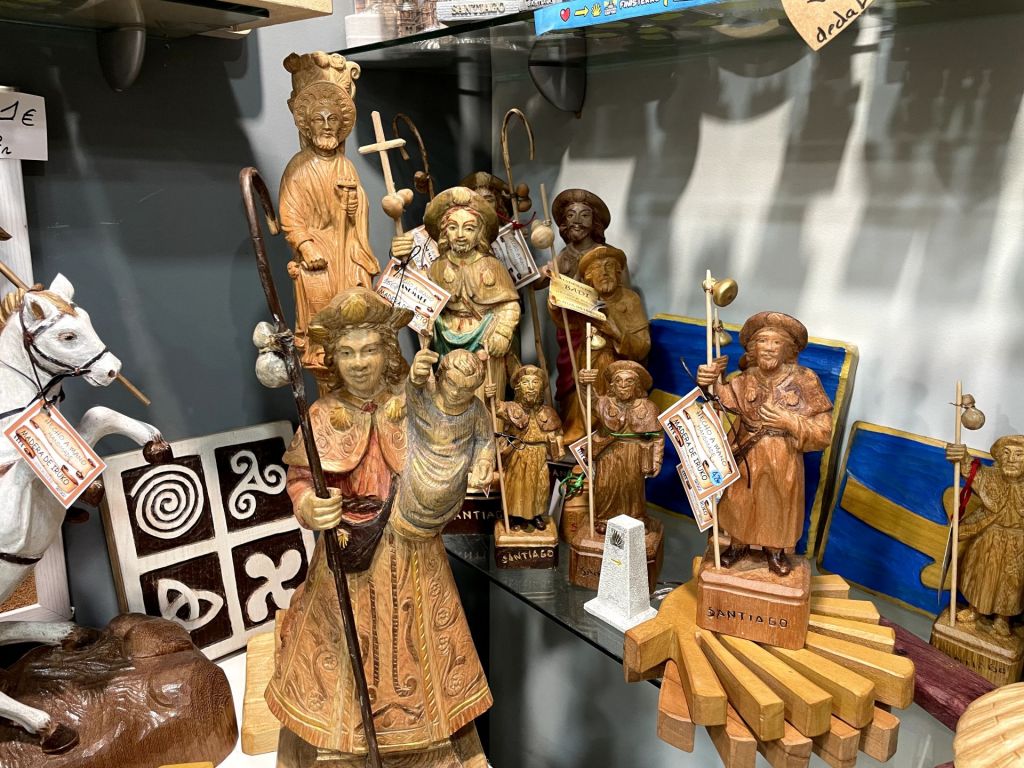
Given the spiritual background of the Camino de Santiago, religious figures are a special souvenir for many pilgrims, and faith is one of the reasons that draws most people to the route.
These figures include images of the Apostle Saint James, the Virgin Mary and other saints honoured by Catholics. Some souvenir shops, such as A Rúa Recordos, claim that “they are the best-selling items” and that “some people reserve them through social media before they even arrive in the city”.
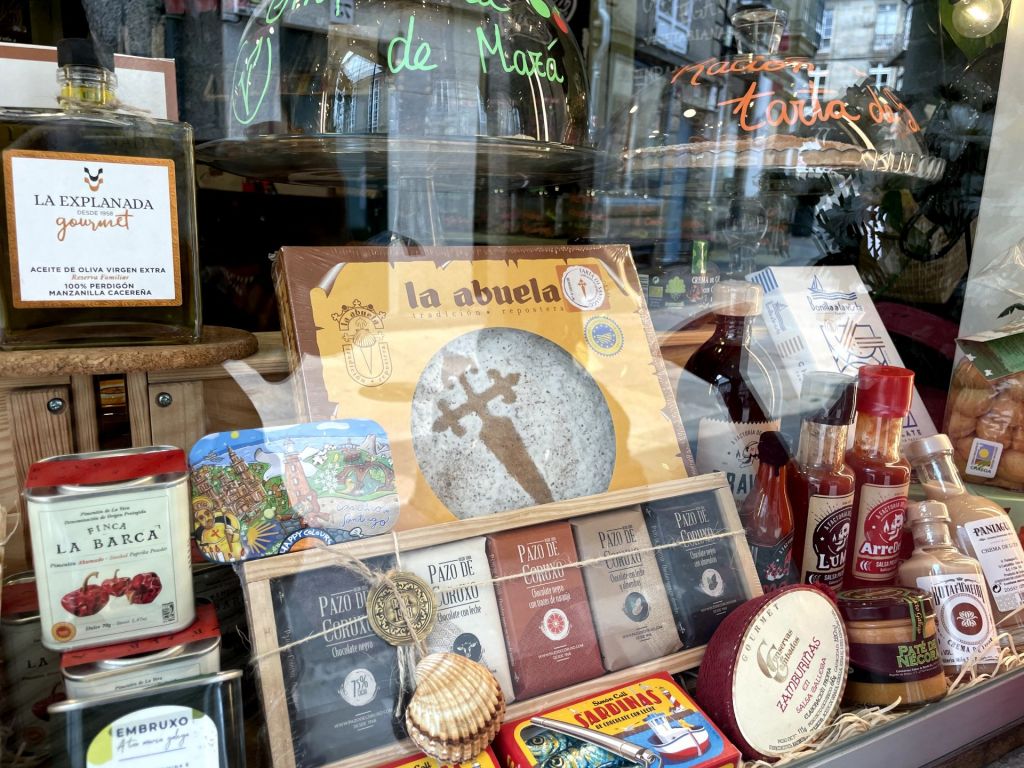
Tarta de Santiago is an iconic dessert that cannot be missing from your list of souvenirs of the Camino. This exquisite almond cake, dusted with icing sugar and decorated with the cross of Saint James, can be found in many of the city’s bakeries and restaurants.
At Tour Galicia we recommend Casal Cotón’s Tarta de Santiago, made with the traditional recipe and quality ingredients. It is, without a doubt, the option any local from Santiago would choose.
The perfect gift: Tarta de Santiago is not only loved for its delicious flavour; it also makes a perfect gift for friends and family. It evokes the unique flavours and aromas of Galician cuisine and leaves a sweet memory of the Camino.

Choose the experience you want, click "Book", select the date and the number of places on the calendar and complete the payment. You will receive instant confirmation by email.
Yes. All our tours have free cancellation up to 24 hours before the activity. After that, please check the conditions of each experience.
Payment is made securely online when you book. For some experiences you can book now and pay later; this will be indicated on the calendar.
Most of our experiences are offered in Spanish and English. Each tour shows its available languages in the "Practical information" section.
Each tour has its own meeting point, shown on the experience page and in the confirmation email. We recommend arriving 10-15 minutes early.
Most of our experiences are for all ages. If you are travelling with young children or need something specific, write to us and we will advise you.
Yes. We organise private and group experiences, including exclusive shore excursions for cruise passengers. Contact us and we will prepare a tailored proposal.
In Galicia the weather is part of the charm. Tours run except in adverse weather conditions; if an activity is cancelled due to force majeure, we offer you a date change or a refund.