

7 Best A Coruña Day Trips Worth Your Time
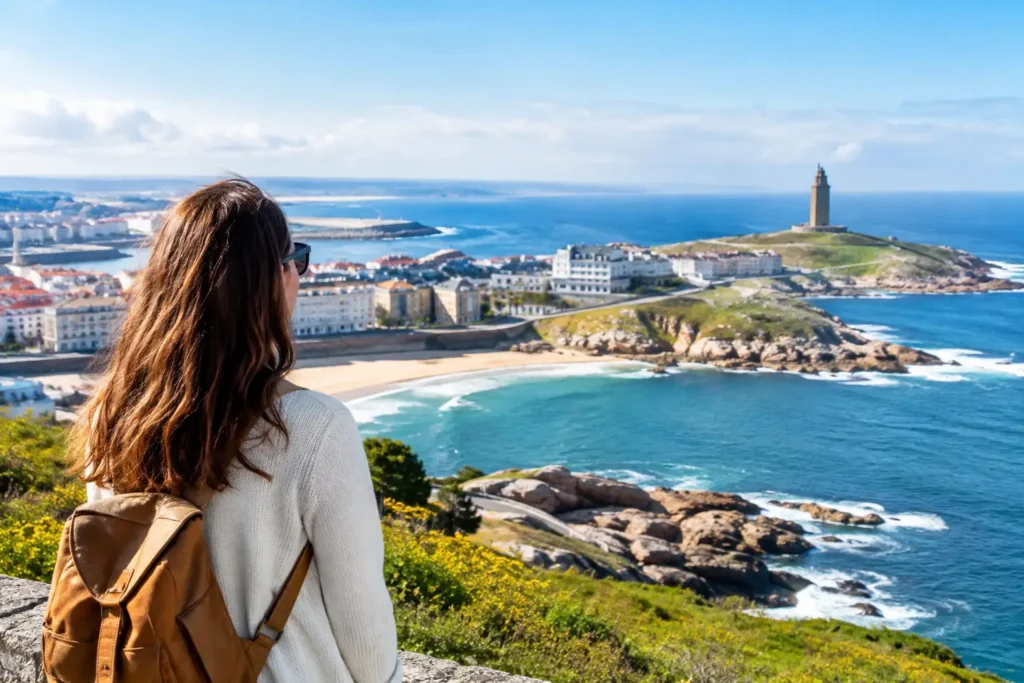
A Coruña makes an excellent base for seeing northern Galicia: the Atlantic is at your doorstep, medieval towns are close by, and Santiago de Compostela is an easy day away. The best A Coruña day trips depend on what you want most from the day - dramatic coastline, historic streets, local food, or a landmark destination without the pressure of driving unfamiliar roads.
For visitors with one or two free days, the smartest choice is not always the furthest one. A short trip to Betanzos can be every bit as memorable as a full-day route to Costa da Morte, especially if you prefer a relaxed pace. Here are seven worthwhile options, with the practical details that help you choose.
1. Betanzos for medieval streets and its famous tortilla
Just inland from A Coruña, Betanzos is one of the easiest and most rewarding half-day trips. Its compact historic center is built for wandering: arcaded squares, old churches, stone houses with glazed galleries, and steep streets that lead toward views of the Mandeo and Mendo rivers.
The town is particularly known for its tortilla de Betanzos, traditionally made with a very soft, almost liquid center. If food is part of your travel plan, this is reason enough to go. Pair it with time in the old town and a stroll through the Parque del Pasatiempo, a distinctive historic garden created with sculptures, fountains, and references to places around the world.
Betanzos works well for couples, families, and cruise passengers with limited time in port. It is close enough to combine with a visit to Pontedeume or the Fragas do Eume area, although adding both makes for a fuller day.
2. Santiago de Compostela for history, atmosphere, and food
Santiago is the classic choice and one of the best A Coruña day trips for first-time visitors to Galicia. The journey is manageable by public transportation or organized excursion, and the reward is a city with far more to offer than its famous cathedral.
Start in Praza do Obradoiro, where the cathedral’s grand façade faces the city’s most important historic buildings. From there, the old town unfolds through narrow granite lanes, lively markets, traditional taverns, and quiet corners that still feel shaped by centuries of pilgrims arriving on foot.
Allow time beyond the cathedral itself. The Mercado de Abastos is a good stop for Galician products, while parks and viewpoints around the historic center offer a calmer perspective on the city. Santiago can be busy, especially in summer and around major religious dates, so an early departure from A Coruña makes a real difference.
This is an especially good option if you want culture, architecture, and a strong dining scene in one day. Travelers who prefer nature and open landscapes may find Costa da Morte or Fragas do Eume a better fit.
3. Fragas do Eume and Pontedeume for Galicia’s green side
The Fragas do Eume Natural Park offers a different Galicia: dense Atlantic forest, riverside trails, moss-covered stone, and a sense of quiet that feels far from the city. It is one of the region’s most beautiful natural areas, particularly in spring and fall, when the forest is lush and temperatures are pleasant for walking.
A visit often begins in Pontedeume, a handsome riverside town with a long bridge, a historic center, and plenty of places to stop for coffee or lunch. From there, the park lies inland. The best-known landmark is the Monastery of Caaveiro, set within the forest and reached by walking routes that vary in length and difficulty.
This day trip requires more planning than Betanzos or Santiago. Access rules, parking arrangements, and shuttle services can change seasonally, while trail conditions depend on weather. If you do not have a rental car, an organized route is often the simplest way to enjoy the area without spending the day coordinating connections.
Wear shoes with good grip, bring water, and choose this trip for its scenery rather than a packed sightseeing schedule.
4. Costa da Morte for lighthouses and Atlantic drama
For travelers who picture Galicia as cliffs, crashing waves, fishing villages, and wide-open skies, Costa da Morte is the day trip to prioritize. The name, meaning Coast of Death, reflects the area’s difficult maritime history, but the experience is not gloomy. It is raw, beautiful, and deeply connected to the sea.
A full-day route can include places such as Malpica, Ponteceso, Laxe, Muxía, or Cape Finisterre, depending on the itinerary. The most satisfying trips do not try to stop everywhere. This coastline deserves time to stand at a viewpoint, watch the water, and understand why its lighthouses and small harbors have such a strong place in Galician identity.
Finisterre is often the headline stop. For many Camino travelers, it represents the symbolic end of their journey, while for everyone else it is a remarkable Atlantic headland. Muxía offers another powerful coastal setting, with the Sanctuary of Virxe da Barca beside the sea.
This is a long day from A Coruña, so it is best for travelers comfortable with several hours on the road. In return, you see landscapes that are difficult to reach by public transportation and easy to miss when driving without local knowledge. Weather can change quickly here, so bring a windproof layer even in summer.
5. Lugo for Roman walls you can walk
Lugo is the right choice for history lovers who want something distinct from Santiago. Its Roman wall completely surrounds the old city and is recognized as a UNESCO World Heritage Site. More importantly, it is not a monument to view from a distance: you can walk along the top for a complete circuit and look down over streets, rooftops, and parks.
Inside the walls, Lugo has a compact center with the cathedral, Roman remains, plazas, and a strong local bar culture. The city is also known for its tapas tradition, making lunch part of the experience rather than a quick pause between sights.
The trip from A Coruña takes longer than Betanzos or Pontedeume, but it is straightforward enough for a full day. Choose Lugo when you want an urban destination with a clear historical focus and a relaxed Galician rhythm. It is less about dramatic scenery and more about walking through layers of Roman, medieval, and contemporary life.
6. Ribadeo and As Catedrais Beach for a tidal spectacle
As Catedrais Beach, also called the Beach of the Cathedrals, is one of Galicia’s most photographed landscapes. At low tide, visitors can walk between enormous rock arches, caves, and pillars shaped by the Cantabrian Sea. At high tide, much of that route disappears, which is why timing is essential.
The beach is near Ribadeo, a pleasant town at the edge of Galicia close to the Asturian border. A full-day trip can combine the beach with time in Ribadeo’s center and views over the estuary. It is a long drive from A Coruña, but it is worthwhile for travelers who have a full day available and want to see a coastal landscape unlike Costa da Morte.
Check the tide schedule before committing to the plan. Visitor access may also require advance arrangements during busier periods. This is not a destination to approach casually: arriving at the wrong time means missing the walk beneath the arches. Organized transportation can remove that uncertainty and keep the day focused on the scenery.
7. Ferrol and the northern estuaries for naval history
Ferrol is often overlooked, which is precisely part of its appeal. Its connection to Spain’s naval history is visible in its grand military architecture, planned streets, and waterfront setting. The nearby area also gives you access to the quieter landscapes of the northern rías, with beaches, lookouts, and traditional towns.
For architecture and urban history, Ferrol’s La Magdalena neighborhood is a highlight, with its orderly grid and elegant façades. Travelers interested in the Camino can also see the beginning of the English Way, which starts from the city and heads toward Santiago.
Ferrol is closer and less demanding than a full Costa da Morte itinerary, making it a sensible option for visitors who have already seen A Coruña’s coastal promenade and want another side of the province. It is also a good choice on a day when you want flexibility rather than a fixed all-day schedule.
How to choose among the best A Coruña day trips
Choose Betanzos or Ferrol for an easy, shorter outing. Pick Santiago de Compostela for a must-see city with major heritage, and Lugo for Roman history and a slower local atmosphere. Go to Fragas do Eume when forest walks matter more than museums. Reserve Costa da Morte or Ribadeo and As Catedrais Beach for a full day when you are happy to trade extra travel time for standout coastal scenery.
Public transportation can work for Santiago, Betanzos, Lugo, and Ferrol, but connections become less practical for rural parks, remote beaches, and the lighthouse route along Costa da Morte. A guided excursion with local guides is particularly useful on those longer days, when timing, road logistics, and the best stops shape the experience as much as the destination itself.
If you are visiting on a cruise stop, stay realistic about the time available. A nearby town or a focused city visit is usually more rewarding than trying to reach the far coast and returning rushed. Tour Galicia can help travelers choose an itinerary designed around available time, including organized transport and a punctual return.
Galicia rewards unhurried travel. Pick the route that leaves room for a long lunch, an unexpected viewpoint, or a conversation with someone who knows the place - those are often the moments you remember most.
Explore day trips from A Coruña
Compare guided experiences to Costa da Morte and Cathedrals Beach, with departures designed for visitors staying in A Coruña.