

Best Day Trip From Santiago to Finisterre
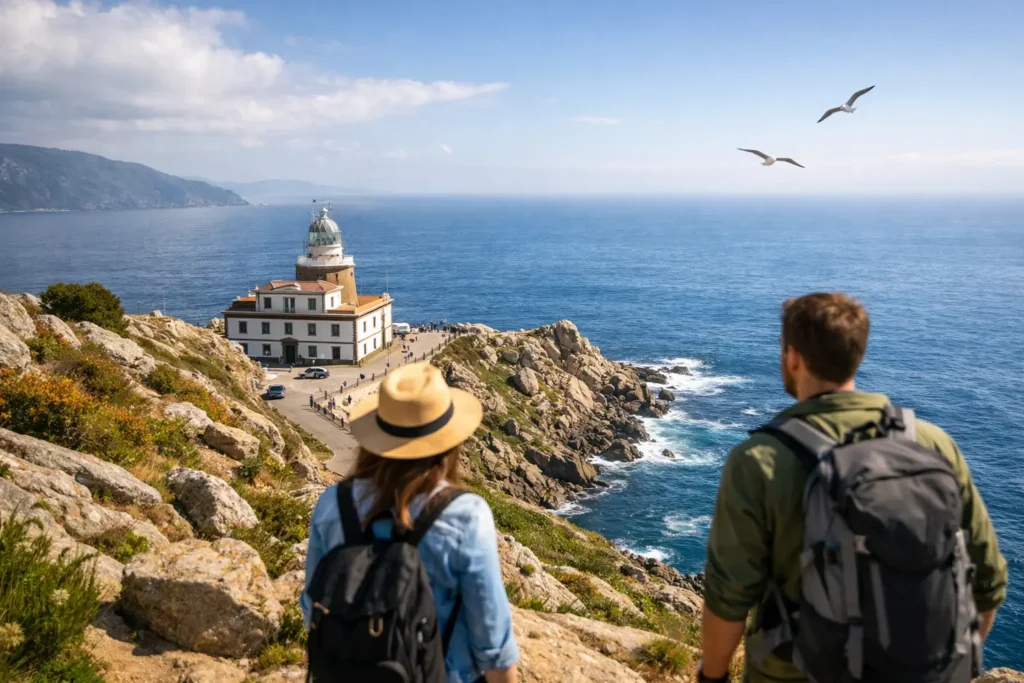
Finisterre is not a place to rush through. The best day trip from Santiago to Finisterre is one that leaves room for the changing character of Galicia: green inland valleys, granite villages, Atlantic beaches, fishing harbors, and finally the wide horizon at Cape Finisterre. This is a full-day journey of scenery and stories, not simply a transfer to a lighthouse.
For travelers staying in Santiago de Compostela, a guided Costa da Morte excursion is often the most comfortable way to experience it. The coast is spectacular, but its highlights are spread out, rural roads take time, and parking can be limited in popular areas. With transport and an official local guide organized in advance, you can focus on the landscape and arrive back in Santiago without a long drive after sunset.
Why Finisterre deserves a full day
For centuries, Finisterre was understood as the end of the known world. Its name comes from the Latin finis terrae, meaning “end of the earth.” While the westernmost point of mainland Spain is nearby at Cape Touriñán, Cape Finisterre carries a special cultural pull, particularly for pilgrims who continue beyond Santiago after completing the Camino.
The appeal is not only symbolic. At the cape, steep cliffs meet the Atlantic, and the lighthouse looks out over a sea that can appear calm, silver, dark blue, or fiercely windswept within a single afternoon. It is a powerful final image after days on the Camino, but it is equally rewarding for travelers who have never walked a single stage.
A day trip also introduces the broader Costa da Morte, the shoreline northwest of Santiago whose name recalls the many historic shipwrecks caused by its exposed waters and rocky coast. The name sounds dramatic because the coast is dramatic. Yet this is also a living region of seafood restaurants, small ports, working fishing boats, and communities shaped by the ocean.
What the best day trip from Santiago to Finisterre includes
The strongest itineraries combine Finisterre with meaningful stops along the Costa da Morte rather than treating the cape as the only destination. A well-planned route usually balances natural viewpoints, local heritage, and time to enjoy the coast without spending the whole day getting on and off the bus.
Ézaro Waterfall and the Xallas River
One of the region’s most distinctive sights is Ézaro Waterfall, where the Xallas River reaches the sea. It is unusual to find a river descending so close to the Atlantic, and the surrounding granite landscape makes the stop especially photogenic. Conditions vary with the season and water flow, but it remains a memorable contrast to the open coastal views that follow.
Muros or another traditional coastal town
Depending on the route, a stop in a historic town such as Muros adds a more human side to the day. Arcaded streets, stone houses, small harbors, and boats at anchor show how closely daily life here remains tied to the water. This is often the best moment for a relaxed lunch or coffee, especially if you want to try local seafood.
Do not expect a large resort atmosphere. The charm lies in the scale: narrow streets, sea air, and the feeling that the town belongs to its residents as much as to visitors.
Carnota Beach and the coastal landscape
Carnota is known for its long beach, open dunes, and broad views toward the Atlantic. Even travelers who do not plan to swim appreciate the sense of space. Galicia’s weather can change quickly, so this stop is beautiful in sunshine, cloud, or mist. Bring a light waterproof layer rather than saving your enjoyment for a perfect forecast.
Nearby, the traditional stone granaries, known as hórreos, offer another glimpse of rural Galicia. These raised structures were designed to store grain while protecting it from damp and animals. They are a small detail, but they help explain the agricultural history that exists alongside the coast.
Cape Finisterre and its lighthouse
Cape Finisterre is the emotional high point of the excursion. Most visitors want time to walk around the lighthouse area, take in the cliffside views, and photograph the kilometer-zero marker associated with the Camino. The wind can be strong at any time of year, and the ground may be uneven, so comfortable closed-toe shoes are a better choice than sandals.
Sunset is often mentioned when people imagine Finisterre, and it can be extraordinary. But a day trip from Santiago should not be judged only by whether it reaches the cape at sunset. In winter, the days are shorter; in summer, returning after sunset makes for a very late arrival. A good excursion prioritizes safe timing and enough time at the cape, whatever the season.
Guided tour or rental car: which is better?
Both options can work, and the right choice depends on how you like to travel. A rental car gives you the freedom to linger at a beach, choose a restaurant, or follow a detour that catches your eye. It is a good fit for confident drivers who are comfortable navigating rural roads and who want to turn the trip into an overnight stay.
For a single day from Santiago, however, a guided tour is usually the more efficient choice. You avoid collecting a car, studying routes, searching for parking, and designating a driver. More importantly, you travel with someone who can put the places into context: why the Costa da Morte has its name, how fishing communities developed, and what makes a quiet stone village worth noticing.
Tour Galicia organizes full-day excursions from Santiago with local guides and coordinated transport, making the route easier for independent travelers, couples, families, and groups of friends. It is especially practical if you want to see several stops in one day without turning your vacation into a logistics project.
How to prepare for the day
The journey from Santiago to the coast is long enough to make a little preparation worthwhile. Plan for an early departure and a full day away from the city. Exact duration and stop order can vary by season, road conditions, and the itinerary selected, so check those practical details before booking rather than assuming every excursion follows the same route.
Dress in layers. Even on a warm day in Santiago, Cape Finisterre can feel noticeably cooler and windier. A light rain jacket, comfortable walking shoes, sunglasses, water, and a small snack are sensible additions. If you are prone to motion sickness, consider bringing what you normally use for coach travel, since the route includes coastal and rural roads.
Lunch arrangements also deserve attention. Some tours build in free time at a suitable stop, while others use a more structured schedule. If food is a priority, ask whether there will be time to sit down for a meal. If you simply want to make the most of the stops, carrying a snack can keep the day flexible.
The best time to visit Finisterre
Spring and early fall are excellent for travelers who prefer milder temperatures and fewer crowds. The countryside is green, the coast feels fresh, and sightseeing is generally comfortable. Summer brings longer days and a livelier atmosphere, but popular stops can be busier and the weather is not guaranteed to be hot. This is Atlantic Galicia, not the Mediterranean.
Winter offers a quieter, moodier version of the Costa da Morte. Dramatic skies and powerful waves can be unforgettable, though daylight is limited and conditions may affect the pace of the route. If you visit then, choose an organized excursion with clear cancellation terms and dress for wind and rain.
Make the journey part of your Santiago stay
Finisterre is often described as the final chapter after Santiago, particularly for Camino travelers. That is true, but it can also be the day that broadens a city break. Santiago offers cathedral towers, historic squares, and centuries of pilgrimage. The Costa da Morte adds salt air, open space, and a different rhythm of life.
Leave with realistic expectations: this is not a quick beach break, and it is not a checklist of viewpoints. It is a long, rewarding day through a part of Galicia best understood with someone who knows it. Bring a jacket, keep your schedule open, and let the Atlantic have the final word.