

Finisterre versus Rias Baixas Route Compared
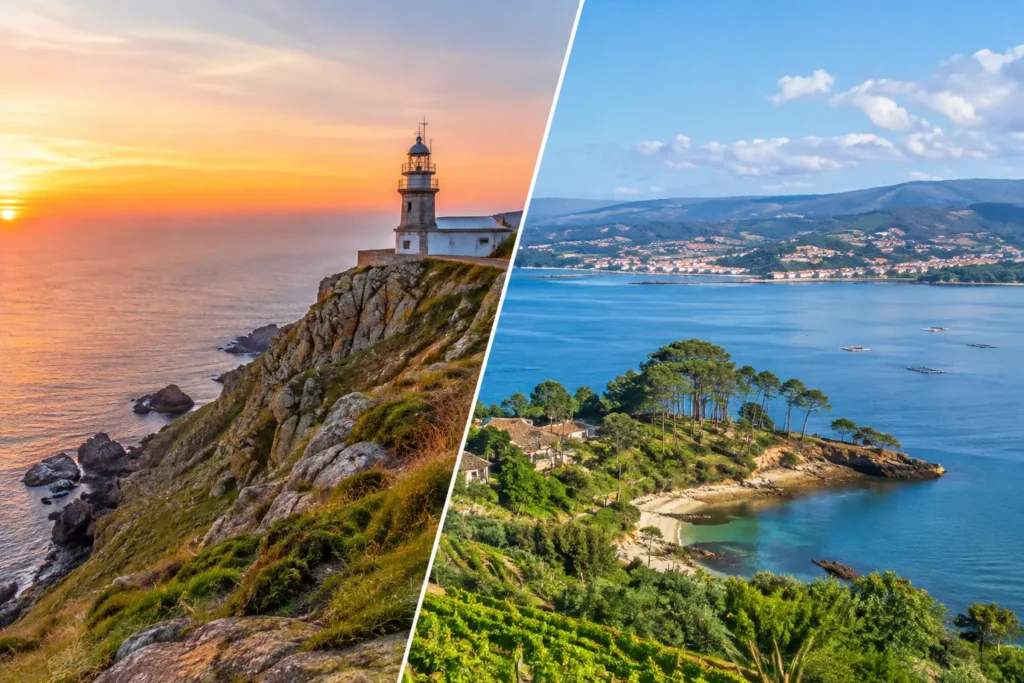
A day in Galicia can take you to the end of the old known world or into a landscape shaped by estuaries, vineyards, and island views. Choosing the Finisterre versus Rias Baixas route is less about which trip is better and more about the kind of day you want: wild Atlantic drama or a relaxed introduction to coastal Galicia.
Both routes are excellent choices from Santiago de Compostela, particularly if you want to see far beyond the city without driving, studying rural roads, or coordinating several stops. The right choice comes down to scenery, pace, interests, and the time you have in Galicia.
Finisterre versus Rias Baixas route: the main difference
The Finisterre and Costa da Morte route heads west toward Galicia's most powerful Atlantic landscapes. It is a day of granite headlands, fishing villages, waterfalls, beaches, and the lighthouse at Cape Finisterre. The coast feels open, dramatic, and at times wonderfully remote.
The Rias Baixas route usually travels south from Santiago through a softer coastal region of sheltered inlets known as rías. Expect a varied day that may include the historic town of Pontevedra, Combarro's traditional waterfront granaries, the island setting of A Toxa, O Grove, and viewpoints over the Arousa estuary. It combines culture, coastal scenery, and the food traditions for which this part of Galicia is known.
In simple terms, choose Finisterre when you picture waves crashing below a lighthouse and want a classic Atlantic road trip. Choose Rias Baixas when you want picturesque villages, estuary views, local heritage, and a more Mediterranean-feeling side of Galicia.
Choose Finisterre for the Costa da Morte experience
Finisterre has a special pull for many visitors to Santiago. For centuries, travelers believed this rugged promontory marked the western edge of the world. It is also the symbolic final destination for many Camino de Santiago walkers, who continue beyond the cathedral to reach the ocean.
A full-day route to Finisterre is ideal if you enjoy big landscapes and places with a strong sense of story. The journey itself matters as much as the final stop. Depending on the itinerary and conditions, the day can include coastal villages such as Muxía, the Ézaro Waterfall, panoramic viewpoints, and time around Cape Finisterre's lighthouse.
What the day feels like
This is the more atmospheric of the two trips. The Atlantic is not background scenery here. It defines the route, from the weathered rocks to the working harbors and the long horizons. On a clear day, the views can feel immense. In mist, wind, or light rain, the Costa da Morte has a mood all its own.
The trade-off is that it is a longer, more road-focused day. The distances from Santiago are significant, and the route generally includes several scenic stops rather than extended time in one town. It suits travelers who are happy to spend time on the bus in exchange for reaching places that are difficult to visit independently without a car.
Finisterre is best for you if...
Choose this route if the lighthouse is high on your Galicia wish list, if you are finishing or following the story of the Camino, or if you prefer dramatic nature over urban sightseeing. It is also an excellent choice for photographers and travelers who want to understand why the Costa da Morte has such a legendary reputation.
Families can enjoy the route too, especially with children who like beaches, waterfalls, boats, and wide-open views. Just keep the overall duration in mind. For travelers who dislike winding roads or prefer a slower day with more cafés and town time, Rias Baixas may feel more comfortable.
Choose Rias Baixas for villages, estuaries, and local flavor
Rias Baixas reveals another character of Galicia. Instead of an exposed ocean coast, this region is shaped by calm rías where freshwater meets the Atlantic. These sheltered waters support shellfish beds, fishing ports, and a food culture centered on seafood and Albariño wine.
It is a strong option for first-time visitors who want variety in one day. A typical route can bring together a historic old town, a fishing village, coastal viewpoints, and time in O Grove or A Toxa. The stops are distinct, so the day moves naturally between architecture, traditions, and landscape.
What the day feels like
Rias Baixas is generally the more leisurely and social route. Combarro, with its stone houses and hórreos - traditional raised granaries - near the water, is especially memorable for travelers interested in local architecture. Pontevedra adds a walkable historic center, while A Toxa and O Grove bring a resort and maritime atmosphere.
The scenery is still coastal, but it is gentler than Finisterre. Think marinas, low hills, boats on the estuary, and sandy shorelines rather than cliffs facing the full Atlantic. That makes it a good choice for couples, groups of friends, and visitors who want time for a relaxed lunch or to sample regional products.
Rias Baixas is best for you if...
Pick Rias Baixas if you enjoy combining sightseeing with gastronomy, want to visit charming towns, or prefer a route with less emphasis on remote landscapes. It is particularly appealing in spring and summer, when the estuaries, terraces, and coastal promenades invite a slower pace.
It can also be the better choice for repeat visitors to Santiago who have already seen Finisterre, or for travelers with limited time who want to understand Galicia beyond its pilgrimage heritage. Although wine and seafood are part of the region's identity, you do not need to be a foodie to enjoy the route. The villages and views carry the day on their own.
Scenery, culture, and pace at a glance
Finisterre offers the strongest sense of a destination: you travel toward a famous cape and arrive at a place that feels like an ending. The route is more about the elemental beauty of the Costa da Morte, with culture appearing through fishing communities, pilgrimage traditions, and local legends.
Rias Baixas offers more variety between stops. You may walk through stone lanes, see traditional granaries, look across an estuary, and visit places associated with Galicia's seafood culture in the same day. It feels less like a journey to one final point and more like an introduction to a whole coastal region.
Weather is worth considering, although neither route should be chosen only for a perfect forecast. Finisterre is spectacular under changing skies, but wind, fog, and rain can affect visibility at exposed viewpoints. Rias Baixas also looks beautiful in mixed weather, and its towns offer more opportunities to enjoy the day between outdoor stops.
Practical advice when booking from Santiago
Both are full-day excursions, so book the route that matches your priorities rather than trying to fit both into a rushed itinerary. If you have at least three nights in Santiago, doing one coastal day trip and reserving another day for the city or a different region creates a more balanced visit.
Bring layers for either route. Galicia's coast can be cooler and windier than Santiago, even in summer. Comfortable walking shoes are useful for uneven stone streets in Combarro, paths near viewpoints, and short walks around the lighthouse area. A light rain jacket is often more practical than an umbrella on the exposed Costa da Morte.
For international visitors, a guided excursion removes a common planning challenge: many of the most scenic stops are spread across rural areas with limited direct public transportation. With local guides, coordinated transportation, and a clear meeting point in Santiago, you can focus on the coast rather than maps, parking, or driving back after a long day. Tour Galicia organizes both routes with guides who know the places behind the views.
If you can only choose one
Choose Finisterre if Galicia, for you, means the Atlantic at its wildest. It is the route for a meaningful lighthouse stop, raw coastal scenery, and the emotional final chapter of the Camino.
Choose Rias Baixas if you want a colorful, varied day that brings together heritage, estuary landscapes, traditional villages, and regional food culture. It is often the easier choice for travelers who value a relaxed rhythm as much as the views.
Whichever route you take, leave room in your plans for surprise. Galicia's most memorable moments are often not the famous stop itself, but a guide's local story, a fishing boat crossing the water, or the first time the coast appears around a bend in the road.
Choose between Finisterre and Rías Baixas
Compare the day trips available from Santiago and select the Atlantic route that best fits your plans.