
The Connection Between the Goose Game and the Way of Saint James
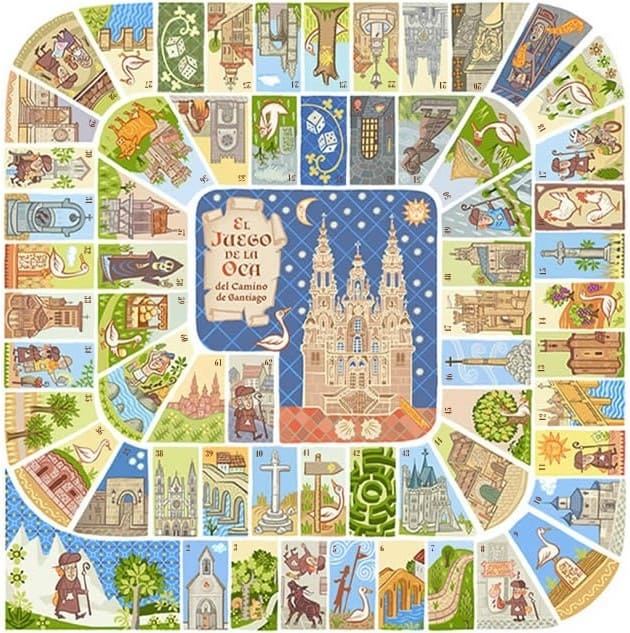
Many of us played this famous game as children, but few know how it came to be. The Goose Game and the Way of Saint James share a close origin. Here's why.
History and connection between the Goose Game and the Camino
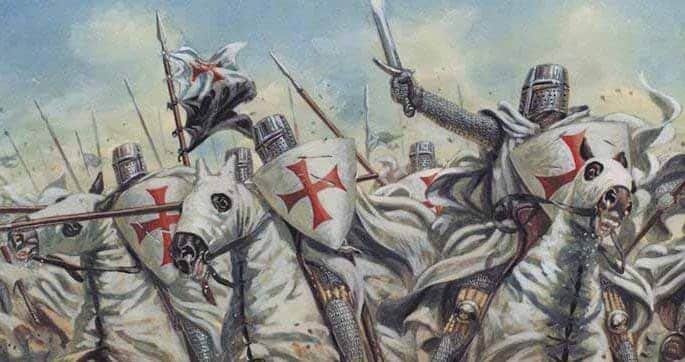
Some theories say the Goose Game was created by the Knights Templar, who protected pilgrims on their way to holy cities like Santiago, Rome or Jerusalem. It's a game from the French Way starting in Somport, beautifully represented on the boards showing the famous stops along the way.
The link is more than obvious. The "Callis Ianus" route between Cape Creus and Touriñán was divided into 63 stages (24 km each), matching the 63 squares of the Goose Game. After the Christianisation of the route, those who knew the original way preserved it as a board game. To ensure pilgrims reached Santiago safely, creators included hazards corresponding to truly difficult places — some in Castile and León.
Examples of squares on the board
You'll find Puente de la Reina in Jaca, Puente de la Reina in Navarre, the Estella bridge, San Marcos Hospital in León (a prison), O Cebreiro (the goose square), Santiago (the dead square) and Finisterre (the final goose).
There are other symbolic spots: La Posada (representing inns), Los Pozos (the inevitable bad days during the pilgrimage), El Laberinto (possible physical losses) and Los Dados (the element of chance — delays and progress).
Why the goose?
The game was originally used as a guide. As most of the population was illiterate, they needed a map with images. The goose was chosen because it's a migratory animal that flies east to west, finally reaching Finisterre. A clear symbol of wisdom, always present in the daily life of Camino inhabitants, who serve as its guardians.
This animal also appears in stop names: Castrojeriz (city of geese), Villafranca Montes de Oca, El Ganso, Ocón, Puerto de Oca, Manjarín (man of geese) and the Arga river.
Curiosities and connection between the Goose Game and the Camino
The number 9 also plays a key role:
- Between each goose square there are 4 or 5 squares (5+4=9).
- The last square (the "Great Goose") is square 63 (6+3=9).
- There were 9 founders of the Knights Templar.
- In tarot, the 9th card is the Pilgrim, who with a staff advances in darkness to find wisdom.
- The designers of the Cathedral of Santiago and its Pórtico de la Gloria built it around the number 9.
What does the game involve?
A spiral board with 63 numbered spaces. Players roll dice and move their piece forward. Each space has an image; depending on where you land, some rules apply (re-roll, return to start, advance a number of spaces…). It's called the "Goose Game" because many spaces have a goose — landing on one means you can roll again.