

How to Visit Costa da Morte From Santiago
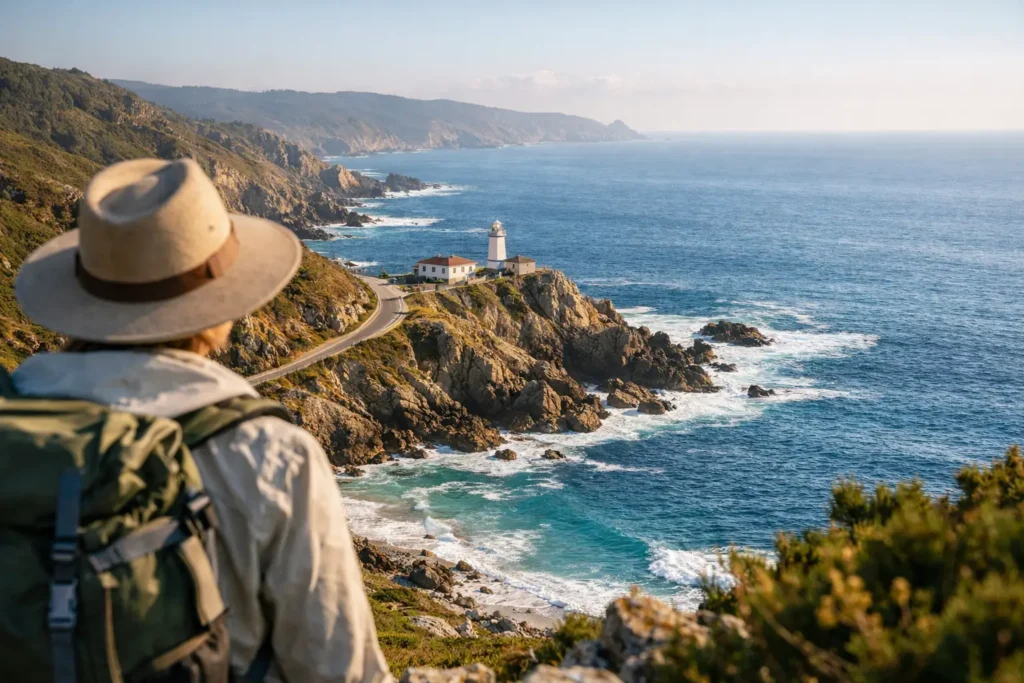
The road west from Santiago de Compostela does not lead to a single destination. It leads through stone villages, estuaries, beaches, and a coastline shaped by Atlantic weather. If you are wondering how to visit Costa da Morte from Santiago, the best choice depends on how much time you have, whether you want to drive, and how comfortable you are planning a long rural route.
Costa da Morte, or Coast of Death, stretches along Galicia’s northwestern Atlantic shore. Its name reflects a long maritime history and difficult waters, but a visit is not about chasing drama. It is about seeing Galicia at its most open and elemental: lighthouses above granite cliffs, fishing towns, broad sandy beaches, and the final landscapes of the Camino at Fisterra.
For most visitors staying in Santiago, this is a full-day experience. It is possible to travel independently, but a guided day trip is often the simplest way to see several meaningful places without spending the day checking road maps, bus schedules, and parking rules.
How to visit Costa da Morte from Santiago in one day
Santiago is around 55 miles from Fisterra, but distance is not the whole story. Roads are generally good, yet much of the route is rural and winding, with frequent stops worth making along the way. A direct drive can take roughly 1 hour and 30 minutes to 2 hours, while a proper Costa da Morte day trip usually takes 9 to 11 hours.
The most practical options are renting a car, joining an organized excursion, or using public transportation. Each has a different advantage.
Drive yourself for maximum flexibility
A rental car gives you freedom to choose your stops, linger at a beach, or have lunch in a small harbor town. It is the best option for travelers who enjoy driving and have enough confidence on unfamiliar roads. It also works well if you plan to stay overnight in Fisterra, Muxía, or another coastal village rather than returning to Santiago the same evening.
The trade-off is that planning matters. You will need to choose a realistic route, allow for road time, find parking in popular towns, and avoid trying to see every landmark in one day. Fog, rain, and wind can slow the journey, particularly outside summer. If you are traveling in July or August, arrive early at major stops and expect busier parking areas.
A strong self-drive route from Santiago includes Ponte Maceira, the fishing town of Muros, Carnota Beach, the Ézaro Waterfall, Cape Fisterra, and Muxía. That is already a full day. Trying to add A Coruña, Rías Baixas, or inland villages to the same itinerary will make the experience feel rushed.
Join a guided excursion for the easiest day trip
For visitors without a car, a day tour from Santiago is usually the most efficient choice. Transport is coordinated, the route is planned around the region’s best-known landscapes, and a local guide provides the history and context that can be easy to miss when traveling independently.
This option is especially useful for couples, families, and international travelers who want to make the most of limited time. Instead of choosing between maps and parking lots, you can focus on the views, local food, and stories behind the places you visit. A well-planned excursion also makes it realistic to combine inland highlights with the coast, then return to Santiago in the evening.
Tour Galicia offers full-day Costa da Morte and Fisterra experiences from Santiago with local guides and organized transportation, a practical fit if you want a clear itinerary and no rental-car logistics. Before booking any tour, confirm the departure point, total duration, included stops, language, and whether meals or entrance fees are included.
Use public transportation only if you can stay overnight
Buses connect Santiago with some towns in the area, including Fisterra, but they are not designed for sightseeing across the coastline in a single day. Services can be limited, schedules vary by season and day of the week, and moving between places such as Ézaro, Carnota, and Muxía is difficult without a car.
Public transportation makes more sense for travelers who want to reach Fisterra and stay one or two nights. From there, you can walk sections of the Camino, enjoy the harbor at a slower pace, and use local taxis for short trips where available. It is not the best approach for a first-time visitor hoping to see the essential Costa da Morte highlights in one day.
The stops that make the journey worthwhile
Costa da Morte is broad, so the right itinerary is selective rather than exhaustive. The following places create a varied and rewarding route from Santiago.
Ponte Maceira
This small historic village is a natural first stop on the way west. Its medieval bridge, riverbank, and old mills offer a quiet contrast to Santiago’s busy streets. It is an easy place to take photographs and get a first sense of rural Galicia, but it does not require a long visit.
Muros and the coastal villages
Muros is one of the most attractive seafaring towns on this side of Galicia. Walk along the waterfront, notice the traditional stone houses, and look for a café or restaurant if your itinerary allows time for lunch. Nearby villages and rías reveal a gentler side of the Atlantic coast, where working boats and calm water sit beneath green hills.
Carnota Beach and its hórreos
Carnota is known for its long, wild beach, backed by dunes and mountain scenery. The area also has famous hórreos, the raised stone granaries that are a distinctive feature of Galician rural architecture. The beach can look completely different depending on the tide, light, and weather, which is part of its appeal.
Ézaro Waterfall
The Ézaro Waterfall is one of the route’s most unusual natural stops. Here, the Xallas River reaches the Atlantic after descending over granite rock. It is a brief visit, but the combination of river, cliff, and ocean makes it memorable. In dry periods, the flow may be less dramatic, so treat it as one part of the route rather than the entire reason for the trip.
Cape Fisterra
For many travelers, Cape Fisterra is the emotional center of the day. Ancient peoples considered this western edge of the Iberian Peninsula close to the end of the known world. Today, the lighthouse, cliffs, and vast ocean horizon make it a meaningful destination for pilgrims finishing the Camino and for anyone who wants to stand at the Atlantic’s edge.
Do not expect the sun to set directly into the sea every day in perfect conditions. Fisterra can be brilliant in clear weather, but fog and wind are common and equally authentic. Bring a warm layer even in summer, and use care near exposed cliff edges.
Muxía
Muxía has a different atmosphere from Fisterra. Its Sanctuary of Virxe da Barca stands close to powerful waves and large coastal rocks, with a strong connection to Galician religious tradition and Camino culture. It is a place that feels both spiritual and maritime, particularly when the ocean is active.
If you must choose between Fisterra and Muxía, Fisterra is often the better choice for first-time visitors with limited time. If your itinerary includes both, you will get a fuller picture of Costa da Morte: one marked by the lighthouse and the idea of journey’s end, the other by a dramatic sanctuary on the shore.
When to go and what to bring
Spring and early fall are excellent times to visit. Days are often mild, the countryside is green, and the roads are less crowded than in peak summer. Summer brings longer daylight hours and more dependable conditions, although the coast can still be windy and cool. Winter is quieter and can be extraordinarily atmospheric, but storms, rain, and shorter days require a more flexible mindset.
Weather changes quickly on the Atlantic coast. A waterproof jacket, comfortable walking shoes, sunglasses, and an extra layer are sensible in every season. If you are driving, keep water and a small snack in the car, especially when traveling with children. If you join a tour, ask whether there will be a scheduled meal stop or free time to buy food.
Photography is best early or late in the day, but do not plan the entire trip around a forecast. Low clouds, sea mist, and shifting light are part of what makes this coast distinctive. The goal is not simply to collect viewpoints. It is to experience the landscape as it is.
Plan for the coast, not just the lighthouse
A visit to Costa da Morte is most satisfying when you leave room for the road between the famous stops. The stone cottages, fishing harbors, roadside viewpoints, and changing weather are not interruptions to the itinerary. They are the experience.
Choose the travel style that lets you enjoy that experience without pressure. Rent a car if you value independence and have time to stay overnight. Choose an organized day trip if you want to see more with a local guide and return comfortably to Santiago. Either way, bring a jacket, keep your schedule realistic, and let the Atlantic set the pace.