

Matosinhos, near Porto
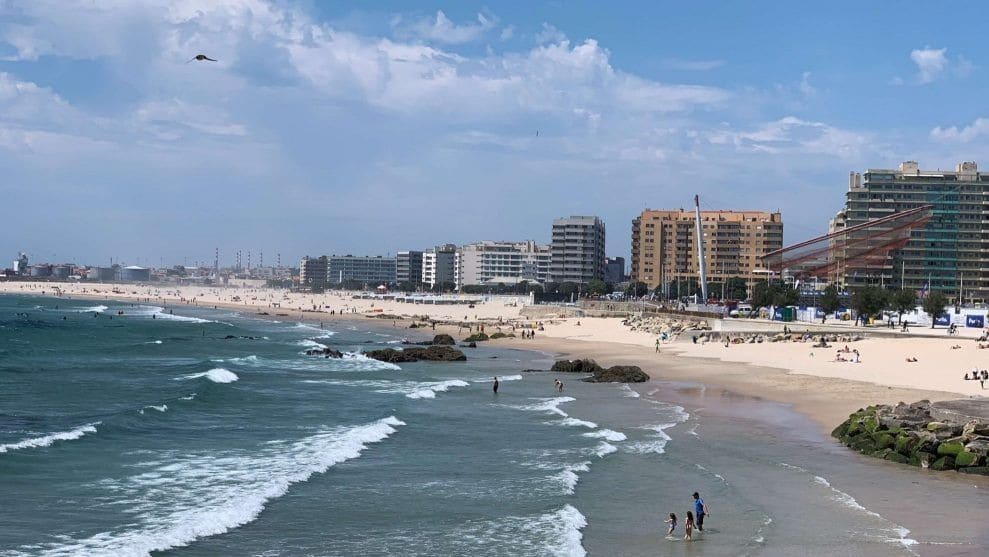
Matosinhos is an important port and fishing town, famous for its fish restaurants and its glorious sandy 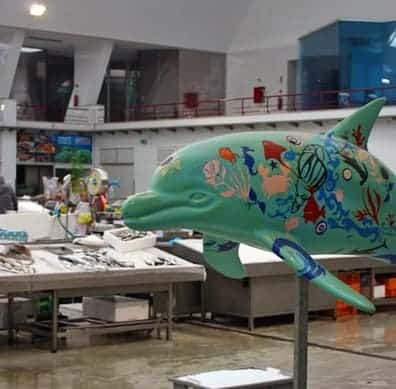 beach. This beach is the largest sandy beach near Porto, and is adored by the city's residents, who flock here during the summer months.
Dominating Matosinhos's coastline is the port of Leixões, which is both the heart and the heritage of the town. From this port, fresh fish is sold at the bustling morning market, while at lunchtime the smell of grilled fish wafts out of the many outstanding seafood restaurants.
Most visitors come to Matosinhos just for the beach, but it has more to offer, including the Castelo do Queijo, the Parque da Cidade, the daily market and a selection of coastal walks. Matosinhos may not be the most picturesque of the Costa Verde towns, but it is authentically Portuguese and a pleasant destination for a day at the beach.
Matosinhos Beach, the beach near Porto
The Praia de Matosinhos is the largest beach near Porto, and it is a beautiful bay with soft sands and clean sea waters. During the summer the beach is a hive of activity, with beach sports, overexcited teenagers, families relaxing and Portuguese couples. The beach can cater for everyone, and it sits close to Porto. The only drawback is that the Praia de Matosinhos lies in the shadow of the container port and the fishing harbour, and does not offer the idyllic setting some tourists might wish for.
In summer the sea is supervised by lifeguards and is safe for children to bathe, while behind the beach there is an assortment of cafés and beach bars. This beach is always busy in summer with visitors to Porto and incredibly crowded at weekends.
The Castelo do Queijo
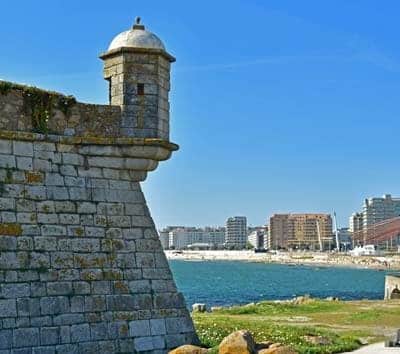
The 17th-century Castelo do Queijo stands at the southern end of the Praia de Matosinhos. The fort was built to protect Matosinhos from Spanish aggression during the Guerra da Restauração (1640 to 1668), when Portugal became independent from Spain.
The fort's strange name refers to the rock on which it was built, which supposedly looks like a cheese. Inside the fort there is a small museum, and from the terraces there are wonderful views of the coast.
The Matosinhos Municipal Market
The Matosinhos Municipal Market is the daily market, selling local produce, fresh fish and regional crafts. The market is a fantastic place to experience typical Portuguese life and culture. Like all Portuguese markets, it is a morning event and the stalls start to close at lunchtime. The market is housed in a bright and airy building dating from the 1950s, and is also a protected national monument.
There is more than one beach near Porto
For a beach outing near Porto, most visitors head only to the Praia de Matosinhos, as it is the closest to the city centre, but there is a second sandy stretch at Matosinhos. These beaches are north of the Leixões docks, and they are as good as the Praia de Matosinhos, but they require a longer walk to reach.
The Praia de Leça da Palmeira is the main beach of this stretch of coast, with soft sands, clean waters and just as busy in summer. The unique attraction of Leça da Palmeira beach is the Piscina das Marés, saltwater pools set within a rocky outcrop north of the beach. These pools are popular with families, as the waters are calm, safe and much warmer than the sea.
Beyond Praia de Leça there are a series of smaller beaches nestled among the rugged coast that leads to the lighthouse. These beaches include Praia Azul and Praia do Fuzelhas, but they are not ideal for swimming or bathing as they contain submerged rocks along the tide line.
The vast stretch of sand on the north side of the lighthouse would be an amazing spot for a day at the beach if it were not in the shadow of a partly submerged oil refinery and an industrial complex. The 1 km beach also bears the strange name of Praia do Aterro, Landfill Beach.
The fish restaurants of Matosinhos near Porto
Matosinhos is known for its seafood restaurants, which specialise in the fresh catch from the fishing port. The best restaurants sit just behind the fishing harbour, along the Rúa Heróis de França. The fish is cooked on outdoor grills and the smell of cooked fish fills the district. On these streets you also find fish wholesalers, offering a wide selection of fish, lobsters and shellfish.
Senhor do Padrão of Matosinhos
The monument of the Senhor do Padrão marks the spot where, according to local legend, the image of Bom Jesus de Matosinhos appeared on the beach. The stone cross and the dome-shaped structure (built in 1758) once stood at the edge of the beach and were a focal point for the prayers of fishermen and sailors. Today the Senhor do Padrão sits inside the quiet Jardim Senhor do Padrão park.
"She Changes", the fishing net sculpture
To the south of the Praia de Matosinhos stands the "She Changes" sculpture, a series of huge red nets suspended above the roundabout. This distinctive piece of art was commissioned in 2005 and created by Janet Echelman. The work represents the fishing heritage of Matosinhos, but locals refer to it as the anemone.
Walks and hiking routes
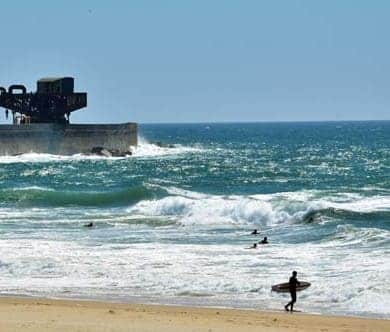
From Matosinhos, near Porto, there are two coastal walks, either south to the Foz district or north to the Leça da Palmeira lighthouse.
The southern route passes through the Parque da Cidade, the Castelo do Queijo, the lovely Pérgola da Foz, and the beaches of the Foz district.
The northern route heads through the docks, passes the Forte de Nossa Senhora das Neves, the Praia de Leça, the Leça da Palmeira lighthouse, and ends at the Miradouro da Boa Nova and the old ruined lighthouse. This is a 6 km round trip and takes two hours.
The Porto Leixões and the Cruise Terminal
The Port of Leixões is located at the mouth of the Leça river, and the dredging of the river in the early 20th century created the largest artificial port in Portugal and the main cargo terminal near Porto. In 2015 a sleek new cruise terminal was built, designed to attract cruise ships, and the centrepiece of this complex is the swirling white dome that can be seen from the beach.