

A Coruna City Tour for a Smart Half-Day
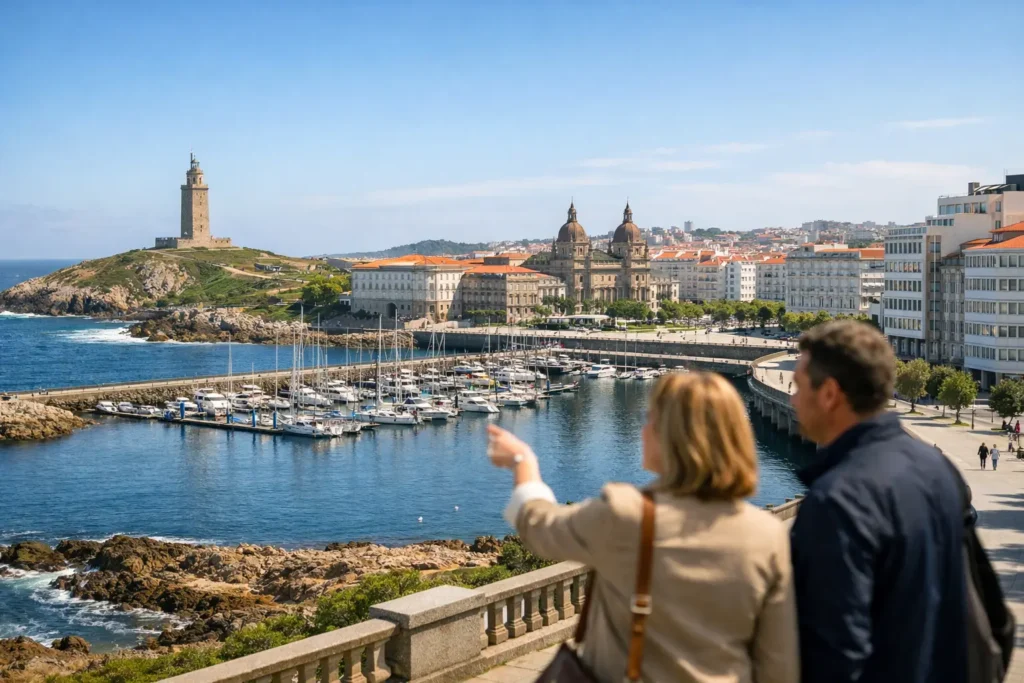
The Atlantic is never just a backdrop in A Coruña. It shapes the city’s light, its long seaside promenades, its glass-fronted galleries, and the character of its historic streets. An A Coruna city tour is most rewarding when it connects those elements instead of treating the city as a quick checklist of monuments.
For travelers staying in the city, arriving from Santiago, or making the most of a cruise stop, half a day can reveal A Coruña’s essential character. The key is choosing an order that makes sense geographically and leaves room to pause, look out over the ocean, and hear the local stories that give each place meaning.
Why A Coruña Is Worth More Than a Quick Stop
A Coruña is a working Atlantic city with a strong maritime identity, not a historic center preserved behind a museum rope. Fishing boats, beaches, university life, modern shopping streets, and centuries of history sit close together. That combination makes it easy to cover a lot of ground, but it can also make independent planning less straightforward than it first appears.
The city is often called the City of Glass because of its distinctive galerías, enclosed balconies that line the harborfront. They are beautiful, especially when the sky changes over the bay, but they are also practical architecture. They helped homes capture daylight while offering protection from Atlantic wind and rain. A local guide can point out these small details, which are easy to miss when you are simply walking from one landmark to the next.
A Coruña also rewards visitors who accept that the weather may be part of the experience. A bright morning can turn breezy by lunchtime, and a soft mist can make the coastline feel even more dramatic. Bring a light waterproof layer and comfortable shoes. The city’s best views often come with a little wind.
A Coruna City Tour Route That Makes Sense
A well-planned route normally begins near the central waterfront and Old Town, then moves toward the peninsula and the Tower of Hercules. This avoids backtracking and gives the visit a natural progression: from the city’s historic and commercial heart to its open Atlantic edge.
Start by the Harbor and Marina
The harborfront is the right place to understand A Coruña at a glance. The curved line of white galerías faces the water, creating one of the city’s most recognizable views. From here, you can appreciate why the city has always looked outward, toward trade routes, fishing grounds, and distant ports.
This area is also convenient for travelers with limited time. It is close to central meeting points, restaurants, and the main streets of the city. If you are on a cruise stop, beginning with an organized meeting and coordinated transport can save valuable time and remove uncertainty about getting back to the port.
Walk Through the Old Town With Context
A Coruña’s Old Town is compact, but it is not a single, uniform historic district. Its streets reveal different chapters of the city, from religious buildings and noble homes to civic spaces shaped by commerce and political life.
Plaza de María Pita is the obvious focal point. The grand City Hall dominates the square, while the monument to María Pita recalls one of A Coruña’s defining stories. In 1589, she became a symbol of the city’s resistance during the English attack led by Francis Drake. The story matters because it reflects a local identity built around determination and the sea.
From the square, quieter streets lead toward churches, small squares, and viewpoints. This is where a guided visit is especially useful. The value is not simply being shown where to go. It is understanding why a façade has a particular style, how the city expanded beyond its walls, or which corners have changed dramatically over recent decades.
Make Time for the Tower of Hercules
No visit to A Coruña is complete without the Tower of Hercules. This UNESCO World Heritage Site is the oldest Roman lighthouse still in operation, and it remains one of Galicia’s most powerful landmarks.
The tower stands on a headland north of the city center, surrounded by open grassland and walking paths along the coast. Even visitors who do not climb the interior will find the setting worthwhile. On a clear day, the views stretch across the Atlantic and back toward the city. On a cloudier day, the landscape feels raw and unmistakably Galician.
If climbing the tower is part of your plan, check access and allow extra time. Entry availability can vary, and stairs may not suit every visitor. For many travelers, especially families with young children or guests with mobility concerns, the exterior views and sculpture park provide a fuller and more comfortable experience than trying to fit in every step.
Add One Stop Based on Your Interests
Half a day is enough for the Old Town and Tower of Hercules when the route is organized well. If you have more time, add one stop that reflects what you most want from Galicia: culture, coastline, food, or local life.
For art and history, the Domus and the nearby museums can work well, although museum time can quickly turn a half-day plan into a full-day visit. For a relaxed coastal atmosphere, Riazor and Orzán beaches show another side of the city. They sit right beside the urban center, so the transition from streets to sand is surprisingly immediate.
Food-focused travelers should leave room for a late lunch rather than trying to squeeze in too many attractions. A Coruña is an excellent place to try seafood, Galician-style octopus, empanada, or local cheeses. The best choice depends on the season and your preferences, but a guide who knows the city can help you avoid settling for the first tourist-facing menu near the busiest square.
Guided Tour or Independent Visit?
An independent visit can work very well if you enjoy walking, have a full day, and are comfortable checking transport details and opening times as you go. A Coruña is approachable, and many of its most attractive areas are walkable.
A guided tour is often the better choice when time is limited. This is particularly true for cruise passengers, travelers visiting from Santiago for the day, and first-time visitors who want history alongside the views. Organized transport, a clear meeting point, and a guide who can adapt the route to the weather can make the difference between seeing the city and genuinely understanding it.
It also depends on your group. Couples may prefer a shared walking tour with a small group and a social atmosphere. Families can benefit from a route that keeps distances manageable. Private groups may want to shape the experience around architecture, gastronomy, Jewish heritage, photography, or a pace that works for older relatives.
Tour Galicia works with local guides who know how to turn a limited visit into a practical, well-paced experience. For visitors who do not want to rent a car or spend their arrival day sorting out logistics, a planned city visit provides the freedom to focus on the place itself.
Practical Tips Before You Go
A Coruña is walkable, but do not underestimate its hills, cobblestones, and exposure to the Atlantic. Wear shoes with good grip, particularly if rain is forecast. A compact umbrella can help in light rain, though a hooded jacket is usually more useful when the wind picks up.
Morning tours are ideal for travelers who want the rest of the afternoon free for lunch, shopping, or a beach walk. Afternoon departures can offer warmer light on the waterfront, especially in spring and early fall. In summer, the city is lively and daylight lasts late, while winter visits offer fewer crowds and a more atmospheric coast.
If you are arriving by cruise ship, do not plan a self-guided route that leaves no margin for delays. Port schedules are fixed, and the Tower of Hercules is not beside the terminal. Choose an itinerary designed around your ship’s timetable, with transport and return timing clearly organized.
A Coruña is not a city that needs to be rushed. Stand beneath the galleries, listen to the wind near the lighthouse, and leave enough time to take the city in with someone who knows what you are looking at.