

Catedrales Beach Parking and Arrival Tips
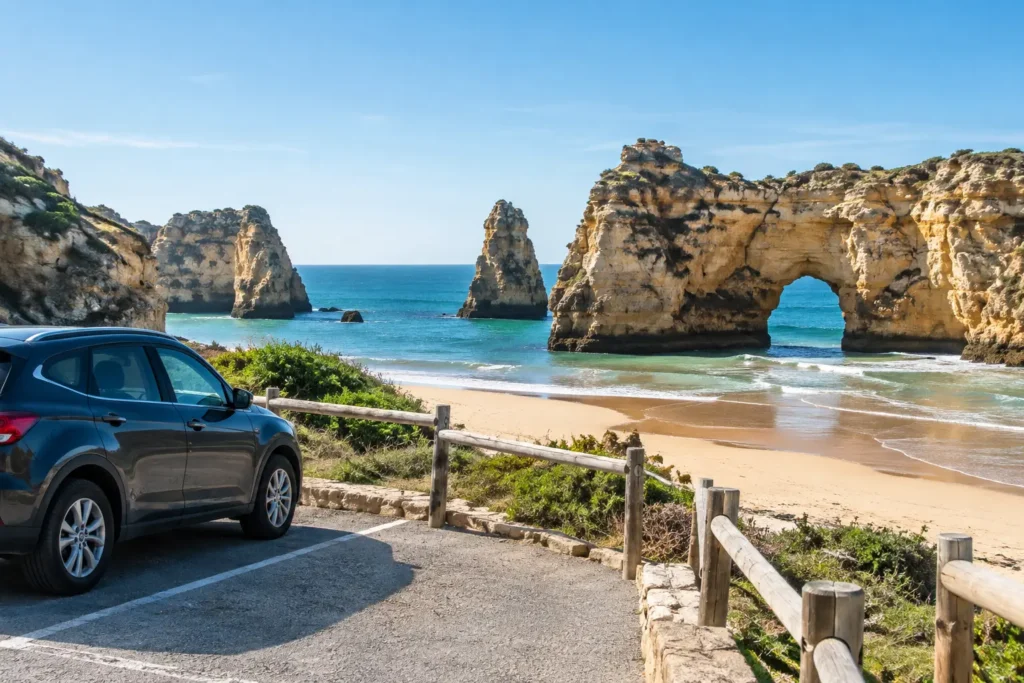
The first surprise at Playa de las Catedrales is that Catedrales beach parking is only one part of the plan. The beach’s famous stone arches can be visited only at low tide, and in the busiest periods access to the sand may require a free prior reservation. Arriving with a car is straightforward when you know where to go, but timing your visit well is what turns a parking stop into one of Galicia’s most memorable coastal experiences.
Located on Galicia’s northern coast, near Ribadeo in the province of Lugo, Playa de las Catedrales is also known as Praia de Augas Santas. It lies around 10 miles west of Ribadeo and is easy to reach by road, although summer weekends, public holidays, and sunny days attract large numbers of visitors.
Where to park at Catedrales Beach
The main parking areas are beside the beach access and visitor facilities, close to the N-634 coastal road. For navigation, search for “Playa de las Catedrales,” “Praia de Augas Santas,” or the official visitor center rather than choosing a random point on the beach itself. This helps avoid being directed to narrow local roads or an unsuitable access point.
The official lots are the most practical choice because they are a short walk from the viewpoints, the beach entrance, restrooms, and information area. Parking is generally free, but spaces are limited and local management can change according to the season or operational needs. Always follow posted signs and staff instructions when you arrive.
Do not leave your car on road shoulders, private access roads, or anywhere that blocks farm entrances and emergency vehicles. Apart from the possibility of a fine, the coastal road needs to remain clear for buses, residents, and services. If the closest lot is full, use any officially indicated overflow area rather than trying to create your own parking space.
When should you arrive?
In quieter months, arriving 30 to 45 minutes before the low-tide window is usually enough to park, walk to the access point, and take in the clifftop views. During summer, Easter Week, long weekends, and other high-demand dates, it is wiser to allow more time. Aim to arrive at least an hour before low tide, especially if you are traveling with children, have limited mobility, or want to photograph the beach without rushing.
Early low tides can be particularly convenient for parking because many visitors prefer a late-morning or afternoon visit. That said, an early tide may mean a cooler walk and lower light between the cliffs. A late-afternoon low tide often produces beautiful light on the rock formations, but it can also coincide with the busiest parking period.
Access reservations and tides: the details that matter
Parking does not automatically guarantee beach access. During selected high-season dates, visitors may need to reserve free access in advance through the official regional system. This measure protects a fragile natural monument from overcrowding and makes the experience safer and more enjoyable for everyone.
The dates and rules can vary from year to year, so check the current conditions before setting out. Keep your confirmation available on your phone and allow time to pass through the entrance area if checks are in place. A reservation is typically tied to a visit period, not to a particular parking space, so it is still essential to arrive with enough time to park.
Just as crucial is the tide table. The cathedral-like arches, sea caves, and sculpted rock corridors are visible only when the sea retreats. Around low tide, visitors can walk across the broad stretch of sand beneath the cliffs and see why this beach has become one of northern Spain’s most recognizable landscapes.
Plan to be on the beach around one to two hours before low tide and leave before the rising water cuts off sections of the shore. The tide returns quickly in some areas. Never enter a cave, narrow passage, or isolated section if the water is coming in, and respect any safety closures.
A simple arrival plan by car
If you are driving from Ribadeo, follow the coastal route west toward the beach and watch for official directional signs as you get close. The drive is short, but traffic can slow near the access area on peak days. From Santiago de Compostela, the journey is much longer, so it makes sense to make Playa de las Catedrales part of a full-day itinerary rather than a quick stop.
Before leaving your hotel, confirm three things: the low-tide time, whether access booking is required, and the weather forecast. Galicia’s north coast can change quickly. Bring a light waterproof layer even on a bright morning, wear shoes with grip for wet sand and uneven rock, and keep valuables out of sight in your vehicle.
If you are visiting in a rental car, do not assume every navigation route is equally suitable. Stay on main roads until the final signed approach. The last thing you want is to lose valuable low-tide minutes turning around on a narrow lane.
Is driving the best option for your visit?
For travelers staying in Ribadeo or exploring the Lugo coast independently, a car offers flexibility. You can choose the best tide window, stop at nearby beaches, and continue along the coastline at your own pace. It works particularly well outside peak periods, when parking is easier and road traffic is light.
The trade-off is that the timing is non-negotiable. If low tide falls in the middle of the day, your whole route needs to work around it. On busy dates, you also need to manage parking, entry rules, and the return drive. For travelers based in Santiago who would rather not spend the day watching tide tables, a guided day trip can remove much of that logistical pressure.
With transport organized and a local guide coordinating the schedule, you can focus on the landscape rather than the parking lot. This is especially useful for families, friends traveling together, and visitors who do not want to rent a car just for one coastal excursion. Tour Galicia offers organized experiences designed to make Galicia’s headline destinations easier to enjoy with guides who know the area.
Make time for the cliffs above the beach
Even if the tide is too high to walk on the sand, the visit is still worthwhile. The clifftop path offers broad views over the Cantabrian Sea and lets you appreciate the scale of the rock formations from above. It is also a good option for travelers with limited time or those who prefer not to walk on wet, uneven terrain.
The upper viewpoints and the beach provide different experiences. From above, you see the coast’s dramatic shape and powerful waves. At low tide, you experience the details: arches, dark stone textures, sea pools, and the changing patterns left by the water. If your schedule allows, arrive early enough to enjoy both.
Respect the marked paths, keep a safe distance from cliff edges, and avoid climbing on unstable rocks. Playa de las Catedrales is not an outdoor theme park. Its beauty depends on careful access and the shared responsibility of everyone who visits.
A well-timed arrival leaves room for the best part: stepping onto the sand as the sea pulls back and the great stone arches begin to appear. Give yourself that extra margin, and let the coast set the pace.