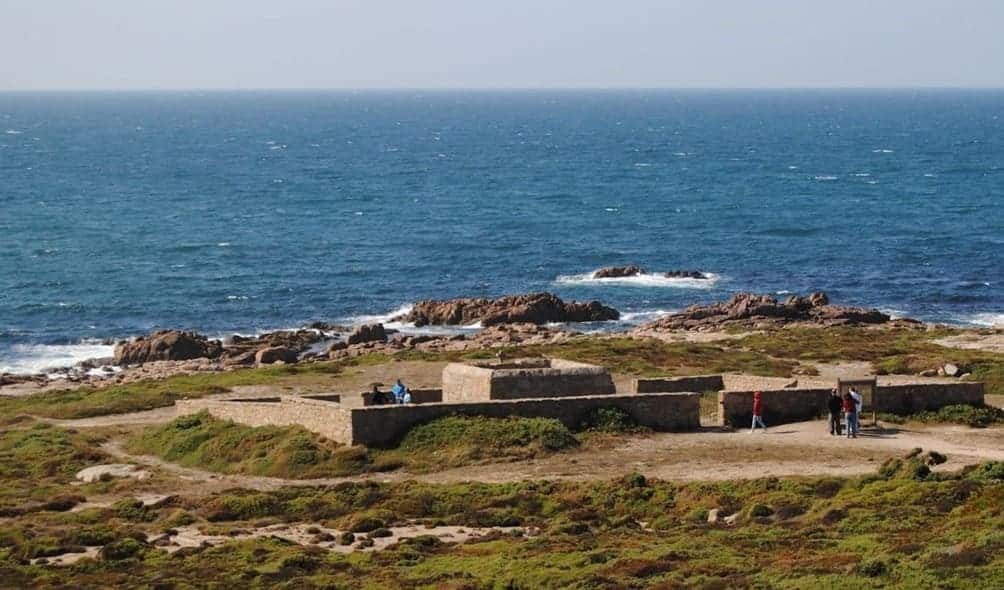

The English Cemetery
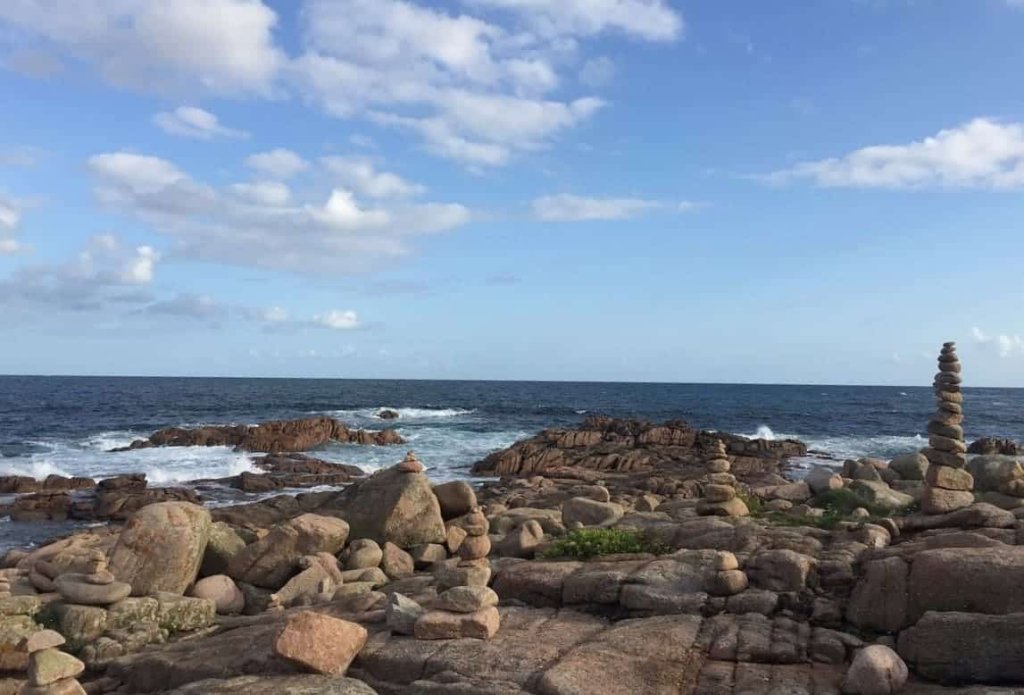
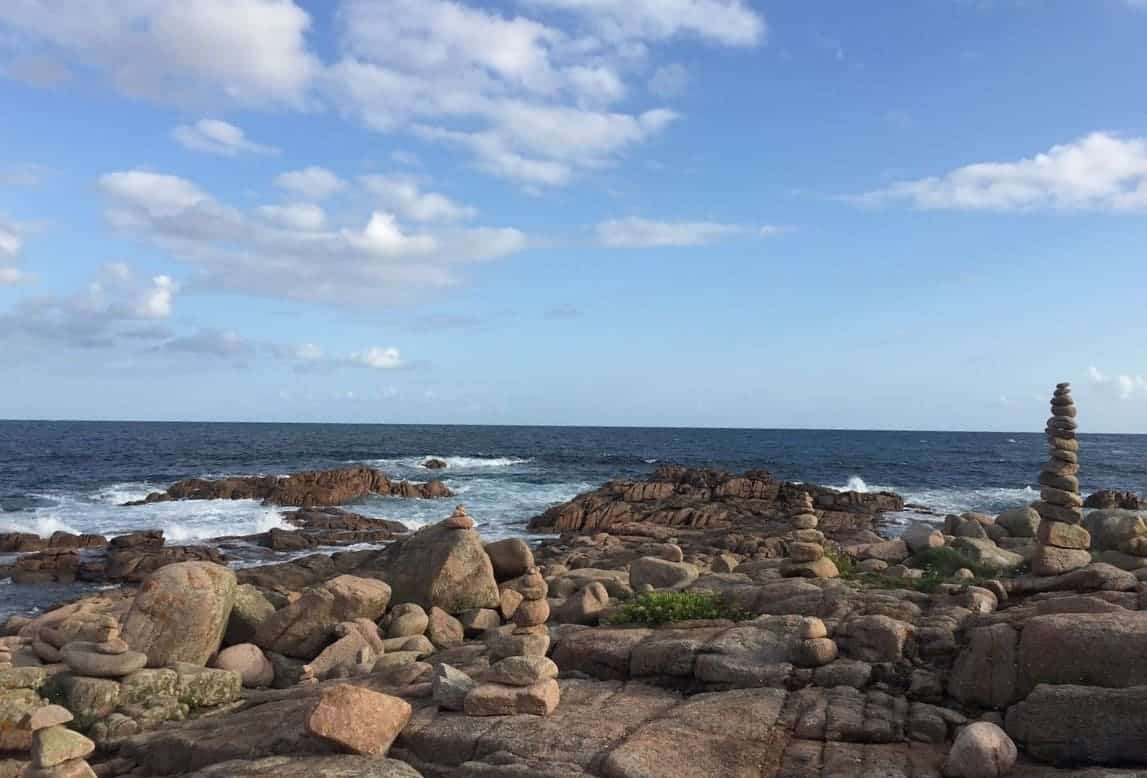
The English Cemetery is in the Camariñas municipality, A Coruña province. The Camariñas coast is in the heart of the Costa da Morte on the Atlantic coast of Galicia — a must on your trip.
History of the English Cemetery
The area is known for the many shipwrecks in its waters. One of the most notable events of its dark history was the wreck of the British ship "HMS The Serpent" on 10 November 1890. Considered the largest disaster on the Costa da Morte, only 3 of 175 passengers survived — mostly young British Navy students.
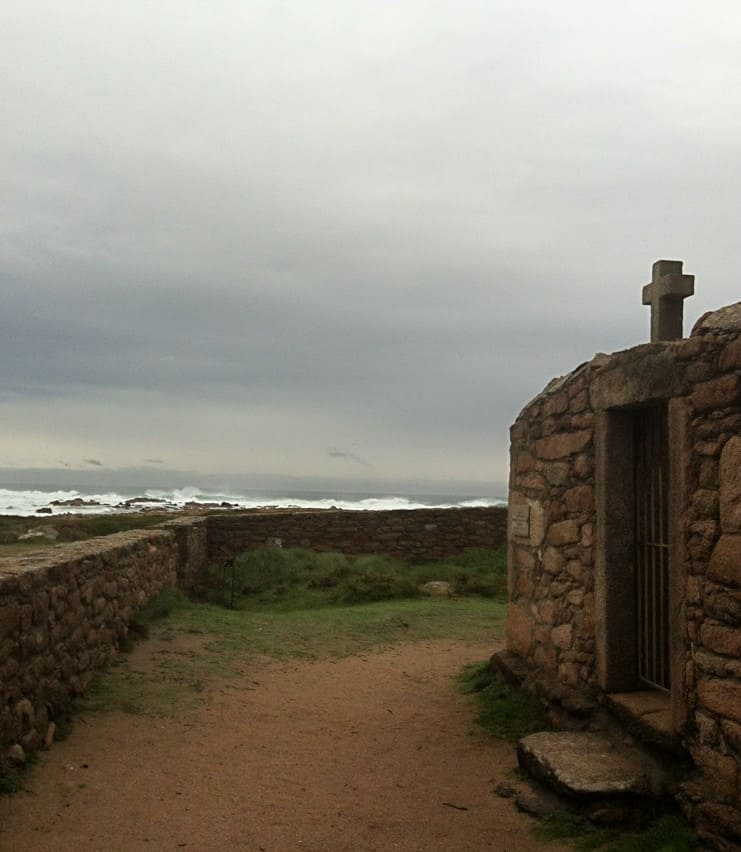
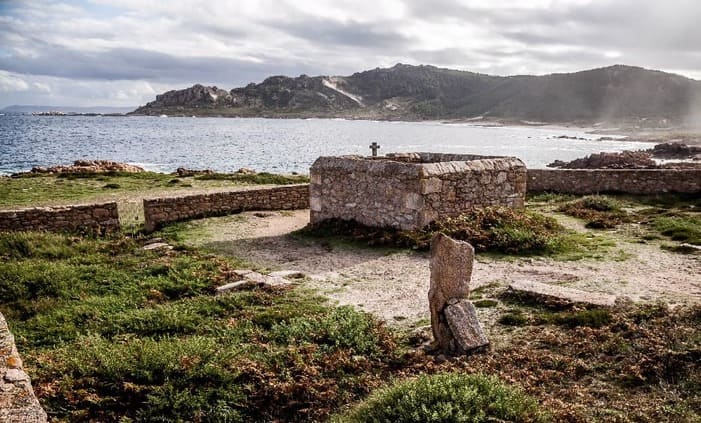
The priest and residents of Xaviña, a nearby village, came to rescue the shipwrecked, but all they could do was shelter survivors and bury the bodies they recovered. Later, two British warships closed off the place with a stone wall. Since then the site has been known as "The English Cemetery". An inscription in Spanish on the stone cross says:
"In memory of the captain, officers and crew of HMS Serpent. 172 were cast here. 10 November 1890."
The English authorities, to show gratitude, gave Camariñas a barometer, the Xaviña priest a rifle and the mayor a clock. Relatives of the deceased visited for years and British warships fired a salute when sailing past. 28 crew members of the "Iris Hull" are also buried here — another British ship wrecked on 3 November 1883, seven years and seven days before the Serpent.
The cemetery was rebuilt in 1990, on the centenary. Every year a tribute is held for those who died in the Costa da Morte waters.
The English Cemetery surroundings
Camariñas is a seafaring municipality famous for its bobbin lace. Beyond the many shops, you can see the results of this craft at the Bobbin Lace Museum. A lace fair is held at Easter.
The Costa da Morte has been included in the Natura 2000 network since 2001. The Camariñas coast is one of the most extensive and pristine areas of the Galician coast. Among the most outstanding natural spaces in the north-west Iberian Peninsula due to its varied vegetation and conservation status. A Pedrosa, Reira and Trece are some of its most impressive beaches.
Of special interest for its seabird populations, including endangered species like the kittiwake. Hosts the only colonies breeding the common guillemot in Spain. A stop for hundreds of thousands of migrating and wintering seabirds. The Cape Vilán environment was declared a Natural Site of National Interest in 1933 and is a Special Protection Area for Birds.
Vilán Lighthouse
One of the highlights around the English Cemetery. The lighthouse is at one of the most dangerous Atlantic crossings. Since the 15th century, over 800 shipwrecks and thousands of deaths.
The Serpent wreck sped up the construction of the new Vilán lighthouse, finished in 1896 on a budget of 840 euros. The lighthouse tower is 25 m tall on an octagonal granite floor on a 105 m granite cliff. The largest in Spain when built and the first powered by electric light. Lack of space meant the house and engine room had to be built lower, connected by a granite tunnel.
The lighthouse houses the Shipwrecks and Lighthouses Analysis Centre, a café, an exhibition hall and a tourist information office. Free to visit.