

How to Reach Combarro Without Driving from Santiago
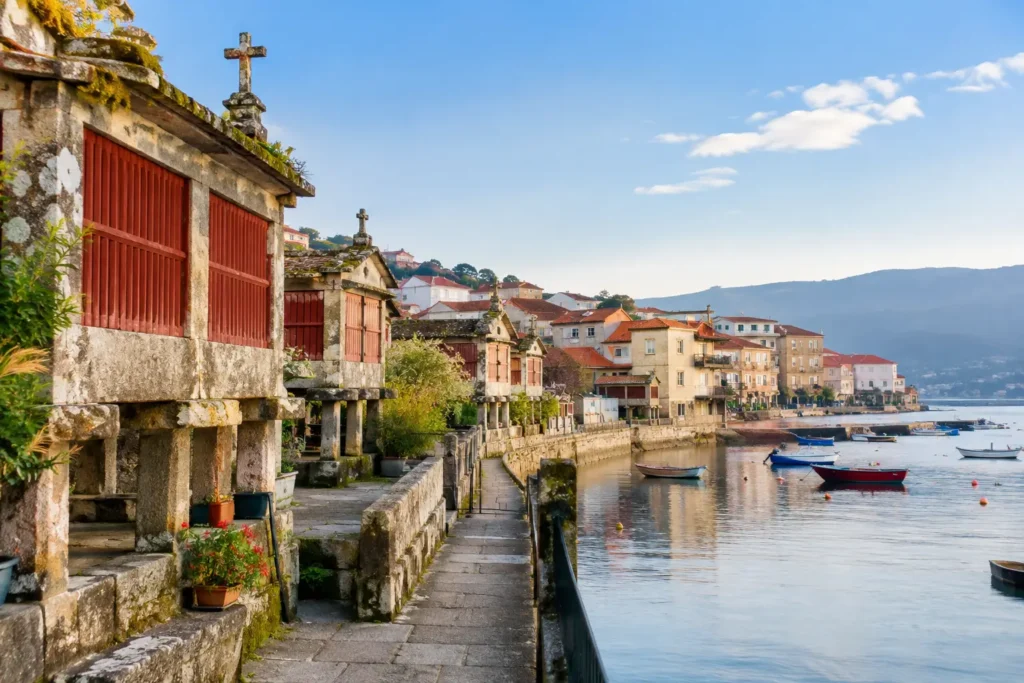
Combarro is the kind of place where arriving without a car can actually improve the visit. Its old quarter is made for walking: narrow stone lanes, traditional granaries beside the water, small squares, and a harbor where parking is limited at the best of times. If you are wondering how to reach Combarro without driving, the most practical answer is to use Pontevedra as your transport hub, or join a guided day trip from Santiago when you want the journey organized for you.
The village sits on the Ría de Pontevedra, a short distance from Pontevedra city and within reach of Santiago de Compostela and Vigo. Public transportation works well for independent travelers, but it requires checking current timetables and accepting that service can be less frequent on weekends, holidays, and outside the main travel season.
The easiest route: reach Combarro from Pontevedra
Pontevedra is the natural gateway to Combarro. The two places are close, so this is the simplest option for travelers staying in the city or arriving there by train or intercity bus. Local and regional buses run between Pontevedra and Combarro, generally passing through the municipality of Poio. Look carefully at the destination and stops when booking or boarding, as not every service follows exactly the same route.
The trip is short, usually around 20 to 30 minutes depending on stops and traffic. Ask the driver for the stop closest to Combarro’s historic center, then walk down toward the waterfront. From there, the old town is compact and easy to explore on foot.
For a little more flexibility, a taxi from Pontevedra is a sensible choice, especially for couples, families, or small groups. It costs more than the bus, but it removes the need to work around return schedules and can be useful after dinner, when local bus options may be limited. If you are splitting the fare among several people, the convenience can be worthwhile.
Arriving in Pontevedra by train
Pontevedra has rail connections with major Galician cities, including Santiago de Compostela and Vigo. This makes a train-plus-bus journey a good choice for travelers who prefer rail travel and are happy to make one local connection. From the train station, allow time to reach the bus departure point or take a quick taxi into the center.
The key is not to plan the connection too tightly. A delayed train, a station transfer, or an unfamiliar local bus stop can turn a relaxed outing into a rushed one. Give yourself a comfortable buffer, particularly if you have a fixed restaurant reservation or want to return before evening.
How to reach Combarro without driving from Santiago
From Santiago de Compostela, there is usually no need to rent a car just to see Combarro. The most independent route is to travel first to Pontevedra, then continue by local bus or taxi. Depending on the service you choose, Santiago to Pontevedra takes roughly an hour by train or intercity bus, followed by the short onward journey to Combarro.
This route works best if you have a full day and enjoy moving at your own pace. Leave Santiago in the morning, spend time in Combarro around late morning or lunchtime, and return via Pontevedra. You may even want to reserve an hour or two to walk Pontevedra’s handsome pedestrian center, known for its granite squares and relaxed local atmosphere.
The trade-off is coordination. You will be handling at least two legs in each direction, and bus schedules to Combarro do not always match train arrivals perfectly. Check the timetable for your travel date shortly before leaving, rather than relying on a schedule you found weeks earlier. Summer, local festivals, Sundays, and public holidays can all affect frequency.
A guided Rías Baixas day trip from Santiago is often the more comfortable alternative when Combarro is only one part of what you want to see. These itineraries commonly pair the village with coastal landscapes, wine country, O Grove, A Toxa, or a boat experience, depending on the route and season. Tour Galicia offers organized excursions designed for travelers who want transportation, timing, and local context handled by a guide who knows the area.
For many visitors, this is not simply about avoiding the stress of driving. It is about seeing more of the Rías Baixas in one day without studying connections, watching the clock, or choosing a designated driver for a wine tasting.
Traveling from Vigo to Combarro
Vigo is another useful starting point, although the route normally involves reaching Pontevedra first. Trains and buses connect Vigo and Pontevedra frequently enough to make this a manageable day trip, then you can transfer to a local bus or taxi for Combarro.
If you are staying near Vigo’s center, compare total travel time rather than focusing only on the first ticket. A fast train to Pontevedra can be convenient, but you still need to reach the local connection afterward. An intercity bus may arrive at a location that makes the next step easier, depending on the day and service. Check the stations, not just the departure times.
For cruise passengers calling at Vigo, a self-guided visit can be possible, but it is rarely the lowest-stress choice. Cruise schedules leave little room for missed connections, and ships do not wait for passengers delayed by local transportation. A shore excursion or private transfer with a clear return plan is the safer way to include Combarro during a limited port call.
What to expect once you arrive
Combarro is small. You do not need a car, a tour bus, or a complicated itinerary once you are there. Give yourself at least 90 minutes to wander the historic quarter, photograph the rows of hórreos - raised stone granaries - along the shoreline, and enjoy the views across the estuary. Two to three hours is better if you plan to have lunch or browse the local shops.
The lanes are uneven in places, with stone paving and short slopes. Comfortable shoes matter more than a packed sightseeing schedule. Travelers with limited mobility should expect some challenges in the oldest streets, though the waterfront and parts of the village are easier to enjoy at a gentler pace.
Lunch is a good reason not to rush. Combarro’s seafood restaurants and terraces are especially appealing in warm weather, but popular tables can fill quickly on weekends. If food is a priority, arrive early, book ahead when possible, or be prepared to eat at a slightly later Spanish lunch hour.
Practical planning tips for public transportation
A car-free trip is straightforward when you plan around a few realities of regional travel. First, check current schedules directly before travel and save the details offline, since mobile coverage and battery life should not be your only backup. Second, confirm the name of your Combarro stop and the last return departure before you set off.
Third, carry a payment method that works for smaller purchases and transportation. Card payment is widely accepted, but having some cash can still be useful for a coffee, a small shop, or an unexpected taxi. Finally, avoid building your day around a single narrow connection. Galicia is best enjoyed with time for a viewpoint, a long lunch, or a change in the weather.
If the forecast brings steady rain, a guided trip can be particularly reassuring. You still get the character of Combarro, but you have a planned vehicle, a guide to adapt the day, and no need to navigate wet stone streets while trying to locate an unfamiliar bus stop.
Choose the option that fits your day
Take public transportation via Pontevedra if you are comfortable checking schedules, have a flexible day, and want to explore independently. Choose a taxi from Pontevedra when you value timing and door-to-door ease. Choose an organized Rías Baixas excursion when you are based in Santiago, want to see several places in one day, or simply prefer to enjoy Galicia with someone who knows it.
Combarro rewards unhurried travelers. Leave enough space in the plan to pause beside the water, follow a lane that looks interesting, and let this small fishing village set the pace.