

Best Tours From Santiago for a Day in Galicia
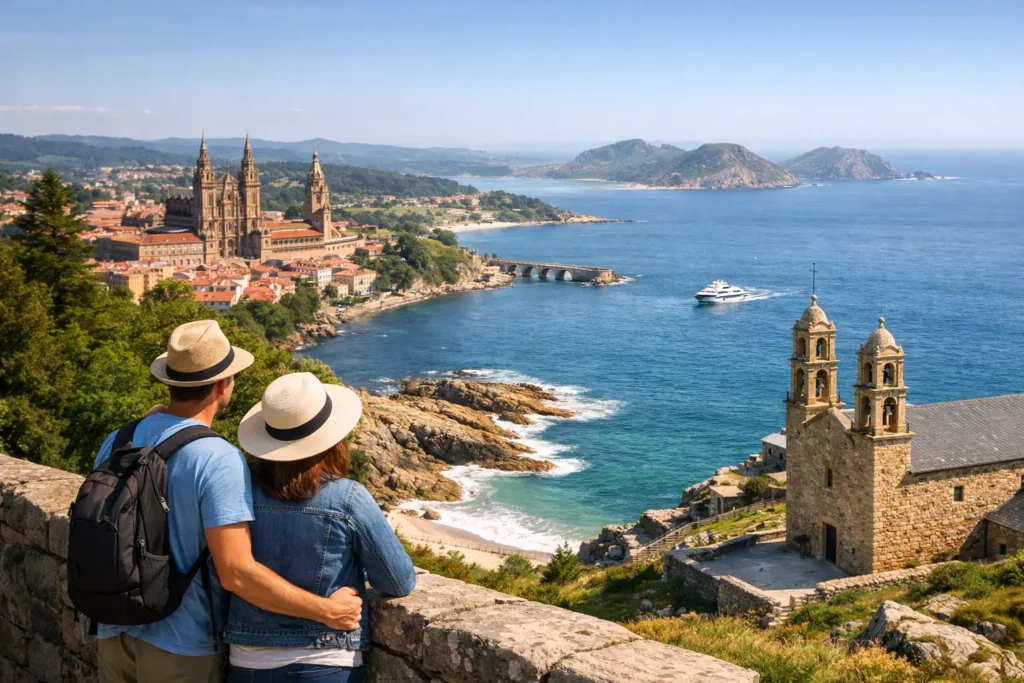
Santiago de Compostela is more than the final stamp on a Camino credential. It is one of Galicia’s best bases for seeing places that are difficult to combine independently in a single day: lighthouse cliffs at Finisterre, vineyard valleys along the Sil, or the island scenery of the Rías Baixas. The right tours from Santiago turn those distances into an easy day out, with transportation, timings, and local context already organized.
For travelers without a rental car, that matters. Galicia’s most memorable landscapes are often beyond the rail network, and rural roads are part of the experience rather than the fastest route between two points. A guided day trip lets you look out the window, hear the stories behind the places you pass, and return to Santiago with enough energy to enjoy dinner in the old town.
How to choose tours from Santiago
Start with the kind of day you want, not simply the place with the best photographs. Galicia offers dramatic Atlantic scenery, historic cities, wine country, fishing villages, and beaches, but a full-day excursion cannot give every destination equal time. Choosing one strong theme makes the experience more satisfying.
A coast-focused trip is a good fit if your priority is big views, fresh air, and villages shaped by the sea. A route through inland Galicia suits travelers who prefer monasteries, river canyons, and wine landscapes. If you want urban history alongside a slower pace, Lugo or A Coruña can offer a different perspective on the region from Santiago’s cathedral-centered atmosphere.
Check the practical details before reserving: departure point, total duration, what is included, time at each stop, and whether food is included or available to purchase. In peak season, early departures usually mean more time at the destination and less pressure on the route. For visitors with only a few days in Galicia, organized transportation is often worth more than trying to fit an ambitious self-drive itinerary into unfamiliar roads and parking areas.
Finisterre and the Costa da Morte for Atlantic drama
Finisterre is one of the classic day trips from Santiago for a reason. The route leads west through a changing landscape of stone villages, estuaries, beaches, and headlands before reaching the coast that medieval pilgrims once considered the end of the known world. The appeal is not only the lighthouse at Cape Finisterre. It is the sense of arriving at the Atlantic after traveling through the green interior of Galicia.
Many Costa da Morte itineraries combine Finisterre with stops such as Muxía, Ézaro Waterfall, or a coastal village. This makes for a full day with several memorable scenes, so it is best for travelers comfortable with time on the road. The trade-off is that you will experience a wide stretch of coast rather than linger for hours in one beach town.
Bring a light waterproof layer even when the forecast looks promising. The wind at the capes can be much cooler than Santiago, and weather is part of what gives this coast its character. A local guide also adds meaning to landscapes that can otherwise seem like beautiful stops on a map: shipwreck stories, pilgrimage traditions, fishing culture, and the geography behind the name Costa da Morte.
Rías Baixas and A Toxa for water, villages, and wine
The Rías Baixas offer a gentler coastal day, built around sheltered estuaries rather than open-ocean cliffs. This is a strong choice for couples, friends, and families who want sea views, traditional towns, and a taste of the area’s food and wine culture. Places such as Combarro are known for granite houses, narrow lanes, and hórreos, the raised stone granaries that are among Galicia’s most distinctive sights.
A Toxa adds a different note, with its small island setting and famous shell-covered chapel. Depending on the route, you may also visit O Grove or another estuary-side town where seafood is central to local life. These excursions feel less remote than Finisterre, but they are no less Galician. The landscape is shaped by the water at every turn, from mussel rafts in the rías to working harbors and vineyards further inland.
If food is high on your list, leave room in your schedule and budget for lunch. A guided excursion can show you the region efficiently, while a relaxed meal is where you can slow down over octopus, scallops, mussels, or local fish. Menus and availability vary by stop and season, so it is wise to confirm the day’s dining arrangements when booking.
Ribeira Sacra for a slower, inland Galicia
Ribeira Sacra is Galicia at its most contemplative. The Sil and Miño rivers cut through steep valleys where vineyards cling to terraces, Romanesque monasteries appear among wooded slopes, and viewpoints open onto wide river bends. It is the best option for travelers who want to move beyond the coastal image of Galicia and see a quieter, more rural side of the region.
Because this area is farther from Santiago, the day tends to be longer. That is the trade-off for the scenery. If your trip includes a river cruise, remember that water levels and operating conditions can affect the schedule. Viewpoints and monasteries remain rewarding even when a boat segment is not available, but travelers specifically interested in cruising should check the planned itinerary in advance.
This is also a destination where a guide makes the details come alive. The story is not just that vineyards are steep. It is how generations of growers have farmed difficult terrain, why monastic communities settled in these valleys, and how the landscape has shaped the region’s wines and villages.
Historic day trips from Santiago
Not every excursion needs to be a landscape route. Galicia’s cities reveal Roman, medieval, maritime, and modern layers that complement a stay in Santiago.
Lugo is especially compelling for its Roman walls, which surround the historic center in a nearly complete circuit. Walking on top of the walls changes your view of the city and gives a clear sense of its scale. It is a practical choice for travelers interested in history who prefer a more compact day and time to wander through streets, squares, and local shops.
A Coruña combines urban energy with the Atlantic. Its waterfront, old town, and Tower of Hercules create an itinerary with both history and sea air. Betanzos, often paired with A Coruña, brings a smaller-scale medieval atmosphere and a strong culinary identity. These routes are useful if the forecast favors a city day or if you want a break from long coastal drives.
The Playa de las Catedrales and Ribadeo are another option for travelers drawn to northern Galicia. The beach’s rock arches and caves are spectacular, but access and timing depend on the tide. This is exactly where an organized itinerary is helpful: the route can be planned around the natural conditions that make the beach worth visiting. Wear shoes that can handle wet sand and uneven ground, and do not expect the same experience at every tide.
Make the most of a guided day out
Reserve early if you are traveling in summer, during Easter week, or around major Camino dates. Shared tours are a simple choice for independent travelers because transportation and route planning are covered. Private options can make more sense for families, groups, or travelers who need a different pace, language, pickup arrangement, or focus.
Arrive at the meeting point a few minutes early with water, a charged phone, and layers. Galicia can deliver sunshine, mist, wind, and rain in one day, especially near the coast. Comfortable walking shoes matter more than formal footwear, even on routes that are not physically demanding.
Tour Galicia works with local guides who know how to balance the must-see stops with the practical details that keep a day running well. Look for clear departure information, transparent conditions, immediate confirmation, and cancellation terms that give you flexibility if plans change.
Choose the route that matches the story you want to bring home: the last light at Finisterre, a seafood lunch beside an estuary, Roman walls under your feet, or river valleys unfolding below a Ribeira Sacra viewpoint. Galicia rewards the traveler who gives each day one clear destination and lets someone who knows the region take care of the road.