

Finisterre Coastal Villages Guide for Your Route
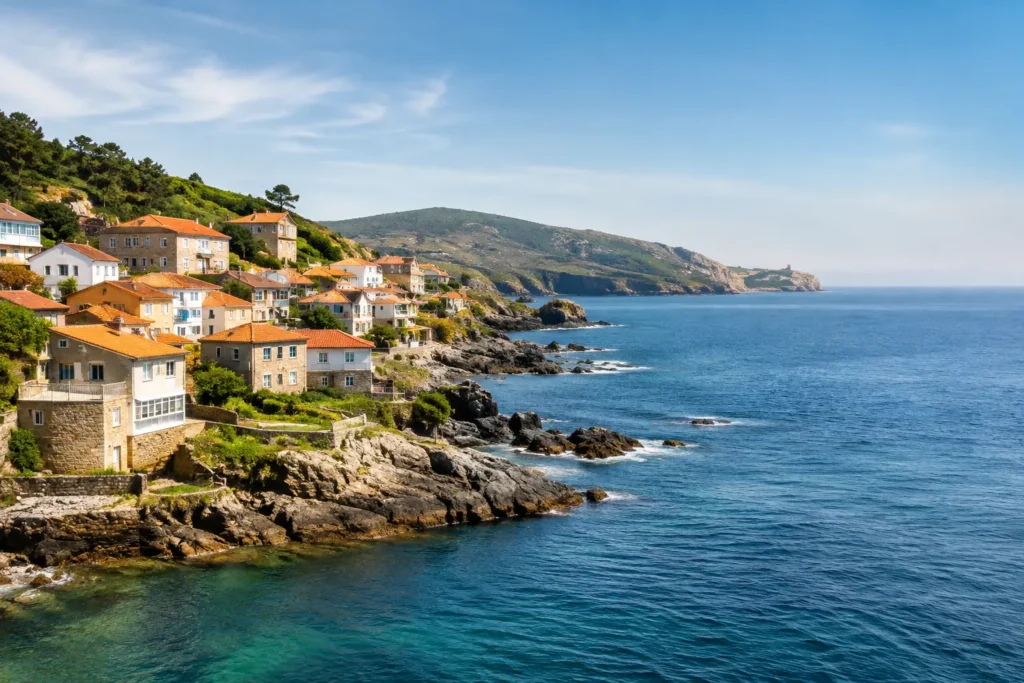
The road west from Santiago changes quickly: wooded hills give way to granite headlands, narrow estuaries, and working harbors where the day’s catch still shapes the rhythm of the town. This Finisterre coastal villages guide helps you choose the stops that make a Costa da Morte day trip feel like more than a quick photo at a lighthouse.
The region is often called dramatic, and it is. But its real appeal lies in the contrast. One hour you may be standing above Atlantic waves at Cape Finisterre; the next, having lunch beside small boats in Corcubión or walking a long, quiet beach near Carnota. The best route depends on your available time, the weather, and whether you prefer heritage, scenery, food, or a little of each.
What makes the Finisterre coast worth the trip?
Finisterre, also written as Fisterra in Galician, marks one of the most symbolic points on Spain’s Atlantic coast. For many pilgrims, it is the natural continuation of the Camino de Santiago: a place to look out toward the horizon after reaching Santiago. Yet the journey to this corner of Galicia is equally rewarding for travelers who have not walked the Camino.
The surrounding Costa da Morte has a powerful maritime identity. Its name, Coast of Death, recalls the difficult waters and historic shipwrecks along this exposed shoreline. That history is part of the landscape, but it should not define the visit entirely. Today, the coast is also a place of sandy coves, seafood restaurants, stone villages, Romanesque churches, and everyday fishing life.
A day trip from Santiago is a practical choice for travelers who do not want to drive unfamiliar rural roads. Distances can look short on a map, but the coastline is winding and the best stops are spread out. An organized excursion lets you enjoy the views with a local guide while transport and timing are already coordinated.
Finisterre coastal villages guide: the stops to know
Muros: an elegant harbor with history
Muros is often the right opening stop for a route that approaches Finisterre from the south. Its historic center is compact and atmospheric, with arcaded houses, granite facades, and a waterfront full of small boats. It feels lived-in rather than staged, which is precisely its charm.
Allow time to walk along the harbor rather than only taking a photograph from the bus. The narrow streets behind it reveal old fishermen’s homes and small local businesses. Muros is also a good place for coffee or an early lunch if your itinerary begins here, although travelers focused on beaches may prefer to continue toward Carnota.
Carnota: beach, granaries, and open space
Carnota is known for one of Galicia’s longest and most impressive beaches. Carnota Beach stretches for miles, backed by dunes and marshland, with Mount Pindo rising in the background. It is a landscape that feels wide open even during the busier summer months.
The village is also home to the famous hórreo of Carnota, a traditional raised stone granary. These structures were designed to protect corn from damp and rodents, and they remain one of the most distinctive features of rural Galicia. The Carnota granary is especially notable for its length and craftsmanship.
This stop works best when the weather is clear enough to appreciate the scale of the coast. On a windy or rainy day, it can still be beautiful, but a harbor town such as Muros or Corcubión may offer more shelter and a stronger sense of local life.
Lira: a quieter view of the Costa da Morte
Near Carnota, Lira offers a more tranquil side of the coast. It is not a destination for ticking off major monuments. Instead, it is a place to slow down, see the granite farmhouses and small coves, and understand how close agriculture, fishing, and the Atlantic remain in this part of Galicia.
If you are traveling independently, Lira rewards a flexible itinerary and a willingness to take smaller roads. If you are joining a structured day trip, you may pass nearby rather than stop for long. Either way, the landscape around Lira explains why this stretch of coast is memorable: it remains relatively unbuilt and closely tied to its natural setting.
Cee and Corcubión: two towns at the end of the estuary
Cee and Corcubión sit beside each other at the sheltered end of an estuary, shortly before the road climbs toward Finisterre. Cee is larger and more functional, while Corcubión is the prettier place for a walk, with traditional houses facing the water and a small historic center.
Corcubión is an excellent stop for travelers who want a village atmosphere without the crowds that can gather at the cape. Stroll the waterfront, look for the old stone details in the streets, and consider a seafood lunch if your schedule allows. Galicia’s coastal cuisine is at its best when it is uncomplicated: fresh fish, clams, octopus, and local shellfish prepared with confidence rather than too much decoration.
For visitors staying in Santiago, this area also offers a useful change of pace. The cathedral city is rich in monuments and pilgrims; Corcubión provides salt air, harbor views, and a quieter kind of history.
Fisterra: the port below the cape
The town of Fisterra is often overshadowed by its lighthouse, but it deserves time in its own right. This is a working fishing port, not only a final checkpoint for Camino travelers. The harbor, waterfront restaurants, and streets climbing gently uphill give it an active, down-to-earth character.
Fisterra is the best choice for a meal close to Cape Finisterre, particularly if you want seafood. It can be busy in summer and around Camino arrival times, so travelers seeking a quieter lunch may prefer Corcubión. The trade-off is simple: Fisterra offers the strongest connection to the cape, while nearby villages offer more calm.
Do not confuse the town with the cape itself. Cape Finisterre is a short distance away and sits higher, exposed to the full Atlantic. Plan for both if your time permits.
Cape Finisterre: save time for the lighthouse
The lighthouse at Cape Finisterre is the emotional high point of the route. From the cliffside, the Atlantic extends westward in a broad, uninterrupted line. On clear days, the views are immense; on foggy days, the setting can feel even more elemental.
Visitors sometimes arrive expecting a remote wilderness and are surprised by the parking area, souvenir stands, and other travelers. That does not diminish the place, but it helps to set expectations. Walk a little beyond the busiest viewpoint, pause before taking photographs, and notice the changing color and movement of the sea.
Weather matters here more than anywhere else on the route. Bring a windproof layer even in summer, wear shoes with good grip, and stay behind marked barriers. The cliffs are not a place to take risks for a photo.
Muxía: a meaningful extension if you have more time
Muxía lies north of Finisterre and is often included on longer Costa da Morte routes. It is especially known for the Sanctuary of Virxe da Barca, set among large granite rocks beside the sea. The setting feels spiritual without requiring any religious background to appreciate it.
Muxía is not always realistic on a short day trip that also includes Muros, Carnota, and Cape Finisterre. Trying to fit every village into one day can turn a coastal experience into a sequence of rushed stops. If Muxía matters to you, choose an itinerary that gives it proper time or consider a private route built around the places you most want to see.
How to plan your coastal route
For most visitors, a full day is the sensible minimum. From Santiago, the journey to the Finisterre area takes time, and the pleasure comes from stopping along the way rather than racing directly to the lighthouse. A well-paced route might include Muros, Carnota, Corcubión or Fisterra, and Cape Finisterre. Add Muxía only if the itinerary is specifically designed for it.
Driving gives you flexibility for beaches and lesser-known viewpoints, but it comes with narrow roads, parking considerations, and the need to watch the clock. Guided travel is particularly convenient for couples, families, and independent travelers who want local context without managing the logistics. Tour Galicia’s organized Costa da Morte excursions are designed around the stops that make sense in a day, with a guide who knows the territory and transportation already arranged.
Pack layers throughout the year. Galicia’s weather can change between Santiago and the coast, and the cape is frequently cooler and windier than inland areas. In summer, sunscreen and water are useful; in spring, fall, and winter, a waterproof outer layer is often the better choice.
Choose the villages that match your travel style
Choose Muros and Corcubión if you enjoy historic streets and waterfront life. Make Carnota a priority if wide beaches and rural landscapes appeal to you. Give Fisterra and Cape Finisterre the most time if you are following the Camino’s final symbolism or want the classic Atlantic views. Select Muxía if you have a longer day and want a quieter, more contemplative finish.
The coast does not need to be rushed to be impressive. Leave room for a harbor walk, a plate of fresh seafood, and a few minutes facing the Atlantic without looking at your schedule. Those small pauses are often what travelers remember most.