

Playa de las Catedrales Guided Tour Tips
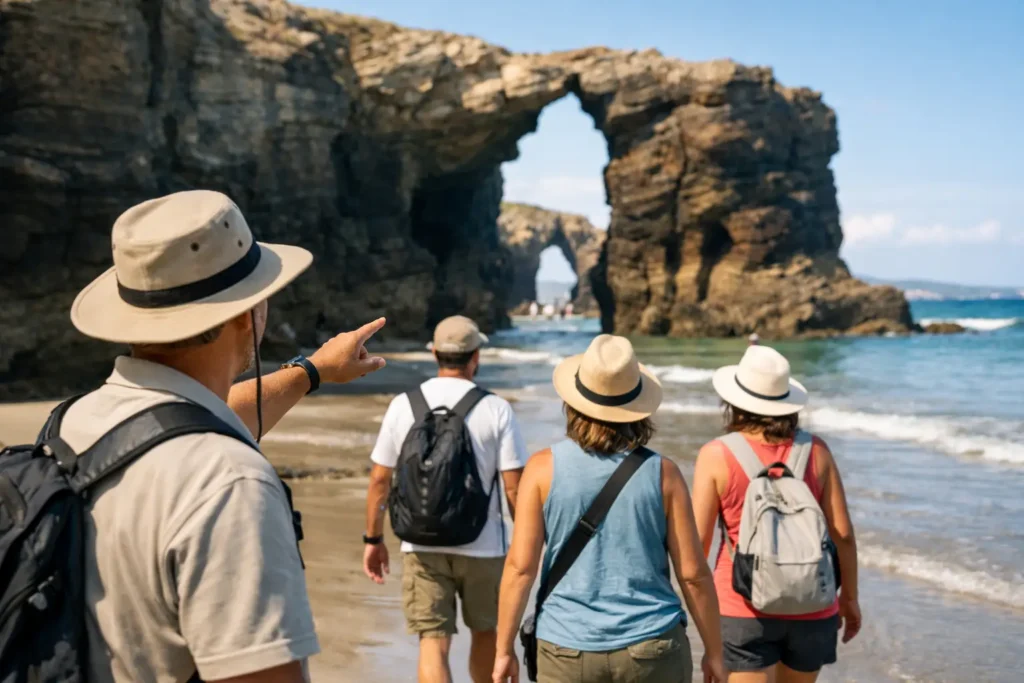
A Playa de las Catedrales guided tour is not simply a beach visit. At low tide, the Cantabrian Sea reveals a natural corridor of arches, caves, rock walls, and narrow passages that are hidden again a few hours later. That changing landscape is exactly what makes this stretch of coast near Ribadeo so memorable - and why planning it well matters.
Known in Galician as Praia das Catedrais, the beach earned its name from the enormous rock arches that resemble the vaults of a Gothic cathedral. Photos are striking, but being there at the right moment is different: you can walk beneath the formations, hear the water moving through the caves, and understand the scale of the cliffs around you.
Why take a guided tour of Playa de las Catedrales?
The main advantage is timing. The beach can only be explored on foot when the tide is low enough, and the safest, most rewarding time window changes every day. A guided excursion organizes the visit around the tide schedule so you arrive when access to the sand and rock formations is possible.
This is especially useful for travelers staying in Santiago de Compostela or other Galician cities without a rental car. Ribadeo is in northeastern Galicia, close to the border with Asturias, and getting there independently can involve several connections and careful coordination. On an organized day trip, transportation, meeting point, and route are already arranged, leaving you free to enjoy the scenery.
A local guide also adds context that is easy to miss when you visit alone. The arches are the result of millions of years of coastal erosion, shaped by wind, rain, saltwater, and the force of the sea. Your guide can explain how this coastline changes with the seasons, why some areas are protected, and what makes the nearby Mariña Lucense landscape distinctive.
Guided tours are also a practical choice for families, couples, and groups of friends who want a full day out without watching the clock. You do not need to calculate driving times, look for parking, or worry about whether you have misunderstood the tide chart.
Low tide determines the experience
The essential fact about Playa de las Catedrales is simple: its famous arches are best seen from the beach at low tide. At high tide, the sea covers much of the sand and can make walking under the cliffs impossible. The view from the upper paths remains beautiful, but it is not the same experience.
Your exact itinerary should therefore depend on the day’s tidal conditions. Some tours may schedule the beach as the central stop, while others combine it with Ribadeo, viewpoints along the coast, or other places in northern Galicia. This flexibility is a good sign. A responsible operator should prioritize safe access and the best possible conditions rather than force the same timetable every day.
During busy periods, access to the beach may require a free prior reservation through the official visitor management system. This is intended to protect a fragile natural space and regulate the number of people on the sand. Check the current requirements before traveling, even if you have booked a tour, as procedures can change by season and local regulations.
What you will see on the beach
Descending from the clifftop trail, the first impression is the scale. Some rock arches rise dramatically above the sand, while smaller openings form tunnels and chambers that appear and disappear as the tide moves. The cliffs show layers, curves, and textures created by constant erosion.
Walking farther along the beach reveals the detail that photographs often leave out: pools of seawater reflecting the sky, seaweed-covered rocks, and shaded spaces beneath the formations. The place feels different in bright sunlight, soft Atlantic mist, or the golden light of late afternoon.
A guide can help you enjoy the landscape without treating it like an obstacle course. The surface can be uneven, wet, and slippery in places. It is tempting to focus only on the most famous arch, but the route is more enjoyable when you slow down, watch your footing, and leave time to look up.
The upper viewpoints are worth your time
Do not assume the visit ends once you leave the sand. The clifftop paths offer broad views of the coastline and a clearer sense of how the sea has carved the headland. They are also the best alternative when the tide is high or the beach is temporarily inaccessible.
For travelers who prefer easier walking, the viewpoints can be the most comfortable part of the stop. You still see the dramatic rock formations from above, with the blue-green sea stretching toward Asturias. A well-planned visit usually includes both perspectives when conditions allow.
What to wear and bring
This is a natural beach, not an urban promenade. Wear closed shoes with a good grip, especially if you plan to walk below the cliffs. Sandals may be fine on dry sand, but they are less suitable for damp rocks and uneven ground.
Galicia’s weather can change quickly on the coast. Bring a light waterproof layer even if the forecast looks favorable, and add sunscreen on clear days. The wind can feel cooler than expected. A small backpack, water, and a fully charged phone are useful, but travel light so you can move comfortably.
There is one more habit that makes a real difference: keep a respectful distance from cliff edges and do not enter blocked or unsafe areas for a photo. The beach is beautiful because it is wild and constantly changing. Following local instructions protects both visitors and the site.
Choosing the right Playa de las Catedrales guided tour
The best option depends on where you are staying, how much time you have, and whether you want a focused beach visit or a broader northern Galicia itinerary. If you are based in Santiago, a full-day excursion is often the easiest way to reach the coast without driving. If you are already in Ribadeo or nearby, a shorter guided visit may give you more flexibility.
Before reserving, check the practical details that shape the day: departure city, duration, language, transport, walking level, and whether the itinerary is adjusted for the tide. Also look at the meeting point and return time, particularly if you have dinner plans, a train, or another activity later that evening.
Smaller groups tend to make the experience more relaxed. There is more time for questions, less waiting at stops, and a better chance to adapt to the pace of the group. On the other hand, a shared excursion is usually a more affordable way to travel, while a private tour can suit families or groups who want a tailor-made schedule.
Tour Galicia organizes guided experiences with local guides and coordinated transportation, making the journey easier for visitors who want to see this coast with someone who knows it. When comparing options, choose clear conditions, confirmed logistics, and a cancellation policy that gives you confidence if your plans change.
Make room for Ribadeo and the surrounding coast
Playa de las Catedrales deserves its reputation, but the surrounding area adds depth to the trip. Ribadeo is a handsome coastal town with an estuary, traditional architecture, and a calmer rhythm than Galicia’s larger cities. Depending on your route, there may be time to enjoy a viewpoint, walk near the harbor, or stop for lunch.
This is where a day excursion can feel more complete than a quick out-and-back visit. The beach provides the dramatic moment, while the town and coastline reveal another side of Galicia: maritime, green, and shaped by the meeting of land and sea.
If you have a specific interest in local food, ask your guide or tour provider about the day’s possible stops. Northern Galicia is a good place to look for fresh seafood, regional cheeses, and simple dishes prepared with local ingredients. Availability depends on the schedule and season, so it is better to treat food stops as part of the experience rather than the sole reason for the trip.
A visit that works with nature, not against it
Playa de las Catedrales rewards travelers who accept its rhythm. You cannot command the tide, and the weather may add a little Atlantic drama to the day. But that is part of the appeal: the landscape is never entirely fixed, and no two visits look exactly alike.
Reserve a tour that respects that reality, wear the right shoes, and give yourself time to take in both the beach and the cliffs above it. When the sea draws back and the arches appear, you will see why this corner of Galicia stays with travelers long after they return home.