

Tours in Galicia: Choose Your Perfect Day Trip
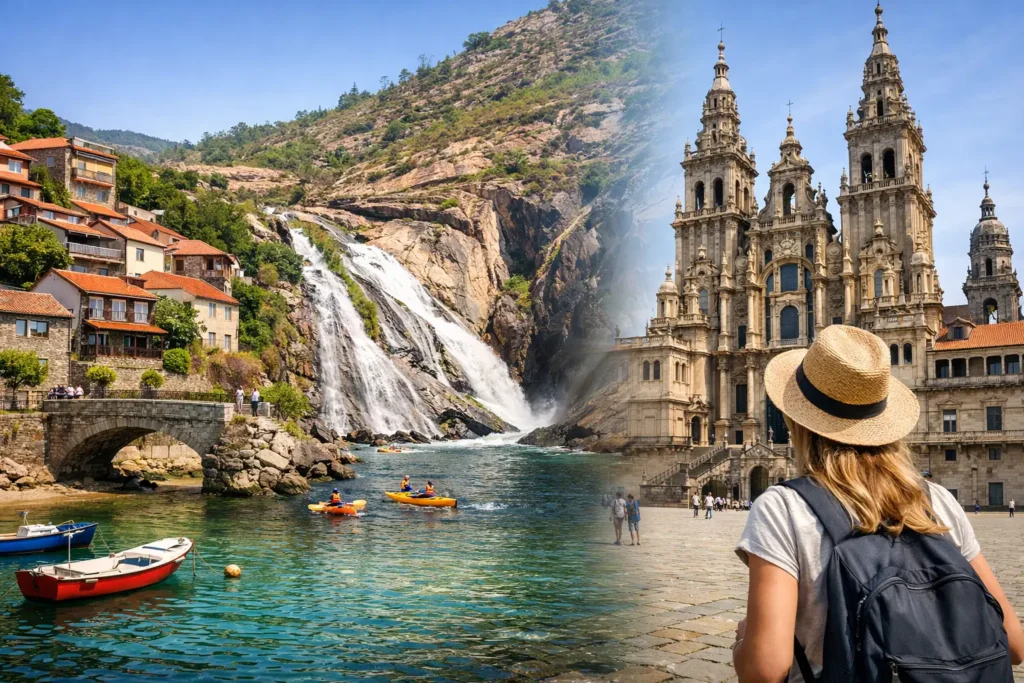
Galicia is not a destination best understood from one hotel window. Santiago’s stone streets tell one story; the Atlantic cliffs beyond Finisterre tell another. The wine terraces of Ribeira Sacra, the seafood markets of the Rías Baixas, and the Roman walls of Lugo each require time, transport, and local context. That is why tours in Galicia are often the easiest way to see more of the region without turning your vacation into a logistics project.
For travelers staying in Santiago de Compostela or A Coruña, a guided day trip makes the distances feel simple. You can leave from a central meeting point, travel comfortably, and spend your time looking at the landscape instead of checking parking rules or trying to fit five stops into a realistic route. With a local guide, each place has a story, not just a photo opportunity.
Start with the Galicia you want to remember
The best tour is not necessarily the most famous one. It is the one that matches the way you travel, the time you have, and what you hope to feel when you return home. Galicia offers dramatic coastlines, historic cities, green inland valleys, and small fishing towns, but they are spread across a large region.
If this is your first visit, begin with the classics: Santiago’s old town and the Costa da Morte. If you have already seen the cathedral or prefer food and coastal villages, the Rías Baixas may be a better fit. Travelers who enjoy history and quieter landscapes often choose Lugo, Ribadeo, or Ribeira Sacra instead.
A well-organized excursion removes the difficult parts: where to stop, what is worth the detour, when the tide matters, and how long each visit actually takes. It also gives you something a map cannot provide - someone who knows the territory and can explain why a lighthouse, a chapel, or a granite granary matters to Galician life.
Popular tours in Galicia from Santiago
Santiago de Compostela is the natural starting point for many visitors. It has excellent connections, a walkable historic center, and day-trip routes that reach both the Atlantic and inland Galicia.
Finisterre and the Costa da Morte
A full-day trip to Finisterre and the Costa da Morte is for travelers drawn to the edge of the map. This is a route of rugged shoreline, fishing villages, sandy beaches, waterfalls, and viewpoints over the Atlantic. Finisterre has long held symbolic importance for pilgrims who continue beyond Santiago, but it is just as rewarding for anyone who wants to see Galicia at its wildest.
The experience depends on the weather. On a bright day, the coastal colors are extraordinary. In mist or rain, the landscape feels more dramatic and atmospheric. Either way, bring a windproof layer. Atlantic weather can change quickly, even in summer.
This route is ideal if you want varied scenery in one day. It is less suitable for travelers who prefer long, unhurried visits in a single town, because the appeal lies in the sequence of coastal stops.
Rías Baixas and A Toxa
The Rías Baixas offer a gentler side of the coast. Think estuaries, beaches, vineyards, mussel rafts, and towns shaped by the sea. A route including A Toxa is a strong choice for couples, families, and travelers interested in local gastronomy as much as scenery.
This is Galicia at a slower rhythm. You may see traditional fishing boats, stone churches, and waterfront promenades where lunch is part of the experience. The area is especially appealing in warmer months, though it has character year-round.
Choose this type of excursion when you want a coastal day with more village life and less exposure to the open Atlantic. It is a different atmosphere from the Costa da Morte, not a substitute for it.
Ribeira Sacra
Ribeira Sacra is one of Galicia’s most distinctive inland landscapes. The Sil and Miño rivers cut through steep valleys where vineyards cling to terraced slopes. Romanesque monasteries, river viewpoints, and small wineries give the area a sense of depth that rewards curious travelers.
It is an excellent option for wine lovers, photographers, and anyone seeking a quieter day away from the busiest coastal routes. Because the roads are winding and the key viewpoints are spread out, this is a destination where organized transportation is particularly valuable.
Spring and fall are beautiful for color and comfortable temperatures. Summer can be warmer inland, while winter tours may have a more limited feel depending on daylight and weather. If a river cruise is part of your plan, check what is included and the seasonal operating conditions before booking.
Beyond Santiago: Cities, coast, and Roman Galicia
Galicia rewards travelers who look beyond its most famous capital. From A Coruña, day trips can combine the city’s maritime character with nearby history, while northern routes reveal a completely different coastline.
A Coruña and Betanzos work well for visitors interested in urban heritage and local food. A Coruña brings together Atlantic promenades, elegant galleries, and the Tower of Hercules, while Betanzos has a compact historic center and deep medieval roots. These destinations can suit a shorter cultural visit or a relaxed day without long road journeys.
Lugo is a must for Roman history. Its remarkably complete Roman wall circles the old city and offers a memorable walk above the streets. It is an accessible choice for travelers who want architecture, local cuisine, and a clear historical focus.
Farther north, Ribadeo and the Beach of the Cathedrals show another face of the coast. The beach is known for its natural rock arches, but visiting conditions depend on the tide. Low tide is essential for walking among the formations, and access can be managed during busy periods. A guided tour helps ensure that the timing supports the experience rather than leaving you standing above the beach waiting for the sea to move.
How to choose the right guided tour
Before reserving, think about more than the destination name. A good itinerary should fit your actual day.
First, consider the departure city. A tour leaving from Santiago is convenient if that is where you are staying, but a route starting in A Coruña may make more sense if you are on the northern coast. Starting close to your accommodation means more time enjoying Galicia and less time arranging transfers.
Next, look at the pace. Full-day tours are the best way to reach Finisterre, Ribeira Sacra, or the Beach of the Cathedrals from the major cities. A historic walking tour in Santiago, by contrast, is ideal for a first morning or afternoon and leaves your evening free for tapas and a stroll around the cathedral.
Then check practical details: departure time, meeting point, total duration, language, what is included, and whether there are walking sections. Galicia’s historic centers often have cobblestones, and coastal viewpoints can involve uneven ground. Most travelers can enjoy them comfortably with good shoes, but it is wise to choose according to your mobility and interests.
Finally, leave room for weather. Rain is part of Galicia’s identity, and it is one reason the landscapes are so green. Do not let a forecast automatically discourage you. Instead, pack layers, comfortable waterproof footwear, and an open mind. In many cases, a cloudy sky makes the coast even more memorable.
A better option for cruise passengers
A cruise stop in Vigo or A Coruña comes with a fixed deadline. You need an itinerary that begins on time, uses transportation efficiently, and returns with a comfortable margin before all-aboard. This is not the day to improvise with regional buses or hope that a taxi is available for the return journey.
For cruise passengers, the best tours focus on a realistic number of stops and clear port coordination. From Vigo, the Rías Baixas and nearby coastal highlights are natural choices. From A Coruña, cultural routes around the city, Betanzos, or other northern highlights can fit the rhythm of a shore day.
Tour Galicia designs excursions with local guides and practical timing for visitors who want to make the most of a limited stay. Confirm your ship’s arrival and departure times before reserving, and allow enough time to return to the port without stress.
Reserve with confidence and travel lighter
The most useful guided experiences are clear before you book. You should know where you will meet, how long the activity lasts, the main places you will visit, and the cancellation terms. Immediate confirmation is especially helpful when planning a short stay or organizing travel with family and friends.
Small groups can make a real difference in Galicia. They are easier to coordinate in narrow historic streets, more personal at viewpoints, and more flexible than a large bus crowd. Still, the right choice depends on your priorities. A shared tour is an easy, cost-conscious way to explore; a private itinerary can be better for a family celebration, a group with specific interests, or travelers who want to set their own pace.
Galicia does not ask you to see everything in one trip. Choose one coast, one city, or one river valley that speaks to you, let a local guide handle the route, and give yourself time to look up from the itinerary.