

Galicia Travel Itinerary for 5 Memorable Days
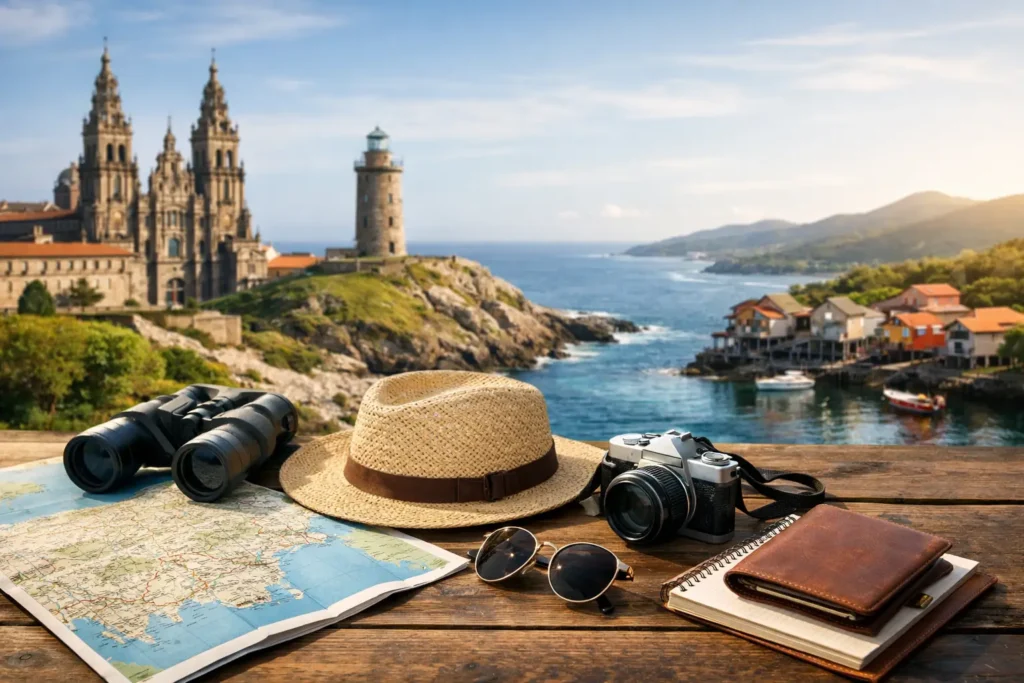
Galicia rewards travelers who slow down long enough to notice the details: mist lifting over stone streets in Santiago, shellfish boats returning to the rías, and Atlantic waves breaking below the lighthouse at Finisterre. This five-day Galicia travel itinerary is designed for travelers who want the region’s essential landscapes and culture without spending their vacation navigating unfamiliar rural roads.
Santiago de Compostela is the most practical base for the first part of the trip. From there, organized day excursions make it possible to reach places that are spectacular but difficult to connect by public transportation. You will see a great deal in five days, but the rhythm remains realistic: one historic city day, two Atlantic days, one inland wine-country day, and one final day tailored to your departure point or travel style.
Day 1: Santiago de Compostela, Beyond the Cathedral
Start in the old town, where centuries of pilgrims have arrived at the same granite square. The Cathedral of Santiago is the natural first stop, but do not treat it as the whole visit. Walk through Praza do Obradoiro, then follow the smaller streets around Praza da Quintana and Praza das Praterías, where arcades, convents, and traditional shops reveal the city’s lived-in character.
A guided historic-center visit is especially worthwhile on your first morning. Santiago has layers that are easy to miss independently: the symbols carved into façades, the role of the university, the stories behind the Camino, and the difference between a grand civic square and a quiet monastic corner. Local guides turn a beautiful walk into a place you can understand.
For lunch, look for classic Galician cooking rather than a rushed tourist menu. Octopus, empanada, caldo gallego, local cheeses, and seafood are all strong choices. In the afternoon, wander through Mercado de Abastos if it is open, then cross into the newer part of town for a different perspective on Santiago as a working university city.
Keep the evening unplanned. The old town changes after dark, when the day visitors leave and its bars, taverns, and small plazas become the center of local life.
Day 2: Costa da Morte and Finisterre
The Costa da Morte is not a beach day in the usual sense. It is an Atlantic landscape of cliffs, fishing villages, long sands, granite headlands, and weather that can shift in a matter of minutes. That drama is precisely why it belongs on a Galicia itinerary.
A full-day route from Santiago usually combines several stops, allowing you to see more than one side of the coast. Depending on the itinerary, that may include the waterfall at Ézaro, the fishing village of Muros, Carnota Beach, Muxía, and Cape Finisterre. These places are spread out, so this is a day where organized transport makes a meaningful difference. Driving yourself can be rewarding, but it limits how much you can appreciate the scenery and complicates parking, timing, and the return after sunset.
Finisterre has long held a powerful place in the imagination of Camino travelers. For many, it is the symbolic final point after Santiago, although it is not part of every official Camino route. Stand near the lighthouse and look west. The Atlantic horizon is simple, immense, and a fitting contrast to Santiago’s crowded streets.
Bring a windproof layer even in summer, comfortable shoes, and water. The coast can be several degrees cooler than inland Santiago. If you are visiting in winter, expect shorter daylight hours and plan around the possibility of rain. The scenery remains extraordinary, but flexibility matters.
Day 3: Rías Baixas, A Toxa, and Coastal Galicia
After the raw Atlantic cliffs, spend a day in the softer, greener landscapes of the Rías Baixas. This southern coastal area is known for sheltered estuaries, Albariño vineyards, fishing ports, islands, and some of Galicia’s most celebrated seafood.
A well-planned day trip can include Combarro, a small village known for its waterfront granaries and stone houses, as well as O Grove and the island of A Toxa. Combarro is compact, but its architecture tells an important story about the relationship between farming, fishing, and the sea. The raised granaries, or hórreos, were built to protect food from dampness and animals, and they have become one of Galicia’s most recognizable images.
A Toxa offers a quieter, more polished atmosphere, with a small chapel famously covered in scallop shells and views over the estuary. In warmer months, a boat outing through the ría can add another dimension to the day, particularly if you want to see mussel rafts and understand how closely the local economy is tied to shellfish cultivation.
This is the day to enjoy a long seafood lunch. Ask what is fresh rather than ordering by habit. Clams, mussels, scallops, razor clams, and turbot may all be available, but the best choice depends on the season and the catch. Travelers who do not eat seafood can still enjoy excellent grilled meats, vegetable dishes, and local wines.
Day 4: Ribeira Sacra and the Sil River Canyons
Galicia is often associated with the coast, yet one of its most memorable landscapes is inland. Ribeira Sacra, between the provinces of Lugo and Ourense, is defined by steep river canyons, monasteries, chestnut forests, and vineyards planted on dramatic terraces above the Sil River.
This is a long day from Santiago, but it offers a complete change of scenery. A typical route includes viewpoints over the Sil Canyon, a river cruise when conditions and season allow, and time to learn about the region’s heroic viticulture. The name is not an exaggeration: growing grapes on these slopes requires difficult manual work, and the terraces are part of the destination’s visual identity.
The region’s red Mencía wines are a natural match for lunch, though tasting should be approached sensibly if you are driving. For independent travelers, this is another route where narrow roads and dispersed viewpoints can make logistics challenging. Traveling with Tour Galicia or another local guided option means you can focus on the canyon views, monastery stories, and wine-country villages instead of the road.
Wear shoes with grip. Viewpoints are generally accessible, but surfaces can be uneven and wet, especially outside summer. River cruises are seasonal and may change with water levels, so treat them as a welcome addition rather than the only reason to visit.
Day 5: Choose Lugo and Ribadeo or A Coruña
Your final day depends on your next stop, your pace, and whether you prefer Roman history or a lively Atlantic city. Do not try to fit both options into one day from Santiago. Galicia is larger than it appears on a map, and rushing between destinations removes the pleasure of being there.
Option A: Lugo and the Cathedral Beach Coast
Choose this route if you are traveling north or want a striking mix of history and coast. Lugo is home to the best-preserved complete Roman wall in western Europe. Walking its broad circuit gives you unusual views over the old town and a clear sense of the city’s Roman scale.
Continue toward Ribadeo and the Beach of the Cathedrals, known for its enormous rock arches. The visit requires planning because access to the sand depends on the tide, and popular dates may require advance authorization. At high tide, the beach is still beautiful from above, but the famous arches are best experienced when the water has receded.
Option B: A Coruña and Betanzos
Choose A Coruña if you enjoy urban energy, waterfront promenades, museums, and a city that feels strongly connected to the sea. The Tower of Hercules, an ancient Roman lighthouse still in use, is the essential landmark. The nearby coastline is ideal for a walk when the weather cooperates.
Pair it with Betanzos for a more intimate historic setting. Its old streets and famous Spanish tortilla make it an appealing contrast to A Coruña’s broad avenues and Atlantic views. This option works particularly well for cruise passengers with time in A Coruña, provided the day is organized around the ship’s return time.
Practical Timing for This Galicia Travel Itinerary
Book your most time-sensitive activities first: a Costa da Morte excursion, a Ribeira Sacra day trip, and any visit to the Beach of the Cathedrals. Then keep Santiago flexible, because it is easy to enjoy in sunshine or light rain. Spring and fall are excellent for comfortable temperatures and green landscapes, while summer brings longer days and more visitors. Winter can be quieter and deeply atmospheric, but it calls for waterproof clothing and realistic expectations about weather.
For a trip without a rental car, use Santiago as your hub and reserve full-day guided outings with clear departure points, duration, and cancellation conditions. If you do rent a car, reduce the plan to fewer stops and leave space for detours. Galicia’s best moments are often unplanned: a village bakery, a sudden view across an estuary, or a table serving the day’s catch.
Leave your last evening in Santiago free for one more walk through the old town. After five days of roads, rivers, rías, and cliffs, the cathedral lights and granite streets offer a calm place to decide which part of Galicia you will return to see properly.