

Ribadeo Sightseeing Itinerary for One Great Day
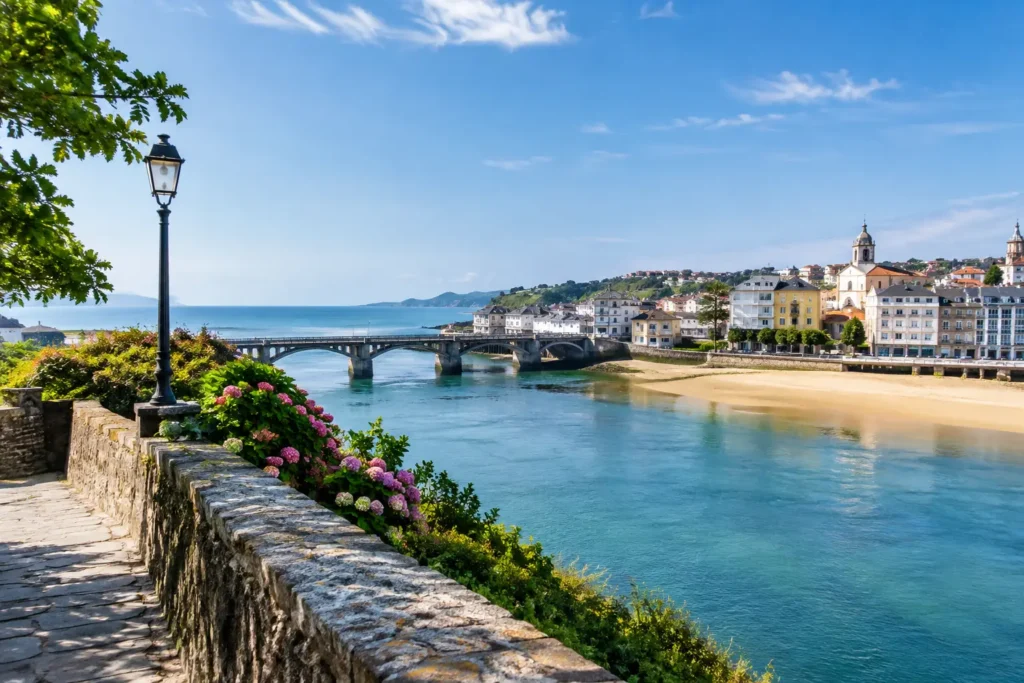
Ribadeo rewards travelers who give it a full day rather than treating it as a quick stop before Playa de las Catedrales. This Ribadeo sightseeing itinerary combines a handsome historic center, the calm waters of the Eo Estuary, northern Galicia’s dramatic coastline, and time to enjoy the town at an unhurried pace. It is an especially good choice for travelers who want a day shaped by scenery and local character, without spending every hour in the car.
Set on Galicia’s eastern edge, next to Asturias, Ribadeo feels different from the larger cities farther west. Its streets rise gently from the harbor, its Indianos houses recall families who made their fortunes in the Americas, and the coast changes character with every tide. The key is planning Playa de las Catedrales around the sea, then building the rest of the day around that fixed point.
A Ribadeo Sightseeing Itinerary Built Around the Tide
Start by checking the tide schedule for Praia das Catedrais, also known as As Catedrais Beach. At low tide, the beach reveals its famous arches, caves, narrow passages, and towering rock walls. At high tide, much of the sand and many of the formations are covered, so the visit is still scenic from above but is not the same experience.
In peak periods, visitor access to the beach may require a free advance reservation. Conditions can also change due to weather or sea safety measures. Confirm the access requirements and tide time before leaving your accommodation, then allow enough flexibility for parking and the walk down to the sand. The beach lies about 15 minutes by car from central Ribadeo.
For most visitors, the smoothest order is: coast first, town second. Arrive at Playa de las Catedrales roughly one to two hours before low tide, walk the beach as the water recedes, and return to Ribadeo for lunch. If low tide falls late in the day, reverse the route and spend the morning in town.
Morning: Playa de las Catedrales at Low Tide
This is the moment that brings many travelers to Ribadeo, and it deserves time. From the cliff-top path, the Cantabrian Sea looks powerful and open. Down on the beach, the scale changes. The sandstone arches frame the water, while the rock corridors create shifting patterns of light, shadow, and reflected pools.
Wear shoes with grip rather than flip-flops. The sand can be wet and uneven, and some areas near the rocks are slippery. Bring a light waterproof layer even in summer: this coast can feel cooler and windier than inland Galicia. Keep a respectful distance from cliffs and avoid entering caves when the water is coming in.
Photography is best when you slow down. The largest arches are impressive, but smaller details make the visit memorable too: layers in the stone, seaweed-covered pools, and views back toward the cliffs. Families with children will appreciate having a clear return time, since the tide can advance more quickly than it appears.
If the beach is busy, do not let crowds rush the experience. Walk beyond the first viewpoints, observe the tide, and choose a quieter stretch of sand when conditions allow. The landscape is the main attraction, not a checklist photo.
Late Morning: Rinlo and the Coastal Road
After the beach, take the coastal road toward Rinlo, a small fishing village west of Ribadeo. It is a worthwhile detour for travelers who enjoy traditional maritime settings more than polished resort promenades. The harbor is compact, the houses are close to the water, and the atmosphere is quieter than central Ribadeo.
Rinlo is known locally for seafood and rice dishes, but meal times can be busy, especially on weekends and in summer. If lunch here is a priority, reserving ahead is sensible. Otherwise, stop for a short harbor walk and continue to Ribadeo for more choices.
The drive between Praia das Catedrales, Rinlo, and Ribadeo is short, but avoid trying to pack in every beach on the map. Northern Galicia’s coast is best enjoyed with pauses. A viewpoint, a harbor, and one well-timed beach visit will give you more than a rushed sequence of stops.
Afternoon: Ribadeo’s Historic Center and Estuary
Back in Ribadeo, begin at Praza de España, the town’s central square. It is a natural place to orient yourself, surrounded by civic buildings, cafés, and streets that lead toward the older quarters. Look for the Torre dos Moreno, an eye-catching early 20th-century building with decorative ironwork and glass that reflects the prosperity of the Indianos era.
The town has a graceful, lived-in quality. Rather than following a rigid monument route, allow yourself to wander through streets lined with galleries, balconies, and traditional facades. Ribadeo is compact enough to explore on foot, yet varied enough that a local guide can add useful context about its trading history, architecture, and relationship with Asturias across the estuary.
For lunch, choose a restaurant in or near the center and keep the meal local. Fish, octopus, clams, Galician beef, and seasonal produce all appear on menus, while a simple dessert or coffee offers a welcome pause after the coast. If you are driving, this break also avoids the temptation to rush straight into the afternoon.
Afterward, head downhill toward the harbor and the Eo Estuary. The water here is gentler than at Playa de las Catedrales, and the views open toward the Asturian shore. Ribadeo’s marina and waterfront are ideal for a relaxed walk, particularly in late afternoon when the light softens.
Santa Cruz Viewpoint and the Indianos Legacy
If you have energy for one more short walk, make your way toward the Santa Cruz viewpoint area. From higher ground, you can appreciate how Ribadeo sits between the estuary and the open coast. The town’s position has always shaped its identity, linking Galicia to maritime trade, nearby Asturias, and routes across the Atlantic.
Ribadeo’s Indianos heritage is more than decorative architecture. Many emigrants left this part of Galicia for the Americas in the 19th and early 20th centuries, and some returned with wealth that transformed local streets, homes, and public life. Paying attention to these buildings adds a human story to a day that might otherwise be remembered only for cliffs and beaches.
If your visit falls on a rainy day, keep the beach plans realistic. The cliff-top views can still be dramatic, but strong wind and poor visibility reduce the value of a long coastal walk. In that case, give more time to Ribadeo’s center, enjoy a longer lunch, and use the estuary views when the weather clears.
How to Make the Day Work Smoothly
Ribadeo is easy to visit independently by car, particularly if Playa de las Catedrales is your main goal. The trade-off is that you need to manage the tide, parking, and driving yourself. Travelers staying in Santiago de Compostela or A Coruña should consider the distance before treating Ribadeo as a casual half-day outing. From either city, it is a full-day commitment.
A guided excursion can be the easier choice for visitors who prefer transport and timing handled by someone who knows the route. It is also useful for travelers who want the landscape explained rather than simply photographed. Tour Galicia organizes experiences with local guides and coordinated logistics, which can remove the uncertainty of planning around a changing coastal schedule.
For a private group, build in room for your interests. Food-focused travelers may want a longer stop in Rinlo. Families may prefer extra time on the waterfront and fewer driving detours. Photography enthusiasts should plan around low tide and leave enough daylight for the estuary. There is no single perfect version of Ribadeo, but there is a clear rule: do not schedule the beach without checking the sea first.
A Sensible Pace for One Day
A satisfying day does not require an early-morning-to-evening sprint. Plan two to three hours for Playa de las Catedrales and its surrounding coast, allow at least an hour for lunch, then reserve the afternoon for Ribadeo’s streets, harbor, and viewpoints. Add time if you want to stop in Rinlo or linger over a seafood meal.
Summer brings longer daylight and a livelier atmosphere, but also higher visitor numbers. Spring and early fall are excellent for travelers who prefer milder temperatures and a calmer pace. Winter can be strikingly beautiful for coastal views, though the weather is more changeable and the beach experience depends heavily on conditions.
Leave Ribadeo with time for one last look across the Eo Estuary. The grand arches may be the headline, but it is the contrast between wild coast, fishing village, elegant town, and quiet water that makes this corner of Galicia stay with you.