

Ribeira Sacra Guide for a Perfect Day Trip
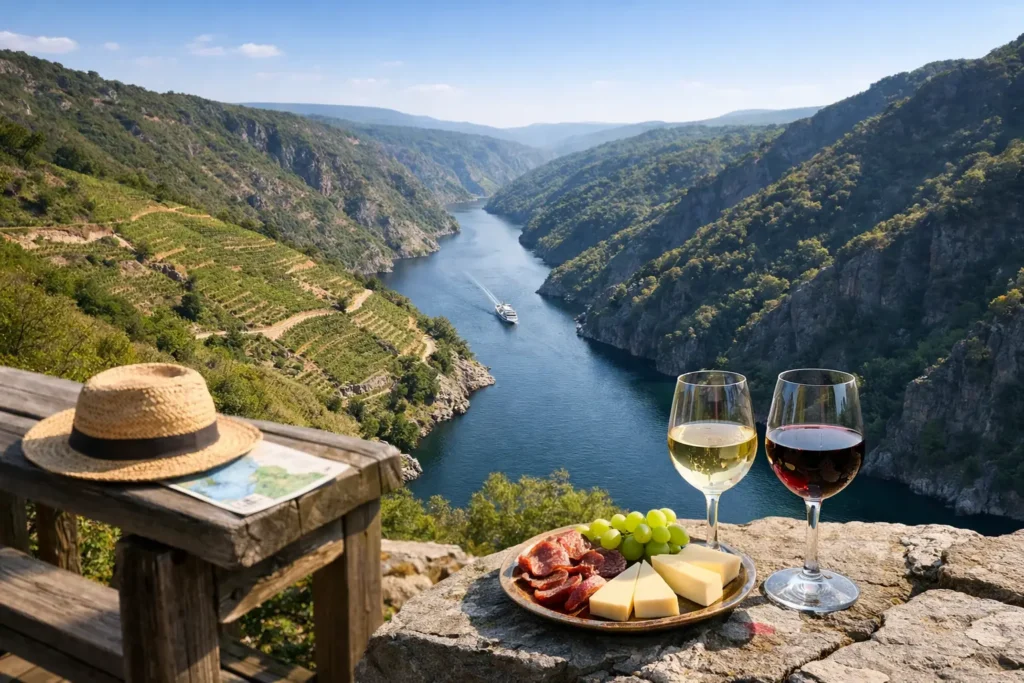
The Sil River cuts through Ribeira Sacra in steep, quiet curves, with vineyards climbing slopes that seem far too dramatic to farm. That contrast is the reason to go: one moment you are looking down into a river canyon from a cliffside viewpoint, and the next you are tasting wine made from grapes grown on terraces above it. This Ribeira Sacra guide helps you turn that striking landscape into a well-planned day, whether you are staying in Santiago de Compostela, traveling without a car, or building a longer Galicia itinerary.
Why Ribeira Sacra deserves a full day
Ribeira Sacra lies in inland Galicia, between the provinces of Lugo and Ourense, around the Sil and Miño rivers. Its name, often translated as Sacred Riverside, refers to the concentration of medieval monasteries and churches hidden among forests, vineyards, and rural villages. But it is the landscape that stays with most visitors: deep river canyons, slate hillsides, chestnut woods, and vines arranged in narrow terraces.
This is not a destination for checking off monuments at speed. Distances can look short on a map, but local roads are winding and viewpoints are scattered across both sides of the canyon. A full-day excursion is the most comfortable choice for travelers based in Santiago, especially if they want to combine a boat cruise, panoramic stops, a monastery, and time to enjoy the region without driving unfamiliar mountain roads.
The experience changes with the season. Spring brings bright green hillsides and flowing water; summer offers warm, long days but more visitors at the main docks; fall is especially beautiful during the grape harvest, when vineyard colors turn gold and red. Winter is peaceful and atmospheric, though boat schedules, winery visits, and opening hours can be more limited.
The essential stops in this Ribeira Sacra guide
Sail through the Sil River canyon
A boat trip on the Sil River is the clearest way to understand the scale of Ribeira Sacra. From the water, you can see the near-vertical vineyard terraces, stone walls, and wooded slopes that are easy to miss from the road. Cruises typically last around an hour, although schedules and departure points vary by season and water conditions.
For many visitors, this is the highlight of the day. It is also one of the reasons organized excursions work so well here: tickets, timing, transport, and the right dock can all be coordinated in advance. If you are traveling independently, confirm your departure point carefully. The region has several river piers, and confusing one with another can cost valuable time.
Bring an extra layer even in summer. It may be hot at a viewpoint, while the breeze on the water feels noticeably cooler. A window seat is not essential because the views are strong from both sides, but arriving a little early gives you more choice.
Choose viewpoints with a purpose
Ribeira Sacra has many miradores, or viewpoints, and it is tempting to try to see them all. In practice, that can turn a beautiful day into a rush of parking lots and hairpin turns. Choose two or three that fit naturally into your route.
The Balcones de Madrid is one of the best-known viewpoints, with a broad view across the Sil canyon and its vineyard terraces. Its unusual name is linked to the many local people who left for Madrid in search of work, while family members watched from the hillside. Another memorable stop is the Mirador de Souto Chao, known for its elevated perspective over the river bends and dense green slopes.
Some viewpoints require short walks over uneven ground. Comfortable shoes with grip are more useful than city sneakers, especially after rain. Keep close to marked paths and barriers. The drops are real, and the best photo is never worth stepping beyond a safe viewing area.
Visit a monastery, not just a wine cellar
The sacred part of Ribeira Sacra is more than a name. Monastic communities shaped this territory for centuries, cultivating vines and organizing life around the rivers. A visit to a Romanesque monastery adds historical context to the scenery.
Santo Estevo de Ribas de Sil is among the most impressive complexes in the area, with remarkable cloisters and a setting surrounded by forest. Santa Cristina de Ribas de Sil feels more secluded, reached through a wooded area above the canyon. Which one is best depends on your route and available time. Santo Estevo is often easier to include on a first visit, while Santa Cristina rewards travelers seeking a quieter, more remote stop.
Opening arrangements may change, particularly outside peak season or during religious services. If a monastery is important to your plans, do not leave its schedule to chance.
Taste heroic viticulture
The wines of Ribeira Sacra are inseparable from the landscape. Local growers call their work heroic viticulture because tending vines on steep terraces requires demanding manual labor. The region is particularly known for Mencía, a red grape that often produces fresh, fragrant wines with red fruit, floral notes, and mineral character.
Wine tasting is worthwhile even for casual wine drinkers because it explains what you are seeing from the boat and the viewpoints. The slopes are not decorative. They are working vineyards, and every stone terrace has a practical purpose.
If you are driving, be realistic about tasting. Narrow roads require full attention, and designated drivers have fewer ways to enjoy the experience. A guided day trip lets everyone sample responsibly while leaving the route and return journey to someone else.
How to plan your visit from Santiago
Santiago de Compostela is a popular base for Ribeira Sacra because it combines excellent accommodations, dining, and transport connections with an easy day-trip option. Still, Ribeira Sacra is not next door. Expect a long but rewarding day, often around 10 to 12 hours depending on the itinerary, traffic, cruise timing, and selected stops.
Renting a car gives you flexibility, particularly if you are staying overnight in the region. It also lets you explore smaller villages and follow a slower route around the Miño and Sil riverbanks. The trade-off is that navigation can be demanding. Roads are scenic but narrow, curves are frequent, and parking near popular viewpoints can be limited.
For travelers who prefer to relax and focus on the views, a guided excursion is usually the more efficient option. Tour Galicia organizes Ribeira Sacra day trips with transport and a local guide, making it easier to combine the canyon cruise, key viewpoints, and cultural stops in one coherent route. This is particularly practical for couples, families, and independent travelers who do not want to spend their vacation managing rural logistics.
Try to reserve ahead in spring, summer, and fall, especially if a boat cruise is part of your plan. These departures have fixed capacities, and a change in cruise availability can reshape an otherwise carefully planned day.
What to wear and bring
Conditions in Ribeira Sacra can shift throughout the day. Mornings may be cool, afternoons warm, and riverside stops breezy. Dress in layers and bring a light rain jacket, as Galicia's weather can change quickly even when the forecast looks favorable.
Comfortable closed-toe shoes are a smart choice for monastery grounds, viewpoint paths, and cobbled village streets. Bring water, sunscreen, and a small snack, though a full-day excursion generally includes time for a meal stop. If you enjoy photography, carry your camera or keep your phone charged. Wide canyon views, river reflections, and vineyard lines reward a lens that can capture distance.
Do not overpack. A large bag becomes inconvenient on boats and during short walks. A small daypack is enough for the essentials.
Make room for the unexpected
The best Ribeira Sacra visits leave a little space between scheduled moments. A misty morning can make the canyon feel mysterious. A late afternoon light can transform ordinary vineyard terraces into the best view of the day. River cruises and rural roads also depend on weather, so a flexible attitude is part of traveling well here.
Rather than trying to collect every viewpoint, let the river set the pace. Choose a route that includes water, history, and wine, then allow yourself time to stand quietly at one overlook. Ribeira Sacra is at its best when you see it with someone who knows the territory, but also when you give this extraordinary corner of Galicia time to speak for itself.