

Plan Your Santiago Cathedral Guided Visit
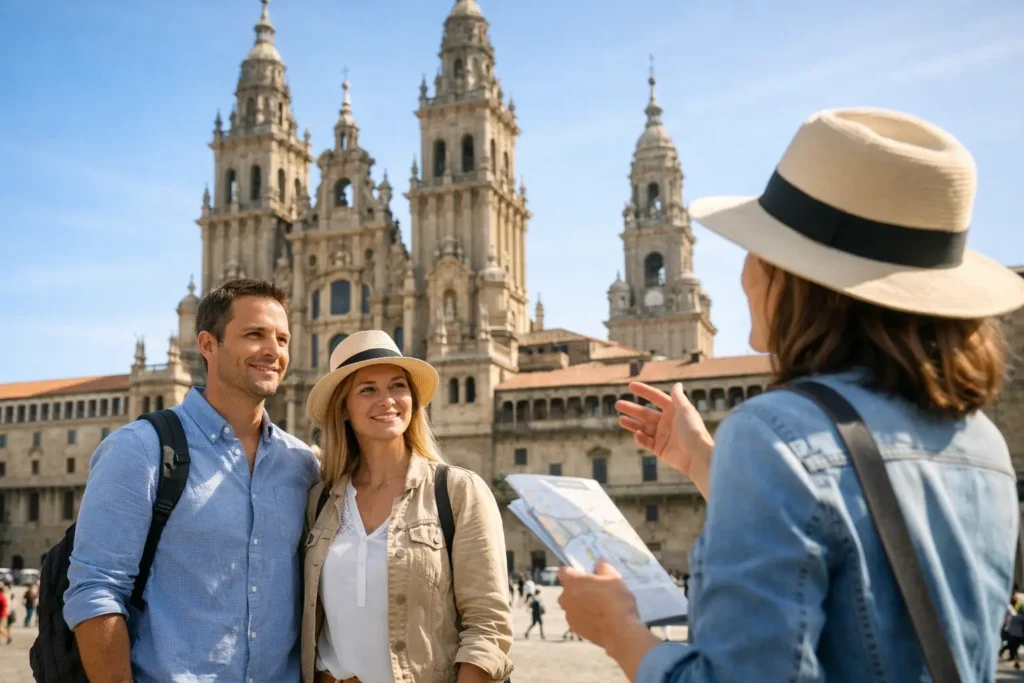
The moment you step into Obradoiro Square, the Cathedral of Santiago de Compostela stops being a landmark on an itinerary and becomes the center of everything around it. Pilgrims arrive with muddy boots and emotional stories. Visitors look up at the Baroque facade. Bells, street musicians, and the movement of the old city create a scene that is easy to admire but harder to understand on your own. A Santiago Cathedral guided visit gives that scene its context, helping you see the building as the destination of the Camino, a living place of worship, and one of Galicia’s defining cultural treasures.
For many travelers, the cathedral is the essential stop in Santiago. The practical question is not whether to visit, but how to make the most of the time you have. A guided experience can be particularly valuable if you are staying in the city for only one or two days, traveling with family, or want clear explanations without spending hours researching the details beforehand.
Why visit the cathedral with a guide?
The cathedral has more than 1,000 years of history, but its most memorable details are often the easiest to miss. A guide can point out how the different architectural periods coexist, from Romanesque foundations to later Gothic and Baroque additions. You will understand why the tomb of Saint James transformed this corner of northwest Spain into one of Christianity’s great pilgrimage destinations.
A local guide also brings the human side of the cathedral into focus. The Camino is not only a historic route. It is a present-day journey made by people from around the world, each arriving with different reasons for walking. Seeing pilgrims enter the square after weeks on the trail gives a guided visit a dimension that a museum-style tour cannot fully reproduce.
The difference is especially noticeable at key features such as the Portico of Glory, the main altar, the chapels, and the cathedral museum areas when included in your ticket. These spaces are full of symbols, restorations, rituals, and stories. Without an explanation, it is possible to appreciate their beauty. With one, you can understand what you are looking at and why it matters.
What to expect on a Santiago Cathedral guided visit
Most visits begin close to the cathedral, often in or near the historic center. Your guide will usually introduce the role of Santiago de Compostela on the Camino before entering the monument or beginning the route through its surroundings. Exact itineraries, entrance points, duration, and included spaces can vary by tour and by cathedral operations, so check the activity details before reserving.
Inside, expect an active religious setting rather than a silent historic building. Masses, pilgrim arrivals, celebrations, maintenance work, and security arrangements can affect access at short notice. A well-organized visit accounts for these realities and adjusts the route when necessary.
Your guide may explain the origins of the apostle’s cult, the construction of the Romanesque cathedral, and the evolution of the plaza that visitors see today. You may also hear about the Botafumeiro, the famous ceremonial censer. It is one of the cathedral’s best-known traditions, but it is not operated as part of every service or every day. Treat it as a possible highlight, not a guaranteed feature of a standard visit.
The Portico of Glory and museum access
The Portico of Glory is among the cathedral’s most significant artistic works. Its sculptural program is extraordinarily detailed, and access is often managed in timed slots to protect the monument. If viewing it is a priority, choose a visit that explicitly states whether admission is included and whether a reserved time is required.
The same advice applies to museum spaces, rooftops, cloisters, and other special areas. These additions can make a visit more complete, especially for travelers interested in art, architecture, or panoramic views over Compostela. On the other hand, they may add time, involve stairs, or require a more fixed schedule. The best choice depends on your interests and how much of the city you want to see that day.
Choose the right time for your visit
Morning visits are often a good option if you want to continue afterward through the old town, enjoy lunch at a relaxed pace, or visit the market and nearby squares. Early hours can also feel calmer before the busiest part of the day, although the cathedral is popular year-round.
Later visits work well for travelers arriving in Santiago that morning or for anyone who wants to start with a walking tour of the historic center. Light changes quickly in the city’s granite streets, and an afternoon route can be especially enjoyable when paired with time in Obradoiro Square after the tour.
The calendar matters. Holy Year periods, Easter, summer weekends, major religious dates, and events connected to the Camino can bring larger crowds and changes to access. If your travel dates are fixed, reserve earlier rather than assuming there will be last-minute availability. For a more comfortable pace, a small-group format is often the better fit than a large excursion group.
Practical tips before you go
The cathedral is in the pedestrianized old town, so wear comfortable shoes even if the tour itself is not long. The cobblestones can be uneven, and Santiago’s weather changes quickly. A light waterproof layer is useful in any season, while summer visitors should still bring water and sun protection for time in the surrounding squares.
Dress respectfully. This is an active place of worship, and rules may be stricter in certain areas or during services. Avoid planning a visit with large luggage, as carrying bags through busy access points is inconvenient and some spaces may have restrictions.
Arrive a little early at the stated meeting point. Old Santiago is compact, but its narrow streets can be confusing the first time you walk through them. A few extra minutes make the start easier and help the group leave on time.
Before booking, confirm three points: the tour language, whether entrance fees are included, and which parts of the cathedral are actually covered. A general historic-center tour may explain the exterior superbly without including interior access. That can be a great choice if you want a broader introduction to Santiago, but it is different from a cathedral-focused guided visit.
Combine the cathedral with the old town
The cathedral makes more sense when you experience the streets around it. After your visit, take time to walk through the squares that frame the monument: Obradoiro, Quintana, Platerias, and Inmaculada. Each has a different view, rhythm, and role in the city’s history.
Continue toward the Cathedral’s southern side and the old market area if you want to see everyday Compostela beyond the pilgrimage route. This is also a good moment to stop for Galician food, from empanada and local cheeses to seafood and a glass of Albariño. If you have a full day, add a visit to Alameda Park for one of the classic city views, then return to the old town as evening approaches.
Tour Galicia can help travelers who prefer the simplicity of an organized experience with local guides, clear meeting instructions, and time to enjoy the city without sorting out every detail alone. It is a practical option for independent visitors, families, and groups who want the history explained by someone who knows Santiago firsthand.
Is a guided cathedral visit worth it for you?
It is usually worth it if this is your first time in Santiago, if you have limited time, or if you want to understand the cathedral’s relationship with the Camino. It is also a smart choice for travelers who enjoy art and architecture but do not want to rely on a guidebook while navigating crowds and changing access conditions.
A self-guided visit may suit you if you have already spent time in Santiago, prefer to move at your own pace, or mainly want a quiet moment inside the cathedral. There is no wrong approach. The trade-off is simple: independent visits offer flexibility, while guided visits offer interpretation, structure, and a clearer sense of place.
When you stand in Obradoiro Square afterward, resist the urge to rush to the next stop. Look at the arriving pilgrims, the towers above you, and the worn stone underfoot. Santiago is best remembered not as a checklist of monuments, but as a city whose stories become clearer when you give them a little time.