

When to See Catedrales Beach Tides in Galicia
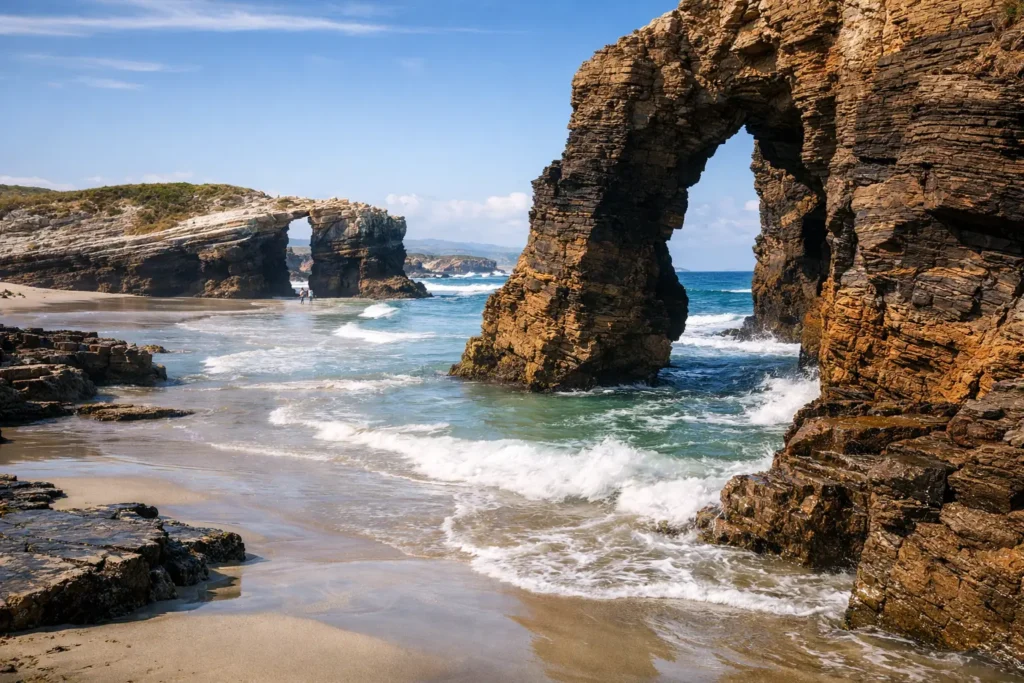
The first sight of Playa de las Catedrales can be misleading. From the clifftop path, it looks beautiful at almost any hour. But if you are wondering when to see Catedrales Beach tides at their most spectacular, the answer is simple: plan your visit around low tide. That is when the Atlantic pulls back to reveal the beach’s famous arches, sea caves, rock corridors, and towering formations that give this coast its cathedral-like name.
Located near Ribadeo in northern Galicia, this is not a beach where you can arrive at any time and expect the same experience. The tide determines what you can see, where you can walk, and whether it is safe to enter the sand at all. A little planning makes the difference between admiring the cliffs from above and stepping beneath one of Galicia’s most memorable natural monuments.
The best time to visit Catedrales Beach
The best time to go down to Playa de las Catedrales is during low tide, ideally within the two hours before and after the lowest point. This gives you enough time to walk across the broad stretch of wet sand, photograph the major arches, and explore the areas that disappear once the water rises.
At high tide, much of the beach is covered by the sea. The views from the upper trails remain worthwhile, especially on a clear day, but the iconic experience of walking under the stone arches is not possible. If seeing the formations from the beach is your priority, do not base your itinerary on a convenient morning or afternoon slot alone. Base it on the tide table for the date of your visit.
Low tide changes every day. It may fall early in the morning one day and late in the afternoon the next. This is why travelers staying in Santiago de Compostela, A Coruña, or Ribadeo should check the official tide forecast before confirming their route. A guided day trip can also be a practical choice, since the schedule is organized around the conditions that matter most.
Why low tide changes the experience
Playa de las Catedrales is shaped by the Cantabrian Sea, whose waves have carved openings, vaults, and caves into the dark slate cliffs over centuries. At low tide, the sea reveals a natural route through this sculpted landscape. You can walk beneath arches that rise dozens of feet above the sand and see details in the rock that are hidden for much of the day.
The changing water is part of the appeal, not an inconvenience. The beach looks different with every tide, season, and sky. On a calm morning, shallow pools reflect the arches. On a windy day, the sound of the surf fills the caves and reminds visitors why the marked limits and safety warnings are taken seriously.
How to check Catedrales Beach tide times
Look for the predicted low-tide time for the Ribadeo coastline, then plan to arrive at the beach access point around 30 to 45 minutes before it. Arriving early gives you time to park, collect your permit if required, use the restrooms, and descend the stairs without rushing.
Tide predictions are useful planning tools, but the sea always has the final word. Weather, waves, and local safety restrictions can affect access. Follow posted signs, listen to staff instructions, and never assume that a published low-tide hour means every section of the beach is safe to enter.
If you are traveling with children, older relatives, or anyone with limited mobility, allow extra time. The descent involves stairs, and the sand can be uneven, wet, and slippery near the rock formations. The viewpoint paths above the beach offer a good alternative for visitors who prefer not to go down to the shore.
The rule that matters most: leave before the tide returns
Do not walk too far along the beach without keeping track of the water. The safest approach is to enjoy the main arches near the central access area and begin heading back well before the water starts reclaiming the sand.
It can be tempting to continue toward a distant cave for one more photograph. That is where poor timing becomes risky. Narrow passages can fill quickly, and cliffs should never be used as an escape route. Stay aware of your return path, especially if you are visiting independently.
Do you need a permit to visit Playa de las Catedrales?
During the busiest periods, access to the beach is controlled to protect this fragile natural area and keep visitor numbers manageable. A free reservation or permit is commonly required for access to the sand during peak season, particularly in summer and around major holiday periods such as Easter.
Requirements can change depending on the season and local regulations, so confirm the current rules before traveling. The permit is generally for entry to the beach itself, not for enjoying the viewpoints above the cliffs. Even when a permit is not required, low-tide timing and weather conditions still apply.
Book as early as possible if your travel dates are fixed. Summer demand is high, and Playa de las Catedrales is one of Galicia’s best-known natural attractions. A confirmed access time takes one uncertainty out of your day, but it should still align with low tide if you want to walk beneath the arches.
What to wear and bring for a comfortable visit
This is a coastal walk, not a formal hike, but the conditions call for sensible preparation. Wear shoes with grip that can handle damp sand and uneven rock. Flip-flops may be fine for a quick beach stroll, yet they are not ideal when the ground is slippery or when you need to move comfortably over shallow channels.
A light waterproof layer is useful in any season. Northern Galicia can change character quickly: bright sunshine may give way to mist, wind, or light rain within the same visit. In summer, bring water, sunscreen, and a hat. In cooler months, add a warm layer because the exposed clifftops can feel much colder than the temperature suggests.
Keep valuables protected from sand and spray, and do not rely on a large backpack if you want to move easily through the arches. A phone or camera is enough for most visitors. The real advantage of arriving at low tide is having time to look up, slow down, and take in the scale of the place rather than trying to capture every corner.
When to visit for fewer crowds
Low tide is the essential factor, but crowd levels are the next consideration. July and August bring the highest number of visitors, especially around midmorning and early afternoon. If low tide falls early in the day, you may have a calmer experience than visitors arriving later. Weekdays are generally less busy than weekends, though popular dates can fill up regardless.
Spring and early fall offer an appealing balance of milder crowds, dramatic coastal light, and comfortable temperatures for walking. Winter can be striking for travelers who enjoy wild scenery, but daylight is shorter and weather conditions are more changeable. At this time of year, the viewpoints can be just as rewarding as beach access.
For travelers based in Santiago, reaching the beach independently often means a long day of driving and coordinating parking, access, and tide times. An organized excursion with Tour Galicia can make that planning simpler, especially if you prefer to enjoy Ribadeo and the coast with a local guide rather than manage every detail yourself.
A few practical safety reminders
The beauty of Playa de las Catedrales comes from an active ocean landscape. Respect barriers, do not climb the cliffs, and avoid entering closed-off caves or areas marked as unsafe. Falling rocks and rising water are genuine risks, even on a day that begins quietly.
Bring any trash back with you, stay on marked paths above the beach, and give the rock formations the care they deserve. This coastline has been shaped over a very long time. A thoughtful visit helps ensure that future travelers can stand beneath the same arches.
If your schedule is flexible, choose the day with a favorable low tide first and organize the rest of your itinerary around it. That one decision turns a quick stop at a famous beach into the experience people remember long after their trip through Galicia.