
Skip to content

Finisterre Tour Duration and What to Expect

The right Finisterre tour duration is usually a full day, not a quick stop between breakfast and dinner. From Santiago de Compostela, reaching this dramatic stretch of the Costa da Morte takes time, and that is part of the experience. The route passes through fishing villages, estuaries, Atlantic beaches, and some of Galicia’s most striking coastal scenery before arriving at Cape Finisterre.

For most visitors, plan on approximately 9 to 10 hours for a guided excursion from Santiago. That allows enough time to enjoy the coast without turning every photo stop into a race. If you want to add Muxía, longer walks, or a relaxed seafood lunch, a private itinerary or an overnight stay may be the better choice.

How Long Is a Finisterre Tour From Santiago?

A standard day trip to Finisterre from Santiago de Compostela generally lasts between 9 and 10 hours, including transportation, guided stops, free time, and the return journey. The drive to the cape is not especially long in mileage, but coastal roads and worthwhile stops along the way make this much more than a simple transfer.

Expect roughly 1 hour and 30 minutes to 2 hours of driving each way, depending on the exact route, traffic, and weather. A well-planned excursion breaks up that travel time with places that explain why the Costa da Morte has such a strong identity: granite villages, working harbors, long beaches, and a coastline shaped by the Atlantic.

Trying to do Finisterre in half a day from Santiago is possible only in a very limited sense. You could reach the lighthouse, take a few photos, and return, but you would miss the landscape and local stories that give the destination its meaning. For travelers without a rental car, a full-day organized trip is usually the most comfortable and efficient option.

What Fits Into a Full-Day Finisterre Itinerary?

The exact order of stops changes by tour and season, but a satisfying day normally combines inland Galicia, the coast, and Cape Finisterre itself. The point is not to spend every minute at the lighthouse. It is to understand the journey toward it.

Ponte Maceira and the road toward the coast

Many routes begin with a stop near Ponte Maceira, a small historic village known for its stone bridge, river setting, and traditional Galician architecture. It offers a quieter contrast to Santiago and gives the day an easy start before the coastline becomes the focus.

Not every itinerary includes the same inland stop, and that is reasonable. Weather, group timing, and seasonal daylight can affect the route. What matters is that the journey includes time to see the Galicia between the city and the cape, not only the final viewpoint.

Muros, Ézaro, or another coastal highlight

A full-day trip often includes a coastal town or natural landmark before Finisterre. Muros is valued for its old fishing-port character, while the Ézaro area is known for the meeting of river, waterfall, and ocean. Some routes also make time for Carnota Beach or the hórreos, the distinctive raised stone granaries found across rural Galicia.

These stops are where tour duration makes a real difference. A 10-hour day can leave room to step onto the sand, look across an estuary, or have a coffee in a harbor town. A shorter schedule often means seeing the coast from the bus window rather than experiencing it.

Cape Finisterre and the lighthouse

At Cape Finisterre, visitors usually have free time to walk around the lighthouse, take in the open Atlantic, and see the kilometer-zero marker associated with the Camino de Santiago. For many pilgrims, reaching this point feels like an emotional extension of the Camino, even though Santiago is its official destination.

Allow at least 45 minutes to an hour here if you want to enjoy it properly. Wind and fog can arrive quickly, so the view may be clear, moody, or completely wrapped in mist. Each version has its appeal, but coastal conditions can influence how long you choose to stay outdoors.

A local guide also adds useful context. Finisterre was long considered the end of the known world, and its name comes from the Latin for “end of the earth.” Technically, nearby Cape Touriñán extends slightly farther west, but Finisterre remains the symbolic destination for travelers and pilgrims.

Is 9 to 10 Hours Enough for Finisterre and Muxía?

It depends on what you expect from the day. A combined Finisterre and Muxía excursion can work within a longer full-day schedule, often around 10 to 11 hours, but it will naturally leave less free time at each location. This is a good choice for travelers who want to see the two most iconic capes of the Costa da Morte in one day.

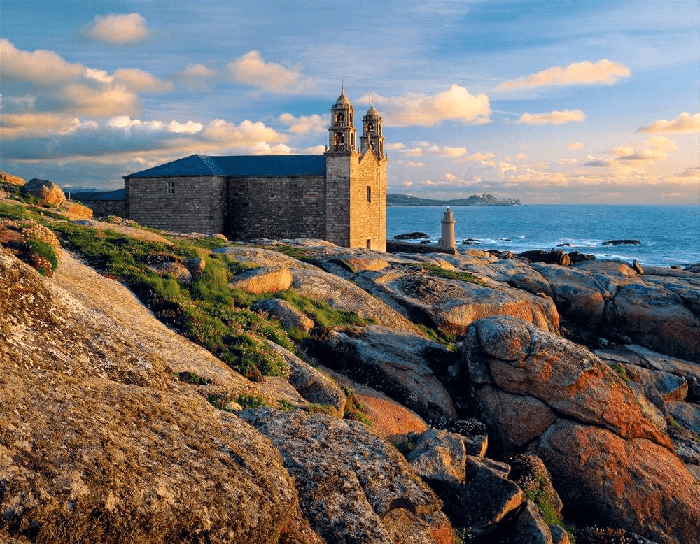
Muxía has a distinctly different atmosphere from Finisterre. Its Sanctuary of A Barca sits directly beside the Atlantic, surrounded by massive granite rocks and sea views. The setting is tied to local religious tradition and feels especially powerful when the ocean is active.

Choose a Finisterre-only route if you prefer a slower day, want more time in coastal villages, or are traveling with young children, older relatives, or anyone who does not enjoy long days on the road. Choose Finisterre and Muxía together if you have limited time in Galicia and would rather see more of the coast, even at a faster pace.

Timing Your Day: Departure, Meals, and Return

Most tours from Santiago depart in the morning and return in the late afternoon or early evening. The exact time varies with the itinerary and season, but visitors should avoid scheduling a dinner reservation, train, or flight immediately after the expected return. A small time cushion makes the day much more relaxed.

Lunch arrangements vary. Some excursions include a stop with free time to eat, while others may allow guests to bring snacks or choose from local cafés. If a seafood meal is high on your list, check whether the itinerary provides enough time for it. Galicia’s coast deserves more than a rushed plate ordered five minutes before departure.

Bring water, a light snack, and an extra layer even in summer. The temperature at Cape Finisterre can feel cooler than in Santiago, especially with wind from the Atlantic. Comfortable shoes are also worthwhile, as lighthouse paths, village streets, and natural viewpoints can be uneven.

When a Private Finisterre Tour Is Worth the Extra Time

A shared group tour is ideal when you want transportation, route planning, and the insight of a local guide without managing the logistics yourself. It is also an excellent option for solo travelers, couples, and small groups who want a clear schedule and a reliable return to Santiago.

A private tour becomes especially appealing when your priorities are more specific. You may want longer at Ézaro, a lunch reservation in a particular village, photography time at sunset, or a route adapted for children or reduced mobility. Private travel gives you greater control, but it requires a larger budget and should be planned around realistic driving times.

For cruise passengers, the calculation is even more precise. The itinerary must fit the ship’s port schedule, include comfortable margins for the return, and avoid overloading the day. A coastal experience can be memorable without attempting to see every corner of western Galicia in a single shore excursion.

How to Choose the Right Duration for Your Trip

Before booking, look beyond the headline destination and check the total hours, departure point, included stops, meal time, and expected return. A tour labeled “Finisterre” may focus only on the cape, while another may also include villages, beaches, waterfalls, or Muxía.

For a first visit from Santiago, a 9- to 10-hour guided day trip offers the best balance. You get the major landscapes of the Costa da Morte, time at Cape Finisterre, and the comfort of returning without navigating unfamiliar roads after a long day. With Tour Galicia, travelers can experience this part of the coast with guides who know the territory and logistics organized from the start.

Leave room in your Galicia itinerary for the road as well as the destination. At Finisterre, the changing light, the villages before the cape, and the Atlantic at the edge of the map are what make a full day feel well spent.

10 Top Galicia Rainy Day Activities Worth Doing

Galicia does not wait for perfect weather to show its character. A misty morning in Santiago de Compostela, rain tapping on a winery window in the Rías Baixas, or clouds rolling over the Ribeira Sacra can become part of the memory. The best top Galicia rainy day activities are not simply indoor backups. They are ways to experience the region’s history, food, art, and landscapes with more comfort and less concern about the forecast.

For travelers based in Santiago de Compostela, A Coruña, Vigo, or a cruise port, the key is choosing an experience that works well in changing conditions. Galicia’s rain is often light and intermittent, but a well-planned day means you can enjoy it without spending hours checking the weather app.

1. Visit Santiago de Compostela’s historic center

Rain gives Santiago’s granite streets a deep silver sheen and fills the old town with a quieter, more atmospheric rhythm. This is one of the few cities where carrying an umbrella can feel entirely appropriate to the setting. The historic center is compact, so you can move between churches, arcades, cafés, museums, and shops without long exposed walks.

Start around Plaza del Obradoiro, where the Cathedral of Santiago anchors the city. Even if you have seen it in photographs, the scale of the façade and the movement of pilgrims arriving at the square are worth experiencing in person. Step inside the cathedral when access conditions allow, then continue through the covered lanes around Rúa do Vilar and Rúa Nova.

A guided walking tour is especially useful on a wet day. A local guide can provide the stories behind the stone façades, explain the Camino de Santiago traditions, and adjust the route to include sheltered stops when rain becomes heavier. Rather than trying to interpret centuries of history from a map, you see the city with someone who knows it.

2. Spend time in Galicia’s museums

Museums are a strong choice when the forecast calls for steady rain, especially for travelers who want culture without a rushed schedule. Santiago has several options that add context to the city beyond the cathedral, including spaces focused on pilgrimage, sacred art, and Galician identity.

In A Coruña, the science museum scene and the city’s cultural institutions can easily fill an afternoon. The Domus, dedicated to the human body, is particularly good for families, while the Aquarium Finisterrae offers an engaging way to learn about the Atlantic that shapes Galicia’s coastline. These are practical choices if children need room to move and you want an activity that does not depend on the weather clearing.

For art and history lovers, allow time rather than trying to fit several museums into one rainy morning. The value is in slowing down, reading the stories, and noticing how Galicia’s Celtic roots, maritime trade, religious traditions, and rural life connect.

3. Choose a food-focused afternoon in Santiago

Galicia’s cuisine is built for gray skies. A rainy day is a very good reason to take a long lunch, order local seafood, and try dishes that feel tied to the region rather than chosen at random. Look for octopus Galician-style, savory empanada, scallops, local cheeses, and seasonal fish. Finish with Tarta de Santiago, the almond cake marked with the Cross of Saint James.

The Mercado de Abastos in Santiago is a useful stop for visitors who want to see the ingredients behind the menus. Its stalls reflect the region’s relationship with the sea, small farms, and seasonal cooking. Go earlier in the day for the liveliest atmosphere, then settle into a nearby restaurant rather than rushing onward.

This is also a smart option for independent travelers with only a few hours in the city. You do not need a full-day plan to have a memorable experience, and it is easy to combine the market with a historic center tour.

4. Enjoy a thermal spa experience

When rain is persistent, warm water is an obvious answer. Galicia has a long thermal tradition, particularly around Ourense, where mineral springs have been part of local life since Roman times. A spa visit can turn a wet afternoon into a restorative pause between sightseeing days.

This activity works best if you have a rental car, a private itinerary, or enough time to make Ourense part of a broader route. It may not be the most efficient choice for a short stay in Santiago, and it is less suitable for cruise passengers working with a fixed return time. But for couples, friends, and travelers spending several nights in the region, thermal pools offer a distinctly Galician way to slow down.

Bring a swimsuit, confirm access requirements in advance, and check whether a reservation is needed. Some thermal facilities are designed for a quiet spa experience, while others are more social and family-oriented.

5. Visit a winery in the Rías Baixas

The Rías Baixas are known for Albariño, a white wine closely connected to the Atlantic climate. Rain is not an interruption to that story. In fact, a visit to a winery on a cloudy day makes the region’s green vineyards and humid coastal conditions easier to understand.

A winery experience usually combines an introduction to the local grape, a look at the production process, and a tasting. The setting can be especially enjoyable when outdoor views are softened by mist, although vineyard walks may be limited in heavy rain. If your main interest is wine rather than photography, that trade-off is rarely a problem.

This option suits adults who want a relaxed, organized half-day or full-day experience. It also pairs well with a route through the Rías Baixas, where coastal towns, small islands, and traditional seafood restaurants offer plenty of stops if the rain is light rather than constant.

6. Take a guided day trip to the coast

A rainy forecast does not automatically rule out Galicia’s coast. Finisterre, Costa da Morte, Playa de las Catedrales, and the Rías Baixas are dramatic precisely because of their Atlantic weather. The important distinction is between light rain and conditions that create safety concerns, particularly strong wind, high waves, or limited visibility.

On a guided trip, transportation and timing are organized for you, which matters when roads are wet and the weather changes throughout the day. A local guide can also shift the pace, prioritize viewpoints with good visibility, and explain the significance of places that might otherwise feel like a brief photo stop.

For example, Finisterre and Costa da Morte are often more powerful under low clouds than under a perfectly blue sky. Their history of shipwrecks, lighthouses, pilgrimage, and the edge-of-the-world feeling is connected to the sea’s force. Bring a waterproof layer and shoes with good grip, but do not assume a cloudy day means you should stay in the hotel.

Tour Galicia organizes guided excursions with local guides and coordinated transportation, making this a comfortable alternative for visitors who do not want to navigate unfamiliar roads or redesign their plans around every passing shower.

7. Explore Lugo’s Roman heritage

Lugo is an excellent rainy-day destination for travelers interested in history. Its Roman wall, one of the best-preserved in Europe, circles the old town and remains the city’s defining feature. You can walk sections of it when conditions are safe, but the city also rewards visitors who spend time at street level, moving between the cathedral, small squares, cafés, and restaurants.

Rain may shorten the time you want to spend on the wall itself, yet it does not take away from Lugo’s appeal. The old town is compact, and the local tradition of serving small tapas with drinks makes it easy to create a relaxed route with frequent indoor stops.

A day trip to Lugo can be a particularly good fit for travelers staying in Santiago who want a change of scenery without committing to a long coastal drive. It is less about chasing viewpoints and more about stepping into layers of Roman and medieval Galicia.

8. Make Ribeira Sacra about wine and monasteries

Ribeira Sacra is famous for steep vineyard terraces, river canyons, and monastery sites. On a bright day, its viewpoints are a major draw. On a rainy day, the experience changes, but it does not disappear. Mist settling over the Sil River can create striking scenery, while winery visits and historic monasteries provide shelter and substance.

The trade-off is clear: if your priority is wide panoramic photography, wait for a clearer day if your itinerary allows. If you are interested in heroic viticulture, regional wines, and quieter inland landscapes, a guided route can still be deeply rewarding.

Because the roads can be winding and conditions can vary by valley, this is one destination where organized transport is particularly practical. You can enjoy the tastings and views without the responsibility of driving afterward.

How to plan for rain in Galicia

Pack for flexibility rather than trying to predict every hour. A waterproof jacket with a hood is more useful than an umbrella on exposed coastal stops, while comfortable water-resistant shoes make city walks much easier. Keep a small bag for electronics and carry an extra layer, since temperatures can feel cooler near the ocean.

If your trip has several days, place weather-sensitive activities such as beach walks and panoramic viewpoints on the most promising forecast day. Reserve Santiago’s historic center, museums, food experiences, wineries, and thermal options for wetter periods. For a fixed cruise schedule, choose an excursion designed around your port timing and avoid plans that require multiple independent connections.

Rain in Galicia is not a failure of the itinerary. With local knowledge, a sensible route, and enough room to adapt, it can be the detail that makes the region feel more authentic. Let the forecast shape the day, then enjoy Galicia with the people and places that know how to welcome you in any weather.

Top Historic Sites Around Lugo Worth Your Time

Lugo is one of those places where history is not kept behind a museum door. It follows the line of the city, appears beneath modern streets, and continues into the green countryside a few miles beyond the center. The top historic sites around Lugo reward travelers who give themselves time to look beyond a quick photo of the Roman Wall.

For a first visit, combine the compact old town with one or two nearby landmarks. The city is easy to explore on foot, while the rural sites require a car, a taxi, or an organized excursion. That small amount of planning makes a major difference, especially if you are traveling from Santiago de Compostela, A Coruña, or Ribadeo and have just one day in Lugo.

Top historic sites around Lugo: start inside the walls

The Roman Wall of Lugo

Lugo’s Roman Wall is the essential place to begin. Built between the late 3rd and early 4th centuries AD, it encircles the historic center for more than 1.2 miles and remains remarkably complete. This is not a fragment to admire from behind a barrier. You can climb up and walk its broad rampart, seeing towers, gates, roofs, and the city beyond.

Allow at least 45 minutes for the walk, or longer if you want to stop for photographs. The circuit is mostly level, which makes it one of the most accessible ways to understand the scale of Roman Lucus Augusti. The wall is especially enjoyable in the early morning or toward evening, when the light softens and the old town is quieter.

Do not limit your visit to the top. Walk outside the wall near the gates to appreciate its height, then return through one of the entrances into the historic center. The contrast between ancient stonework and everyday city life is precisely what makes Lugo distinctive.

Lugo Cathedral and its medieval layers

Inside the walls, Lugo Cathedral brings a different era into focus. Its origins go back to the 12th century, but the building has accumulated Romanesque, Gothic, Baroque, and Neoclassical details over the centuries. The main facade is an impressive introduction, yet the interior is where the cathedral’s long life becomes clearer.

Look for the Romanesque elements and the calmer atmosphere of the chapels and cloister. The cathedral is also known for its continuous display of the Blessed Sacrament, a tradition that gives it a particular place in Galicia’s religious heritage.

This is a site best appreciated with context. A local guide can point out which parts belong to the medieval church and which are later additions, saving you from treating a complex building as a simple photo stop. Dress respectfully, and remember that visiting hours can be affected by services and religious celebrations.

Domus do Mitreo

Near the cathedral, the Domus do Mitreo reveals Roman Lugo at a more intimate scale. The archaeological site preserves remains of a wealthy Roman house, including traces connected with the cult of Mithras, a mystery religion practiced across the Roman Empire.

The interpretation center explains what archaeologists found beneath the city and why it matters. It is not a vast ruin, so it works well as a focused stop of around 30 to 45 minutes. For travelers who enjoy archaeology, it adds depth to the wall: Lugo was not only fortified, but also a working provincial city with homes, beliefs, and social life.

The Roman Baths and the Miño riverfront

At the edge of the old town, the Roman Baths offer another useful perspective on daily life in Lucus Augusti. The remains are associated with the historic spa area near the Miño River, where thermal waters have attracted visitors since Roman times.

The setting matters as much as the ruins themselves. After a walk through the old center, head toward the river and notice how the landscape changes from stone streets to wooded banks. The nearby Roman Bridge, rebuilt and altered over time, is a pleasant point from which to take in the river corridor. It is a quieter part of Lugo, ideal if you want history with a break from the busiest streets.

Historic places near Lugo for a half-day outing

Santa Eulalia de Bóveda

About 10 miles from Lugo, Santa Eulalia de Bóveda is one of Galicia’s most intriguing early historic monuments. From outside, it can seem modest. Inside, however, its unusual structure, painted decoration, and archaeological mysteries make it unlike any standard country church.

The building may have served a late Roman religious or funerary purpose before later Christian use, though scholars continue to debate aspects of its original function. That uncertainty is part of the appeal. Rather than presenting a neatly resolved story, Santa Eulalia de Bóveda shows how much remains to be interpreted about the transition from Roman rule to the early medieval world.

Because the site is small, pair it with Lugo city or another nearby stop. Check opening times before setting out, as access can be more limited than at the major attractions in the center.

Castro de Viladonga

For an older chapter of northwestern Iberia, drive about 15 miles northeast of Lugo to Castro de Viladonga. This hillfort was occupied during the late Iron Age and into the Roman period, and its excavated remains make the layout of a castro easy to understand.

You can see the defensive lines, streets, and foundations of circular and rectangular structures spread across the hilltop. The on-site museum gives valuable context through pottery, tools, ornaments, and other finds from daily life. It is an excellent choice for families and for travelers curious about the people who lived in Galicia before and during Romanization.

Plan roughly 90 minutes to two hours here, including the museum. Conditions can be exposed in wet or windy weather, so bring suitable footwear and a light layer. The site is more rewarding when you slow down and picture a settlement rather than expecting monumental stone buildings.

Pazo de San Marcos and the Provincial Museum

Back in Lugo, the Provincial Museum is housed in the former convent of San Francisco, close to the old town. It is a strong option for a rainy afternoon or for anyone who wants to connect the region’s major periods in one visit.

Its collections include Roman inscriptions and mosaics, medieval religious art, traditional Galician objects, and pieces that help explain rural life across the province. The building itself deserves attention, particularly the cloister. While it is not an outdoor archaeological site, it provides the historical framework that makes the wall, cathedral, and hillfort more meaningful.

How to organize a visit without rushing

If you have only a few hours, walk the Roman Wall, visit the cathedral, and choose either Domus do Mitreo or the Provincial Museum. This route keeps everything within the walled center and gives a satisfying introduction to Lugo’s Roman and medieval identity.

With a full day, add Santa Eulalia de Bóveda or Castro de Viladonga. Choosing between them depends on your interests. Bóveda suits travelers fascinated by rare sacred architecture and archaeological mysteries. Viladonga is the better choice if you want open landscapes, a substantial hillfort, and a clearer look at pre-Roman and Roman-era settlement.

Independent drivers have the most flexibility outside the city, but parking and unfamiliar rural roads can take time away from the visit. A guided route is often more comfortable for travelers who prefer not to manage transport, schedules, and historical interpretation themselves. With Tour Galicia, visitors can experience Lugo with local guides who turn dates, stones, and legends into a story that makes sense on the ground.

Wear comfortable shoes even for a city-only plan. Lugo’s historic center has stone pavement, and the wall involves stairs at access points. Keep a little room in your schedule for lunch as well: the old town is a good place to enjoy Galician cooking after a morning of sightseeing, rather than trying to rush through every landmark.

The best visit to Lugo is not the one that checks off the most monuments. It is the one that leaves you standing on the Roman Wall, looking over a living Galician city, with enough time to understand why those stones are still part of everyday life.

Plan a Betanzos Day Trip From A Coruña Today

A Betanzos day trip is one of the easiest ways to trade A Coruña’s Atlantic energy for a slower, deeply Galician town of stone arcades, medieval churches, and famously soft-centered Spanish omelets. Just inland from the coast, Betanzos rewards travelers who want history and local flavor without committing to a long drive or an overpacked itinerary.

This is not a destination that needs to be rushed. Its appeal lies in small details: a quiet square behind an ancient church, the sound of the Mandeo River below the old town, a pastry shop window, and a tortilla served exactly as locals expect it. Give it most of a day, wear comfortable shoes, and let the historic center set the pace.

Why Betanzos is worth a day trip

Betanzos was one of the seven capitals of the former Kingdom of Galicia, and its old quarter still carries that importance. Behind the compact historic center are noble homes, defensive walls, Gothic churches, and squares that feel lived in rather than staged for visitors. It is a strong choice for travelers based in A Coruña who want a cultural outing, and for visitors to Santiago de Compostela looking for a less crowded alternative beyond the city.

The town is particularly appealing if you enjoy destinations where food is part of the story. Betanzos is known across Spain for its tortilla de patatas: thinly sliced potatoes and eggs, usually without onion, cooked so the center remains very runny. It is simple food, but it inspires serious opinions. Trying it in its hometown is reason enough for many visitors to make the journey.

There is a practical advantage, too. Betanzos is close enough to A Coruña for a relaxed visit and compact enough to explore on foot once you reach the center. You can combine monumental sights, lunch, and a riverside walk without spending the day changing locations.

Getting to Betanzos from A Coruña or Santiago

From A Coruña, Betanzos is roughly 16 miles away. Driving is quick, although parking close to the oldest streets can be limited and the center has steep, narrow sections. If you rent a car, it is usually more comfortable to park outside the core and walk in.

Public transportation can work well, but check departure and return times before you leave. The train station is not directly in the historic center, so allow time for the walk or a local taxi. Bus services may offer a more central arrival depending on the route and day. For travelers who prefer not to coordinate transportation, a guided excursion with a local guide removes the practical details and adds context to what can otherwise look like a collection of beautiful but unexplained buildings.

From Santiago de Compostela, the trip takes longer, so Betanzos makes most sense as part of a private day route or for travelers with a rental car. If your time is limited, staying closer to A Coruña gives you more time in town and less time in transit.

A relaxed itinerary for Betanzos

Start in the historic center

Begin around Praza dos Irmáns García Naveira, a central meeting point surrounded by handsome façades and cafés. From here, the old town unfolds uphill and downhill in short stretches. Do not try to follow every lane with military precision. Betanzos is best experienced with room for detours.

Walk toward the Church of Santiago, one of the town’s great Gothic landmarks. Its façade and interior reflect the wealth and ambition of medieval Betanzos, while the surrounding streets preserve the dense layout of a town shaped long before cars. Nearby, the Church of Santa María do Azogue is another essential stop, especially for travelers interested in religious art and medieval architecture.

The Church of San Francisco also deserves time. Its Gothic tombs and historical atmosphere offer a quieter counterpoint to the busier squares. Opening hours for churches can vary with services, season, and local events, so consider the interiors a welcome bonus rather than the only reason to visit.

As you walk, look up. The granite houses, enclosed balconies, coats of arms, and arcaded corners reveal the town’s mercantile past. Betanzos is not a place of grand boulevards. Its charm comes from these close, textured streets.

Plan lunch around the tortilla

For lunch, order tortilla de Betanzos. The classic version is known for its loose, almost liquid center, so it may be very different from the firmer Spanish omelet served elsewhere. If you are unsure about undercooked egg, ask your server what to expect before ordering. The traditional texture is part of the experience, but personal preferences and dietary needs come first.

A tortilla can be a satisfying shared lunch, especially alongside bread, salad, or other Galician plates. Avoid scheduling your meal too late if you are traveling on a weekend or during a holiday. Restaurants can fill quickly, and a small town’s dining hours may feel different from those in major US cities.

Betanzos also has a well-earned reputation for pastries. If you see local sweets or a traditional bakery, save room for an afternoon treat. This is an easy place to build a day around unhurried stops rather than a strict checklist.

Spend the afternoon by the Mandeo River

After lunch, head down toward the Mandeo River. The lower part of Betanzos changes the mood completely: water, bridges, greenery, and views back toward the old town soften the medieval stone landscape. A short riverside walk is ideal after a generous meal and gives families, couples, and photographers a calmer side of the destination.

If you have extra time, consider Parque del Pasatiempo. Created at the end of the 19th century by the García Naveira brothers, it was conceived as an imaginative educational garden filled with references to places and cultures around the world. Its condition, accessible areas, and visiting arrangements have changed during restoration work over the years, so verify current access before building your day around it. When open, it is one of Galicia’s most unusual historic spaces.

What to know before you go

Betanzos can be visited year-round, though spring and early fall are especially pleasant for walking. Summer brings longer days and more activity, while rainy weather can make the polished stone streets slippery. Bring a light waterproof layer in any season, particularly if you are traveling from coastal A Coruña where conditions can change quickly.

The historic center includes slopes, cobblestones, and uneven pavement. Visitors with limited mobility can still enjoy the main squares and selected monuments, but should plan a shorter route and avoid trying to cover every upper street. A taxi can be useful for connecting the station, lower town, and central area.

If your visit coincides with local festivities, expect a more animated atmosphere and more limited availability at restaurants. Betanzos is especially known for its medieval-themed celebrations and summer events. These dates can make the town memorable, but they also call for earlier planning.

For cruise passengers arriving in A Coruña, Betanzos is possible only when the port schedule leaves enough margin for transportation, sightseeing, and a comfortable return. Do not plan the day around the last possible connection. A coordinated shore excursion is often the safer option when ship departure times are fixed.

Make the most of your time with local context

You can certainly enjoy Betanzos independently, particularly from A Coruña. Yet a guide changes the experience when you want to understand why the town mattered in medieval Galicia, how the García Naveira family shaped public spaces, or where local traditions sit behind the architecture. With Tour Galicia, travelers can discover places like Betanzos with guides who know the territory, while transportation and timing are organized in advance.

Whether you arrive by train, car, or an organized outing, leave room for one unscheduled hour. In Betanzos, that is often when the day becomes memorable: a second slice of tortilla, a conversation at a café, or a riverside view that makes you stay just a little longer.


Explore A Coruña and Betanzos with a local guide

Join a guided day trip from Santiago with transport, key landmarks in A Coruña and time to discover Betanzos.

12 Best Rainy Day Activities in Santiago

Rain in Santiago de Compostela is not a reason to put the day on hold. It is part of the city’s character: cobblestones shine, granite facades deepen in color, and cafés fill with the scent of fresh coffee and something warm from the oven. The best rainy day activities in Santiago combine its great indoor landmarks with short, well-timed walks through the old town, where a local guide can make every covered arcade, square, and story count.

For travelers staying in the historic center, the key is not trying to avoid every drop. Bring a waterproof jacket and comfortable shoes with grip, then plan around the places that feel even more atmospheric in wet weather.

1. Visit Santiago Cathedral and its museum spaces

The Cathedral of Santiago is the natural starting point on a rainy morning. Its vast interior offers shelter, history, and one of Europe’s most meaningful pilgrimage destinations. Take time to look beyond the main altar: chapels, stone carvings, and the quiet movement of pilgrims reveal details that are easy to miss on a rushed visit.

Depending on opening times and access conditions, the cathedral museum and rooftop areas can add another perspective. The rooftops are weather-dependent, so do not build your whole day around them if the forecast is poor. The museum, however, is an excellent choice when rain is steady and you want to understand the cathedral’s art, construction, and role in the Camino de Santiago.

2. Walk the old town with a local guide

A rainy-day walking tour may sound counterintuitive, but Santiago’s historic center is remarkably manageable in light or intermittent rain. Many of its most memorable streets are close together, and there are arcades, churches, cafés, and covered entrances along the route.

The difference lies in having someone who knows the city. A local guide can shape the pace around the weather, point out details that are not obvious from a map, and turn a short walk between monuments into a fuller experience. You will hear why the Obradoiro façade has become such a powerful symbol of the city, how pilgrims arrived through different gates, and where the university shaped Santiago’s daily life.

If rain is heavy, choose a shorter historic-center visit rather than an ambitious outdoor route. Santiago is best enjoyed without rushing from one dry doorway to another.

3. Spend time in the Museum of the Galician People

Set in the former Convent of Santo Domingo de Bonaval, the Museum of the Galician People offers an engaging introduction to Galicia’s traditions, work, architecture, and cultural identity. It is a particularly good option for visitors who want context before exploring more of the region.

Its famous triple-helical staircase alone makes the visit worthwhile. The museum’s exhibits explain rural life, fishing, traditional crafts, clothing, and music without reducing Galicia to a postcard version of itself. Allow at least an hour, and more if you enjoy reading displays in detail.

Afterward, if the rain softens, the surrounding Bonaval Park offers lovely views over the city. If it does not, you are only a short walk from the old town and its many places to pause for lunch.

4. See contemporary art at CGAC

The Galician Center for Contemporary Art, commonly known as CGAC, sits beside Bonaval and provides a complete change of pace from medieval streets and baroque churches. The building itself is worth seeing, with clean lines, open spaces, and thoughtful use of light.

Exhibitions vary, so this activity depends on your interest in contemporary art. It may not be the first choice for every family or first-time visitor, but it is ideal for couples, independent travelers, and anyone who enjoys architecture or modern culture. Pair it with the Museum of the Galician People for a well-balanced rainy afternoon.

5. Take a long lunch with Galician flavors

Rainy weather gives you permission to linger at the table, and Santiago is made for it. Look for a traditional restaurant near the market or in the old town and order a meal that reflects the season. Galician broth, grilled seafood, octopus, empanada, and local cheeses all feel especially right when the streets outside are wet.

For a lighter stop, a café with a window seat can be just as satisfying. Try a slice of Santiago cake, made with almonds and often marked with the Cross of Saint James. It is simple, local, and an easy way to slow down between visits.

A long lunch is not wasted sightseeing time here. It is one of the ways to experience the city at its natural pace.

6. Browse Mercado de Abastos

Santiago’s food market is a lively, practical stop near the cathedral. Under its covered structure, you can see the ingredients that define Galician cooking: fish and shellfish from the Atlantic, seasonal vegetables, meats, cheeses, and baked goods.

Morning is usually the best time to visit, when stalls are active and the market feels most local. It is not a large indoor attraction that will occupy an entire day, but it works perfectly as part of a wet-weather route through the center. Stop in before lunch, then choose a nearby restaurant with a better idea of what is on the plate.

7. Explore the Pilgrimage and Santiago Museum

For many visitors, Santiago is the end point of a journey. For others, it is the place where the Camino suddenly becomes real. The Pilgrimage and Santiago Museum helps explain the routes, symbols, travelers, and centuries of movement that made this city internationally known.

It is one of the best rainy day activities in Santiago for travelers who want more than a photo in Obradoiro Square. You do not need to have walked the Camino to enjoy it. The museum gives useful context to the scallop shells, pilgrim credentials, monuments, and emotions you will see throughout the city.

8. Visit San Martiño Pinario

Just steps from the cathedral, the monumental monastery of San Martiño Pinario is often quieter than the main cathedral complex. Its scale is striking, and its interiors offer a peaceful alternative when the central squares are busy with umbrellas and tour groups.

This is a good choice if you have already seen the cathedral and want to understand the religious and institutional history that shaped Santiago. Check access hours before setting out, as they can vary by season and special events.

9. Choose a tasting experience indoors

Galicia’s food culture extends well beyond a restaurant meal. An indoor tasting focused on local wines, cheeses, preserves, or sweets can turn a gray afternoon into a memorable part of the trip.

The best choice depends on your group. Wine-focused experiences suit couples and friends who want a relaxed pause; families may prefer a market visit followed by hot chocolate and pastries. If you are joining a scheduled activity, confirm the language, duration, and meeting point before booking so the plan fits your day.

10. Find shelter in Santiago’s historic cafés and bookstores

Santiago is a university city, and it still has corners made for reading, conversation, and unhurried observation. A café-bookstore or traditional coffeehouse gives you a comfortable place to dry off while staying connected to the city outside.

This is especially useful on arrival day, when you may be tired from travel, or on the final afternoon before an early departure. Order coffee, read about Galicia, and watch the rhythm of the old town change as rain passes through the streets.

11. Plan a weather-smart day trip

Not every excursion from Santiago is ideal in heavy rain. Coastal views at Finisterre and Costa da Morte can be dramatic under changing skies, but strong wind, low visibility, or persistent downpours may limit the experience. Ribeira Sacra also depends heavily on viewpoints and outdoor landscapes.

That does not mean you must cancel at the first sign of rain. In Galicia, forecasts can change quickly, and light rain is normal. The practical choice is an organized excursion with clear schedules, coordinated transportation, and guides who know when to adjust the order of stops. Tour Galicia can be a helpful option for travelers who want to explore beyond the city without handling unfamiliar roads and weather logistics themselves.

For a truly wet day, stay in Santiago. For passing showers, a full-day route can still be a rewarding way to see the region with someone who knows it.

12. End the day in Obradoiro Square

Return to Obradoiro Square after dark, even if only for ten minutes. The cathedral illuminated against a wet stone plaza has a quieter, more cinematic feeling than it does at midday. Rain reflects the lights, crowds thin out, and the scale of the façade becomes even more impressive.

Keep your visit simple: stand under an umbrella, take a few photographs, and look around. Santiago does not need perfect weather to leave an impression. Often, the rain is what makes the city feel most like itself.


Keep exploring Santiago, whatever the weather

Compare guided visits and day trips available from Santiago in English.

Tips for Visiting Cape Vilán

Cape Vilán is one of A Coruña’s natural landmarks. It is a striking feature of the Costa da Morte and you cannot miss this beautiful spot, so we will share some tips to help you discover Cape Vilán.

O Grove

O Grove is a town on the Iberian Peninsula, full of beautiful beaches to enjoy with the family. It boasts the best tourist spots from which to get to know the city and all of its advantages.

Best Places to See in Muros

Muros is a Spanish municipality in A Coruña. Known for its history and beautiful landscapes, it may not be among the most famous towns for tourists, but it holds magic and beauty that everyone should take the chance to discover one day. That is why in this article you will find the best places to see in Muros.

Get to Know Galicia

This is now my fourth time in Galicia, and during all the time I have spent here I have visited many places and each time I feel closer to this region. In this post I have put together a piece on the places I think are worth seeing here. I invite you to come along on my journey through Galicia!

We start in the Rías Baixas; the jewel of this area is the Cíes Islands. According to The Guardian they have the best beach in the world. The British paper was not mistaken — Rodas Beach is gorgeous, with soft white sand and crystal-clear, turquoise-blue water. But the English press is not the only one to have been spellbound by the Cíes; the Romans were too, and they called them the “Islands of the Gods”. You can reach the islands by boat from Vigo or Sanxenxo.

In the Rías Baixas we can also visit many small seaside villages, such as O Grove, with the best seafood paella I have ever eaten, and a very long beach, A Lanzada, with large shells scattered through its sand.

In the south you can also visit cities like Pontevedra. “Pontevedra dá de beber a quen pasa” is a Galician saying that captures very well the essence of this city, which is hospitality. Pontevedra can be admired on foot; everything is fairly close together. You can visit the old quarter, the ruins of Santo Domingo, a few churches or the Museum of Pontevedra, with a gold collection of splendid jewellery more than 4,000 years old. They also say that, in Pontevedra, you never sleep.

We move on to Ourense, where the Romans arrived as early as the 1st century in search of gold in the River Miño. Today we have no gold, but we have hot waters. Some of the thermal baths are public; among the most famous are the Termas da Chavasqueira, where the water can reach 65 degrees. Ourense also has an interesting main square with several places to visit.

Near Ourense is the town of O Carballiño, known for its Octopus Festival. Curiously, several local businesspeople offered 30,000 euros five years ago to buy Paul the Octopus, the famous predictor of World Cup results. They wanted to turn him into the symbol of the octopus fair to promote it. In the end the octopus died and never made it from Germany to O Carballiño.

Another place where you can taste good octopus is Melide, a town we will pass through on the French Way.

What to See in 5 Days in Galicia

The Autonomous Community of Galicia is one of Spain’s most attractive destinations. You’d need a long time to know it fully — here’s a 5-day itinerary to make the most of your visit.

With a little planning, you can organise a very complete getaway. Tip-by-tip, you don’t need a month — these landscapes deserve every minute.

Arrival in Santiago de Compostela

Visit Santiago de Compostela

One of Galicia’s most emblematic cities, with great air connections to start your 5 days. About 70,000 inhabitants — rich in history and culture, can be visited in a day. Old town, San Pedro neighbourhood, San Roque and the iconic Cathedral. Good food and tapas bars. If you arrive in the day, follow the 6 km Sarela river route with old mills.

Get to know the Rías Baixas

Discover the Rías Baixas

Day 2: don’t miss the Rías Baixas. Rent a car. Must-sees: O Grove, Combarro and a boat ride. Eat seafood with a good Albariño. With more time: Parque Natural A Barosa and Playa de Lanzada. A tour with boat ride, buffet and beach visits may even save you money.

A Coruña

Trip to A Coruña

Train, bus or car from Santiago. Walk the historic centre — port, María Pita Square, Tower of Hercules. Affordable food in the centre. For a swim, head to Orzán beach. With kids, the Aquarium Finisterrae is great.

Cape Finisterre and Costa da Morte

Travel to Costa da Morte

Two unmissable spots. Bus connections are limited — rent a car for comfort. A Costa da Morte tour can be cheaper and include Paxareiras viewpoint, Ézaro waterfall and Cape Fisterra with expert guides.

End your trip

Visit the Santiago market

If your flight leaves in the afternoon, stop by the Santiago market — traditional stone building with delicacies to taste. Buy typical products to take home. Eat on the market street or at one of the restaurants in Plaza de Mazarelos.