

Free Walking Tour Santiago: What You’ll See
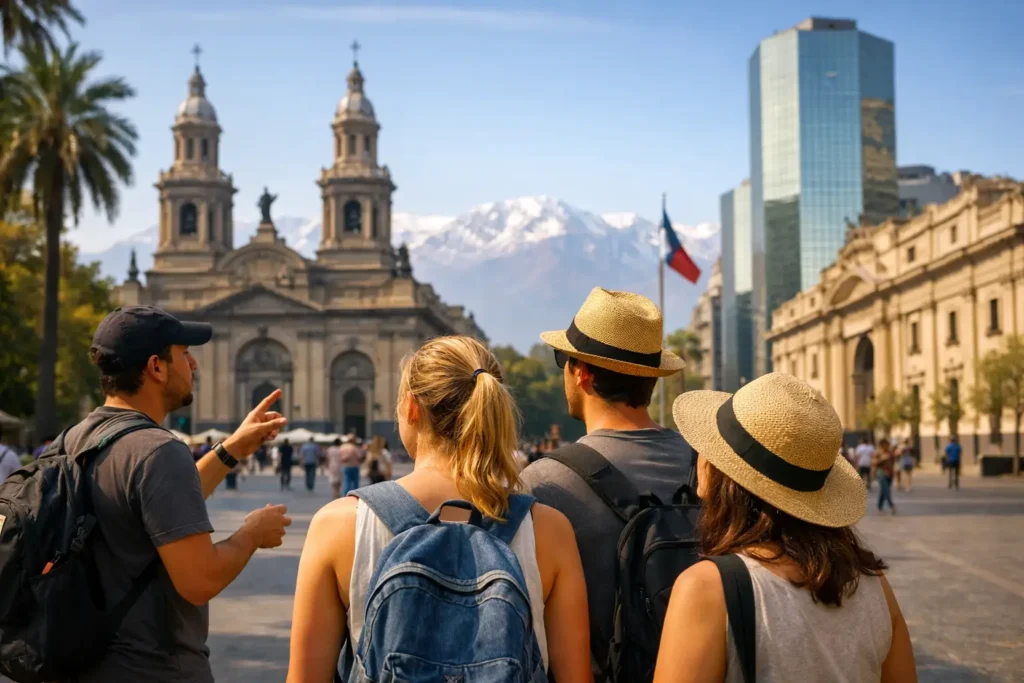
The first glimpse of the Cathedral towers can stop even an experienced traveler in their tracks. But Santiago de Compostela makes much more sense once you know why a quiet passage is called Rúa da Acibechería, where pilgrims entered the city, and how centuries of rain shaped the granite beneath your feet. A free walking tour Santiago visitors choose is a practical first step for getting those stories straight, without trying to navigate the historic center alone.
Santiago is compact, but it is not a city that reveals itself through a checklist. Its streets curve, its squares connect in surprising ways, and many of the details worth noticing are easy to miss. A guided walk gives your first hours in the city a useful structure, then leaves you better prepared to return to the places that interest you most.
What a free walking tour of Santiago usually covers
Most tours begin close to the Cathedral or at a central square in the old town. The exact meeting point matters: Santiago has several plazas within a few minutes of one another, so confirm it before leaving your accommodation and arrive 10 minutes early. The historic center is pedestrian-friendly, but its stone streets can be slippery after rain.
A typical route introduces the main squares around the Cathedral. Obradoiro Square is the grand arrival point, framed by the Cathedral facade, the Hostal dos Reis Católicos, the Pazo de Raxoi, and the College of San Jerónimo. It is the image many visitors expect, yet a guide can explain how the space functions as a meeting place for pilgrims, students, residents, and visitors rather than simply a photo stop.
From there, the walk often moves toward the Cathedral’s other sides. Platerías Square carries Romanesque detail and a different atmosphere from Obradoiro. Quintana Square, with its broad steps and monastic surroundings, is one of the city’s most memorable spaces after sunset. Azabachería Square connects the Cathedral with the route used by many Camino de Santiago pilgrims as they make their final approach.
Beyond the Cathedral complex, many routes include narrow streets such as Rúa do Franco, Rúa da Raíña, and Rúa de Vilar. These are lively streets for food, shopping, and people-watching, but they also help explain the city’s long relationship with travelers. You may pass the Mercado de Abastos, traditional convents, small stone arches, and corners associated with the University of Santiago de Compostela.
The route varies by guide, duration, group size, and day of the week. That is a strength rather than a problem. A guide may adapt the walk to weather, local events, or access around the Cathedral. Still, if there is one landmark you especially want to see, check the route description before booking instead of assuming every tour includes it.
Free does not mean without value
A free walking tour is generally based on tips. You reserve a place without a fixed tour price, then decide at the end what the experience was worth to you. This model can be an excellent choice for independent travelers who want an introduction to Santiago before choosing museums, food experiences, or day trips around Galicia.
It also comes with a little responsibility. A local guide spends time preparing the route, managing the group, and bringing the city’s history to life. If the visit is useful and enjoyable, leave a tip that reflects the quality of the experience and your budget. For travelers used to fixed-price tours, this is the main difference to understand before joining.
Free tours can attract larger groups, especially in spring, summer, and around major Camino arrival periods. If you prefer a more personal pace, detailed questions, or an itinerary built around your interests, a small-group or private guided visit may suit you better. It depends on whether your priority is flexibility, a lower upfront cost, or a more tailored experience.
How to choose the right free walking tour Santiago experience
Start with the practical information, not only the tour title. Look for the length of the route, language, meeting point, cancellation policy, and whether advance booking is required. A two-hour walk is often enough for an overview of the old town, while a longer visit may add more context about the Camino, local traditions, or university life.
The guide’s approach matters too. Santiago has deep religious, artistic, and social history. Some travelers want to focus on the Camino and the Cathedral; others prefer everyday local life, legends, architecture, or food culture. Read the description carefully and choose a route that matches the way you like to travel.
Reviews are useful when they mention specifics: clear explanations, an easy-to-find meeting point, a guide who manages the group well, and a pace that works for different ages. Broad praise is encouraging, but details tell you more about what your own experience may be like.
If you are traveling with children, older relatives, or anyone with limited mobility, ask about the route before reserving. The historic center has slopes, steps, cobbled lanes, and occasional crowding. A good operator should explain what to expect clearly and help you decide whether a standard group walk is appropriate.
Plan for Santiago’s weather and streets
Santiago’s weather is part of the experience. The city can be bright and warm, then wet an hour later, particularly outside the driest summer weeks. Do not let a forecast of rain automatically cancel your plans. Granite facades, arcades, and mist over the old town have their own character. Just come prepared.
For a comfortable walk, bring four simple essentials:
- Shoes with grip for wet stone and uneven paving
- A compact rain jacket or umbrella
- Water, especially on warmer days
- A charged phone with your booking confirmation and meeting-point details
Avoid relying on high heels or smooth-soled shoes. They may be fine for dinner, but they are not ideal for a route that includes cobblestones and sloping streets. In colder months, layers work better than one heavy item because the temperature can change while you walk between open squares and sheltered lanes.
Morning tours tend to offer a calmer atmosphere, especially before day visitors and larger groups fill the area. Afternoon walks can be more animated and may finish close to the traditional dinner hour. If your time in Santiago is limited, take a tour on your first day. You will likely leave with restaurant streets, quieter viewpoints, and return visits already in mind.
Turn your first walk into a better stay
A walking tour should not replace your free time in Santiago. It should make that time more rewarding. After the route, return to one square without a schedule. Sit with a coffee near the old town, visit the market when it is open, or walk toward Alameda Park for a broad view over the Cathedral towers.
This is also the right moment to ask your guide for recommendations that fit your plans. Be specific. A couple looking for a relaxed seafood dinner, a family needing an easy lunch, or a Camino traveler with one spare afternoon will benefit from different suggestions. Local knowledge is most useful when it responds to the time you have, not a generic list of places.
If Santiago is your base for several nights, the old town is only the beginning. Galicia’s coast, historic towns, wine landscapes, and Atlantic viewpoints are easier to enjoy when transportation and timing are organized in advance. Tour Galicia can help travelers who want to combine the city with structured day trips led by local guides, without the need to rent a car.
A few questions worth asking before you go
Is the Cathedral interior included? Often, no. Free walking tours commonly explain the exterior and surrounding streets, while entry rules, service times, and security arrangements can affect interior visits. Check separately if entering the Cathedral is a priority.
Do you need to reserve? In many cases, yes. Even tours with no fixed upfront price may require a reservation because group capacity is limited. Cancel promptly if your plans change so another traveler can take the place.
Can you join after the tour starts? It is better not to count on it. The old town has many intersecting lanes, and locating the group once it has left the meeting point can be difficult.
The best way to experience Santiago is to give its details time to register: the sound of footsteps on wet stone, the pilgrims arriving from the Camino, and the small carvings above doors you might otherwise pass without seeing. Start with a guide who knows the city, then let your own curiosity choose where to linger.