

History of the Pastéis de Belém: the classic Portuguese pastries
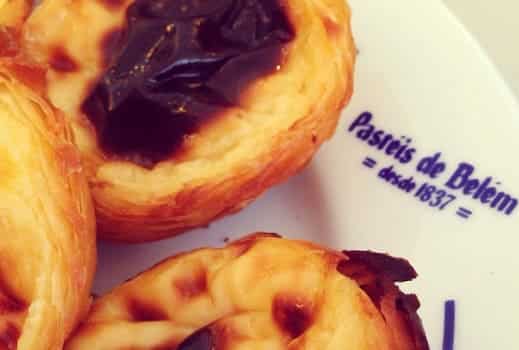
If you have taken a route through Porto or anywhere in Portugal, you will undoubtedly have come across the famous Pastéis de Belém. Displayed in every bakery window with their flaky crusts, custard centres and carefully caramelised tops. You can find them everywhere in Portugal. They are cheap, delicious and absolutely everywhere. Below, we will explore the history of the Pastéis de Belém and why they became so famous in the country.
History of the Pastéis de Belém
If you want to dive into the history of the Pastéis de Belém and the details of this sugary delight, you have come to the right place. Once you know its history and cultural meaning, you will think twice before wolfing them down in two bites. A pastry as symbolic and historic as this deserves to be savoured.
What are pastéis de nata?
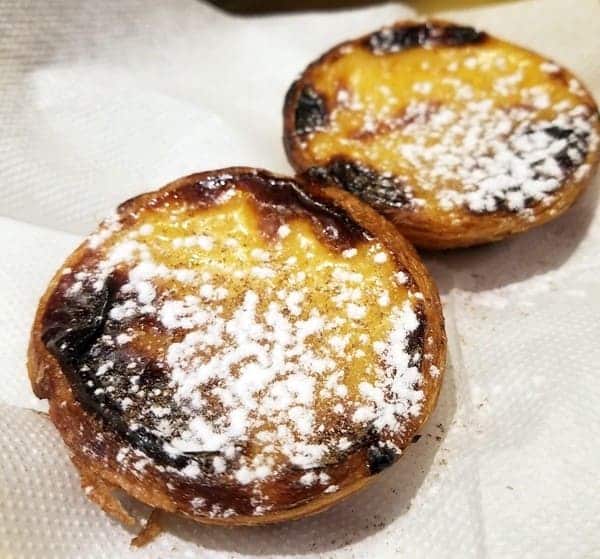 These pastéis de nata are a traditional Portuguese pastry that can be described as a kind of egg tart. They look a little like small nests, with a thick outer layer of puff pastry and a filling of rich yellow custard. The top of the custard is caramelised, with dark brown or black spots and a slightly different texture from the filling below.
The term "pastéis de nata" is a Portuguese expression that means "cream pastries". Pastéis is the plural of the word "pastel", so if you hear or see "pastel de nata" instead, it just refers to a single pastry rather than several.
What about the Pastéis de Belém?
Pastéis de nata are sometimes also called pastéis de Belém. But what is the difference and why the two names? It all comes down to time, place and the history of the Pastéis de Belém. The most famous place to eat pastéis de nata in Lisbon is the Santa Maria de Belém district, and specifically the Fábrica de Pastéis de Belém.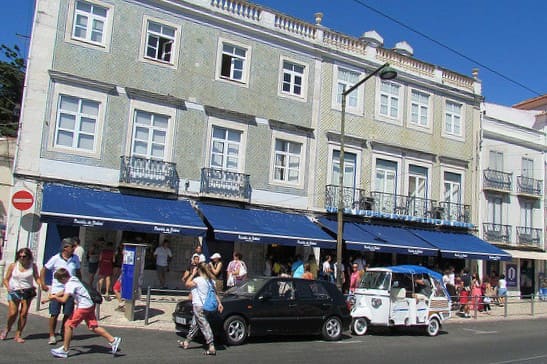
Some might argue that the pastries made at the Fábrica are in a class of their own, and that therefore the two names refer to different things. But the simplest explanation is that pastéis de nata is the generic term, while pastéis de Belém became popular due to the prestige of that particular bakery. Although the latter technically refers to those made there, it is often used as a synonym for pastéis de nata in general.
Where are pastéis de nata made?
Delving further into the history of the Pastéis de Belém, there is another reason why pastéis de nata are sometimes called pastéis de Belém: they were invented in this area of Lisbon. According to the story, the monks of the Jerónimos Monastery of Belém were the first to make and distribute the iconic egg tarts. The monks used egg whites to starch clothes and fabrics and were left with a surplus of leftover yolks. Rather than waste them, they often used them to make pastries and cakes.
Mosteiro dos Jerónimos
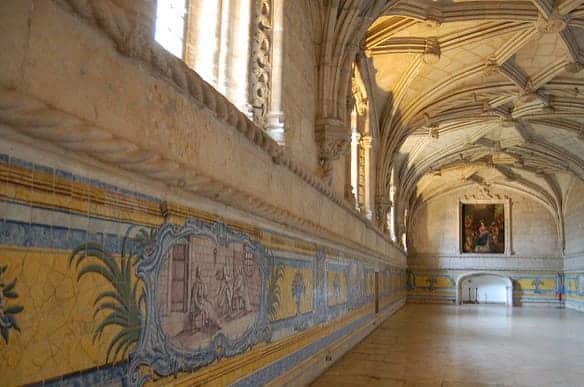 Continuing with the history of the Pastéis de Belém, after the Liberal Revolution of 1820, the monks faced a problem. Across Portugal religious institutions were being closed and they barely had any funding left. To bring in some extra money, they started selling pastéis de Belém.
In the end, the monastery closed anyway, and at that point the monks sold the recipe to the local sugar refinery. Sensing the goldmine they had in their hands, the refinery owners opened the Fábrica de Pastéis de Belém in 1837… and the rest is the history of the Pastéis de Belém.
How are pastéis de nata made?
Pastéis de nata are certainly a simple pleasure: buttery pastry, creamy custard and not much more. However, it takes much more effort and skill than one might expect to achieve the ideal pastry.
Making the perfect crust
First, there is the dough that forms the pastry crust. If you have ever tried to make your own pastries, you know how delicate the process can be. After mixing the ingredients, you have to work the dough to the right consistency, adding butter as you go to create the perfect texture.
This takes time, and there are no shortcuts if you want the real thing. Amateur chefs may be tempted to use store-bought pastry dough, but the result, while still tasty, will not be as impressive or authentic.
Filling with essential ingredients
After perfecting the dough, it is time to make the filling. This involves combining a few essential ingredients: flour, milk, sugar, cinnamon, vanilla and, of course, egg yolks. But do not think you can just throw it all into a bowl, whisk it and call it done. Creating custard that is both creamy and light is a delicate process, involving careful heating and timing.
Baking and assembly
Once that is done, the tarts are assembled and baked. This is where the magic happens: the filling thickens, the crust turns crisp, and those distinctive golden-brown spots appear on top of the custard. Once out of the oven, they are sprinkled with cinnamon and powdered sugar. And just like that, the star of Portugal's bakeries is born.
If you did not know the history of the Pastéis de Belém, we hope that on your next tour of Galicia or Portugal, you will not hesitate to taste one of these Portuguese delicacies to round off your visit.