

Vinho Verde from Porto
Porto's Vinho Verde is a crisp, aromatic, low-alcohol wine that is often lightly sparkling. Despite the translation, Vinho Verde is never green: it is usually a white wine, although it is also possible to find red Vinho Verde and rosé Vinho Verde.
"Verde" means, more than anything to do with its colour, that it is young. In fact, the only thing that makes a Vinho Verde a Vinho Verde is that it comes from the Vinho Verde region, in northern Portugal.
EXPORTING VINHO VERDE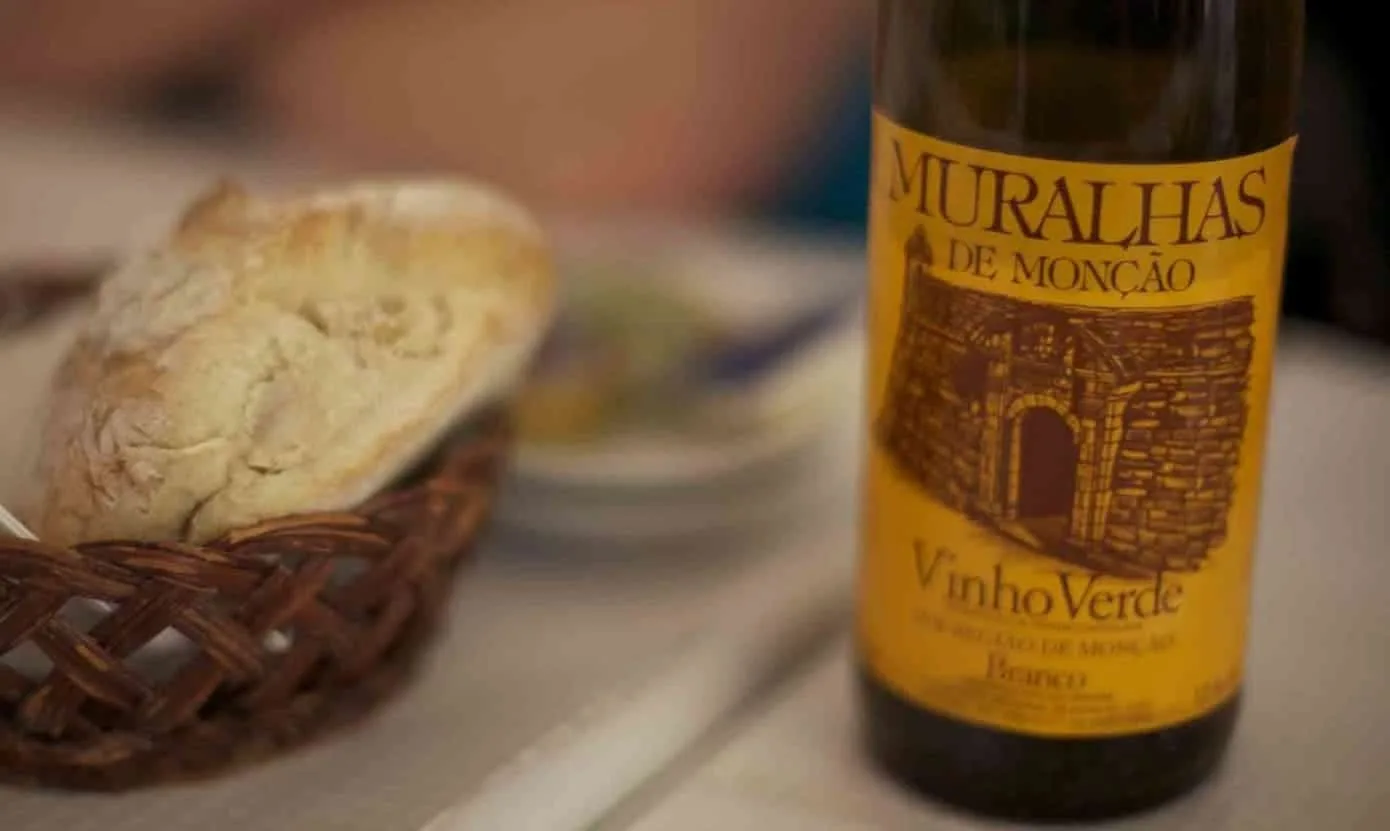
You will find Vinho Verde in every supermarket in Portugal, and on almost every menu in every Portuguese restaurant. It used to be hard to find outside Portugal, and you often had to look for it in a specialist shop. Today, most wine shops usually carry bottles of this great wine.
Fortunately, some of the commercial producers in Portugal had already started to modernise their methods just before the Vinho Verde boom, otherwise it might have been very hard to get a bottle outside Portugal.
THE EVOLUTION OF THIS MAGNIFICENT WINE
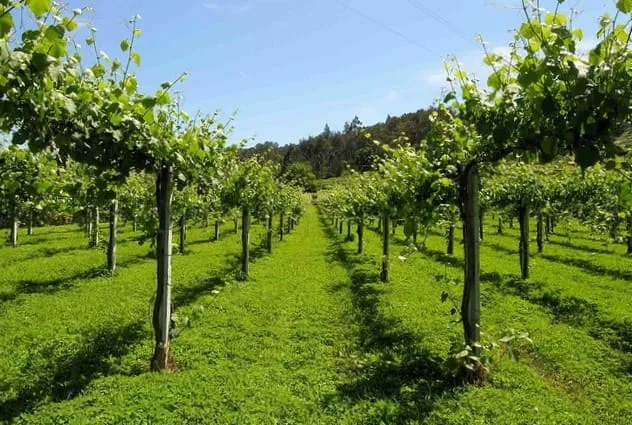
Its evolution is tied to history. Not long ago, the Vinho Verde region was characterised almost exclusively by small holdings. People grew their vines in a very disorderly way: on the sides of fences, pillars, telephone poles and trees, so that they could use the fields to grow vegetables and let their animals graze. Naturally, all this led to very small yields and everything had to be harvested by hand.
In recent years, the Vinho Verde region has changed considerably, as both Portugal and the rest of the world have grown to appreciate this wonderful wine more and more. Although this has meant that several large vineyards have dominated the shelves of Portuguese supermarkets, as well as the export market, that does not mean that small producers no longer exist. They do. The majority of the region is still made up of small producers who work together with local cooperatives. Large producers, such as Aveleda, are probably the exception, but they dominate much of the market.
Although recent years have been marked by modernisation, that does not mean all the romance has gone. The popularity of Porto's Vinho Verde has led various vineyards to experiment and create Vinho Verde wines that did not really exist before, such as single-varietal Vinho Verdes or oak-aged ones.
So is it not really green?
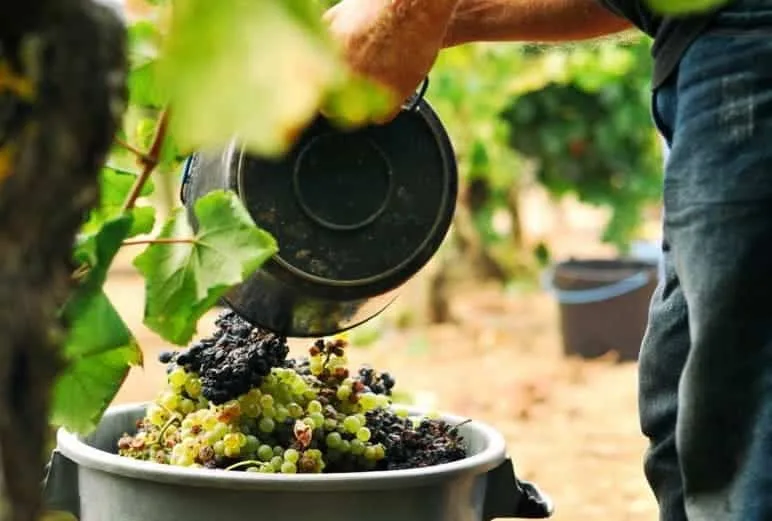 Verde, as mentioned, does not mean the wine is really green. If you were worried about having to drink something the colour of pond water, this is probably a relief. Or maybe a disappointment.
Porto's Vinho Verde is usually a white wine, although it is not always the case. You can also get red and rosé Vinho Verde.
Although there are several theories about where the name Vinho Verde comes from, the most accepted is that it means young. The bottles are released about 3-6 months after harvest, which means the wine is not really aged.
It is rare for a Porto Vinho Verde to be oak-aged, although some producers have started to experiment. Vinification is only done in stainless steel tanks.
The different types of Vinho Verde
Because Vinho Verde is the name of the region, that means there can be many different variations.
White Vinho Verde tastes different from the others, and not only because of the price. There are certain features of white Vinho Verde that most whites share: it is a light, crisp and aromatic wine that often has bubbles and can be slightly sweet.
When it comes to a white Vinho Verde, Loureiro tends to be floral, Trajadura tends to have a steely taste, Arinto tends to be mineral, Avesso also tends to be mineral, but with creamy notes blended in, and Alvarinho (the same grape as Spain's Albariño) tends to be mineral and slightly fragrant.
FEATURES OF WHITE VINHO VERDE
Vinho Verde is the name of the region
Vinho Verde is the name of the region. It is a DOC region in the far north of Portugal, above Porto and reaching the Spanish-Portuguese border.
The Vinho Verde region is then divided into smaller sub-regions: Monção, Melgaço, Lima, Basto, Cávado, Ave, Amarante, Baião, Sousa and Paiva.
Vinho Verde often has bubbles
One feature of Porto's Vinho Verde is that it often has bubbles. Not on the same level as champagne or cava, but enough to be noticeable.
Traditionally these bubbles were more accidental than anything. It happened when some carbon dioxide was trapped in the bottle. Today, the bubbles are usually added manually through artificial carbonation.
From 1999, some producers are now producing sparkling Vinho Verde wines.
Vinho Verde has a fairly low alcohol level
Vinho Verde wines are usually very low in alcohol, between 8.5{0c4b52101edf59c43bd9ea9c33002dad18a168785976cd7d994d2e239557c454} and 11{0c4b52101edf59c43bd9ea9c33002dad18a168785976cd7d994d2e239557c454} on average. Even at its highest, 11{0c4b52101edf59c43bd9ea9c33002dad18a168785976cd7d994d2e239557c454} is still quite light, which makes it popular for drinking at lunchtime. Vinho Verde made with Alvarinho, for example, often tends to be higher in alcohol (typically 11.5 to 14{0c4b52101edf59c43bd9ea9c33002dad18a168785976cd7d994d2e239557c454}).
 What foods pair well with Porto's Vinho Verde?
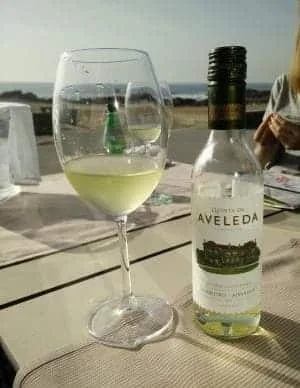
Porto's Vinho Verde pairs very well with seafood. So if you visit a seafood restaurant to try Portugal's fantastic variety of seafood, this is probably the wine you will end up drinking.
In addition, as it is normally drunk in summer and often at lunchtime, it tends to go well with "summer food" such as chicken and salads, rather than stews and heavier meals.